Hybrid Solar with Battery Backup
Keep the power on when the grid goes down, and store the solar power you generate by day for use at night.
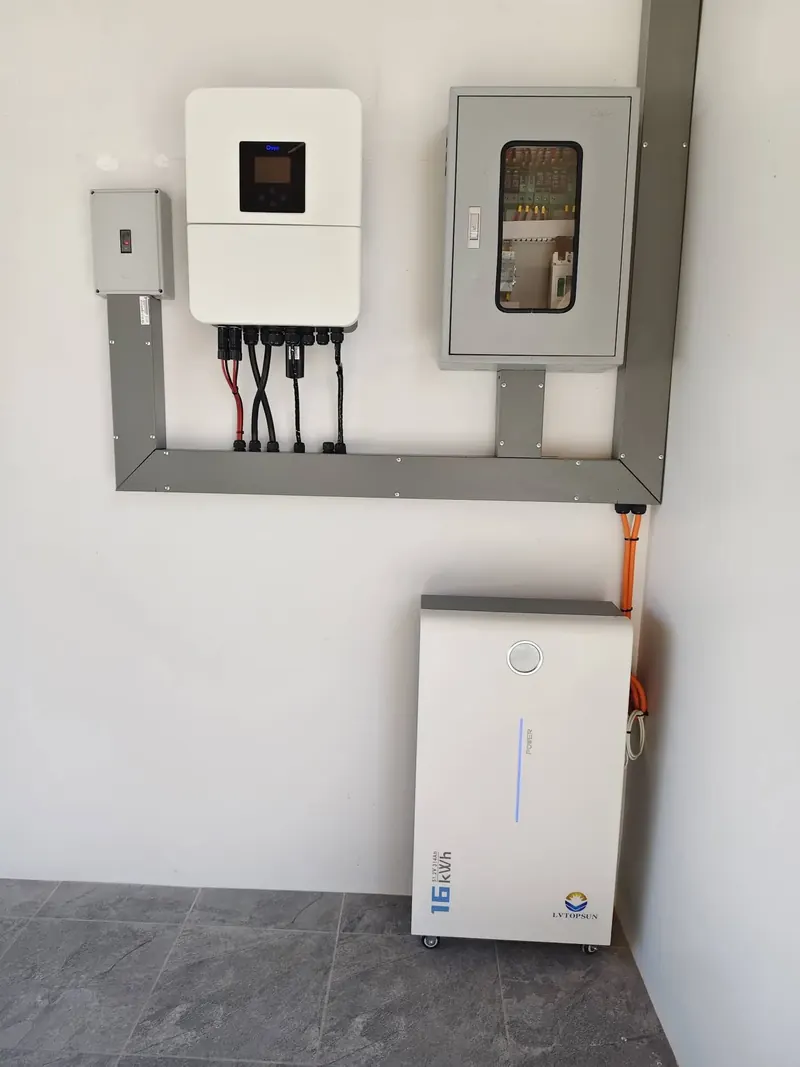
Standard solar doesn't work during a power cut
During an outage, a standard on-grid system switches off and the house goes dark just the same — even with bright sun on the roof.
Nothing is faulty. It is a safety requirement: the system has to disconnect itself the moment grid power is lost, so that power from the panels cannot flow back into lines that crews are climbing up to repair.
What keeps the lights on is a battery and a transfer switch — not a bigger array of panels.
Side by side
On-grid, hybrid and off-grid: what's the difference?
On-grid
Connected to the grid, no battery
Generates power for your own use during the day; any surplus flows out to the grid.
- During a power cut
- Shuts down immediately, as the Provincial Electricity Authority (PEA) requires
- Best for
- People whose main goal is a lower bill, in places where outages are rare
Hybrid
Connected to the grid, with a battery
Works like on-grid, but stores surplus power in the battery instead of sending it all out.
- During a power cut
- Switches over to battery power, up to what the battery can supply
- Best for
- People for whom outages cause real problems, who also want a lower bill
Off-grid
Not connected to the grid at all
Runs on panels and batteries alone, and must be designed to cope with several rainy days in a row.
- During a power cut
- Not affected — it doesn't use grid power in the first place
- Best for
- Places the grid doesn't reach, or where running a line in costs more than the system
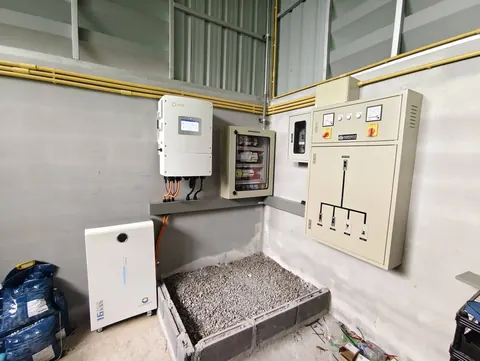
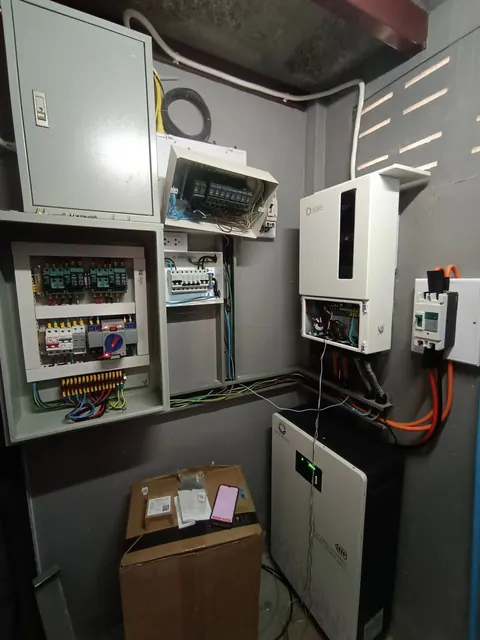
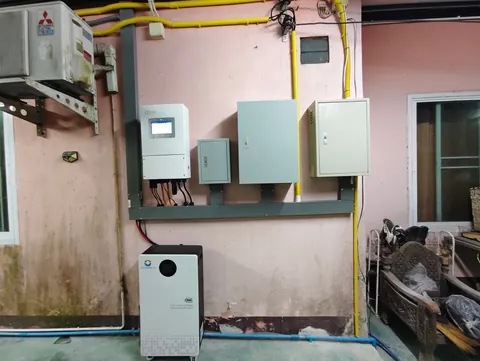
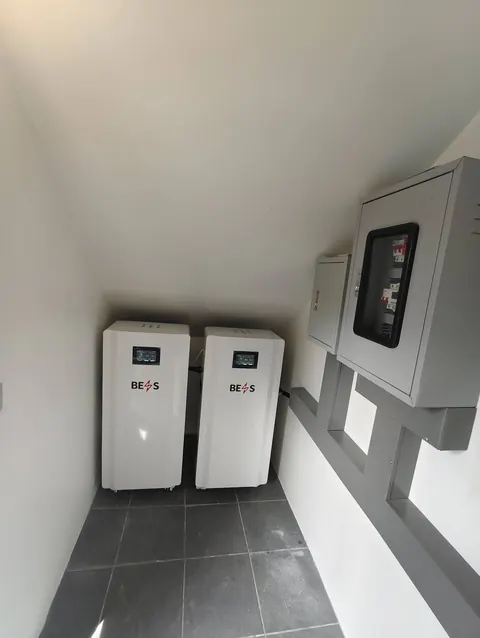
Inverter and backup battery systems we have installed for real clients. See all projects
Making the right call
Who a battery is right for
The question to ask isn't whether it pays back — it's how much a power cut costs you.
Worth adding
Homes where someone relies on medical equipment
Oxygen concentrators, ventilators or a fridge for medication are loads that cannot stop, even for a few hours
Shops with freezers or cold rooms
A two- or three-hour outage can spoil a whole freezer of stock — more than the cost of the battery in a single incident
End-of-line areas with frequent dips and outages
Many districts in the South sit at the end of long power lines, and during the monsoon, falling trees bring lines down regularly
Homes that use a lot of power at night
A battery shifts power generated in the day to the evening, raising the share of solar power you use yourself
Not yet
- Buying one to make the system pay back faster — adding a battery makes payback longer in every case
- Homes where the power almost never goes out and nothing critical needs to keep running
- A tight budget that would mean fewer panels to pay for the battery — which achieves the opposite of what you want
A battery does increase your savings, but its cost rises by more than the extra savings, so payback always gets longer when you add one. You can check the numbers for your own property in the cost calculator.
What our hybrid installations include
- A hybrid inverter and battery sized from the appliances you want to keep running
- Separate AC and DC (panel-side) switchboards, with a transfer switch that isolates your circuits during outages
- Backup circuits separated from the ones that can go off, so the battery lasts as long as possible
- The full grid-connection application to the Provincial Electricity Authority (PEA)
- A 2-year installation warranty, plus 2 years of free aftercare
The on-site survey costs THB 1,200–1,500, refunded in full against your quote when you go ahead with the installation.
FAQ
Hybrid systems and batteries
Is it true that ordinary solar doesn't work during a power cut?
Yes — and not because anything is broken. It is a safety requirement. An on-grid system must disconnect itself the instant grid power is lost, so that power from your panels cannot flow back into lines that utility crews are climbing up to repair. Every certified inverter, of every brand, has this function. If you want power during an outage, you need a hybrid system with a battery and a transfer switch that isolates your circuits from the grid.
How many kWh of battery do I need?
It comes down to two questions: what do you want to keep running during an outage, and for how long? A fridge plus lights and fans for the whole house uses about 1 to 1.5 kWh per hour, so five hours of backup means roughly 5 to 8 kWh. Add air-conditioning and the figure jumps several times over. We calculate the size from the list of appliances you want to keep running.
How long does a battery last?
The LFP (lithium iron phosphate) batteries commonly used in home systems usually carry a manufacturer warranty of around 10 years, or around 6,000 charge cycles, whichever comes first. At one cycle a day, that is about 16 years. The actual terms are those in the warranty document for the model installed, which we hand over with the job.
Can I add a battery later if the budget is tight now?
Yes, if it is planned from the start: choose a hybrid inverter on installation day, then buy the battery and connect it later. If an on-grid inverter goes in first, adding a battery later means replacing the whole inverter — paying twice. Tell us during the survey that you might want a battery in the future, and we will design for it.
Can the battery be installed inside the house? Is it dangerous?
LFP is a far more stable chemistry than the lithium used in phones, and the battery has a built-in management system that shuts it down if temperature or voltage goes out of range. It is normally installed in a well-ventilated room, out of direct sun, away from water and not next to anything flammable. We choose the location during the site survey.
Can a hybrid system sell power back to the grid?
Yes, if you qualify for the buy-back scheme. A hybrid system stays connected to the grid just like on-grid; the only difference is the battery in between. In practice, though, surplus power goes into the battery first, so less flows out for sale than with an on-grid system of the same size.
Tell us what can't go off when the power does
We size the battery from your actual list of appliances, then quote with figures you can check.
Our team replies in English — on LINE, by email or by phone. Sending a photo of your electricity bill and your location on LINE is the quickest way to get an estimate.
Read before you decide
- Does Solar Still Work During a Power Cut?Many people only find out at their first power cut that the house goes dark as usual, even with bright sun on the roof. Here's why, and what you need if you want power to keep running.
- Can Lightning Strike Solar Panels? The Protection You Need in Southern ThailandRooftop panels don't attract lightning the way many people fear, but surge damage from a nearby strike is real — and it can be prevented.
- Power Cuts on Koh Samui and Koh Pha Ngan: What Solar Can and Can't DoKoh Samui's power comes through undersea cables from Khanom on the mainland, and Koh Pha Ngan shares the same outages. A standard solar system goes dark with the grid every time — backup has to be designed in from the start.