Solar FAQ: Questions We Get in Southern Thailand
Real questions from clients in Nakhon Si Thammarat and across our service area in the South — answered by our team.
Last updated
Is it worth it, and what does it cost?
Is solar worth it in Thailand?
It depends on how much electricity you use during the day, because solar only generates in daylight. If someone is home or your business is open during the day, you use almost everything it produces and it pays off well. If you are out at work all day and use most of your power at night, the value drops. As a rough guide, homes pay back in about 6–10 years and businesses in about 4–7 years. Estimated at THB 4.20 per kWh and Southern Thailand sunshine (1,350 kWh per kWp per year, rainy season included). Actual payback depends on your bill and when you use electricity — we calculate it for your property before quoting.
How much can solar cut my electricity bill?
Somewhere in the range of 30–70%. A typical home that doesn't use much power during the day usually lands around 30–50%. Savings near 70% happen for homes or shops that use most of their power in the daytime and have a correctly sized system. We don't promise a specific figure until we have seen your actual electricity bill.
How high does my bill need to be before solar makes sense?
Generally, from around THB 2,500–3,000 a month upward it starts to make sense. Below that, the payback period gets so long that it may not justify the money, unless you have other reasons — such as wanting to rely less on the grid.
Can I pay in installments?
Currently there are credit-card installment plans and loans from some banks that run dedicated solar programs. Terms and limits change over time and from bank to bank, so contact us to ask what is actually available when you are ready.
Does the estimate include everything?
It includes equipment, installation labor and the permit applications. Not included: roof reinforcement if the roof isn't ready, the meter upgrade fee charged directly by PEA (Provincial Electricity Authority), a backup battery, and any travel charge, which we confirm before booking.
Can you issue a full tax invoice?
Yes. VAT-registered company — full tax invoices issued, 3% withholding tax supported for corporate clients. Our quotes state clearly whether a price is before or after VAT.
Is there a charge for a site survey?
A first estimate from your electricity bill is free. An on-site survey has a fee of THB 1,200–1,500 for sites within 100 km, which is refunded in full against your quote when you go ahead with the installation. In other words, if you install with us, the survey costs you nothing.
Living with solar
It rains a lot in the South. Does solar still work?
Yes. Solar panels work from daylight, not heat, so they still generate on cloudy days — just less. We calculate using the full-year average sunshine for Southern Thailand of 1,350 kWh per kW per year, which already includes the rainy season and is lower than other regions of the country.
Can I still use solar power during a blackout?
A standard on-grid system shuts down when the grid goes down. This is a safety requirement, so power from your system can't flow back into the lines and endanger crews repairing them. If you want power during blackouts, you need a battery and a hybrid system, which costs more.
How often do the panels need cleaning?
Usually once or twice a year. In the South, rain washes off a fair amount of dust anyway. The bigger issues are bird droppings, fallen leaves and algae in damp areas, which block light in patches and cut output more than ordinary dust.
How long does a solar system last?
Panels are the longest-lived part of the system. Manufacturers generally give a power-output (performance) warranty of 25 years or more, with the yearly degradation rate stated in the warranty document — we hand over the original document for the model installed. The inverter is an electronic device with a shorter life, typically around 10–15 years, so it is wise to budget for one inverter replacement over the life of the system.
Can I see how much power my system is producing?
Yes. The inverter comes with an app that shows real-time and historical generation, and we show you how to use it at handover. If the numbers look wrong, you will spot it first and can tell us right away — and we can often make a first diagnosis remotely before coming out.
Installation and your roof
Will my roof leak after installation?
The points to watch are the screw holes where the mounting is fixed to the purlins. We use fixings designed for each roof type, with a waterproof seal at every drilled point, and our 2-year installation warranty covers any leaks caused by our work.
Which roof types can take solar panels?
Almost all of them: corrugated fiber-cement, cement tile, metal sheet and concrete. Each needs a different type of fixing. What matters more than the roof type is the condition of the structure and which way it faces the sun — we check both during the site survey.
How much roof space do I need?
A 625 W panel takes about 2.8 m². A 5 kW system uses 8 panels, so it needs roughly 23 m² of sunny roof, with no shade across it during the day. Even partial shade can pull down the output of the whole array.
How long does installation take?
A typical home installation takes about 1–3 days, depending on system size and how difficult the roof is. But before the system can run, the permit and meter change with PEA also have to be completed, which usually brings the total to about 1–3 months.
Can I install solar on a house near the sea?
Yes, but the materials have to be right. Salt air on the coast speeds up corrosion of metal. For sites near the sea we use aluminum mounting structures and stainless-steel fixings, and we recommend cleaning the panels more often than in town.
Paperwork and permits
Do I need a permit, and who handles it?
Yes. It involves a grid-connection application to PEA (Provincial Electricity Authority), a license-exemption notification to the ERC (Energy Regulatory Commission), and in some cases an engineer's certification of the roof structure or a building-modification permit. We handle every step — you don't have to deal with the agencies yourself.
Can I install without a permit?
We strongly advise against it. Installing and connecting to the grid without notifying the utility risks fines and an order to remove the system, and it causes problems when you sell the property or take out fire insurance. We don't take jobs where the client asks us to skip this step.
Can I sell electricity back to the grid?
Homes can apply to the utility's buy-back program, but there are conditions: limited quotas, a requirement for a residential meter, and a cap on how much each meter can sell. The buy-back rate is about THB 2.20 per kWh, far below what you pay for electricity, so using the power yourself is worth more than selling it. Businesses on commercial meters generally don't qualify for this program.
What documents are needed?
Usually a copy of the owner's ID card, a copy of the house registration, your latest electricity bill and proof of ownership of the building. Companies also need a company certificate. We give you the full list of what's needed before work begins.
Service area and the company
Which provinces in Southern Thailand do you cover?
We cover 13 provinces: Nakhon Si Thammarat, Phatthalung, Songkhla, Trang, Surat Thani & Koh Samui, Krabi, Phang Nga & Khao Lak, Chumphon, Satun, Phuket, Pattani, Yala and Narathiwat. The same terms apply in every province: site surveys are by appointment, and any travel charge is confirmed before booking. We do not serve Ranong.
Is there a travel charge?
The same terms apply in every province: any travel charge is confirmed before booking. The installation price itself isn't marked up by province — it varies with the roof type, the condition of the structure and the cable run. The site survey fee is THB 1,200–1,500 for sites within 100 km, refunded in full against your quote when you go ahead with the installation.
Is 19Energy a registered company?
Yes. It is registered as SIPKAO ENERGY CO., LTD. (บริษัท สิบเก้าเอ็นเนอร์ยี่ จำกัด), tax ID 0805566004191, with its office in Nakhon Si Thammarat Province. The company is VAT-registered, so it can issue full tax invoices. The registration details can be checked in the Department of Business Development database.
Which panel and inverter brands do you use?
Panels are JA Solar, LONGi or Jinko Solar (N-type TOPCon, dual-glass, 620–630 W per panel). Inverters are HUAWEI, Solis or Deye, and batteries for hybrid systems are LVTopsun or Sunwoda. We choose brands to suit each site and budget, so not every home gets the same brand. The exact brand and model are written into your quote before you sign anything.
How long is the installation warranty, and do you look after the system afterward?
The installation and mounting work is warranted for 2 years. Each piece of equipment carries its own manufacturer's warranty, and these differ, so we list them component by component rather than rolling them into one number. On top of that, clients who install with us get free panel cleaning and system checks for 2 years — we schedule them and contact you 14 days in advance.
Can solar power a farm water pump?
Yes, and it is one of the most cost-effective uses of solar, because pumps already run during the day and can be shifted to the sunniest hours. There are two ways to do it: connect to your existing electricity supply, or wire panels directly to the pump for plots the grid doesn't reach. The direct option needs no new meter and no grid-connection permit, because it isn't connected to the utility's lines at all.
Where can I see installations you have done?
Two places. First, the photo library of more than 400 real site photos on our projects page. Second, our case studies, with site photos and equipment details for each job — from 5 kW home systems up to a 760 kW project.
Didn't find your answer? Try the payback calculator or read our warranty terms.
Still have a question?
Ask our technicians directly on LINE or by phone.
Our team replies in English — on LINE, by email or by phone. Sending a photo of your electricity bill and your location on LINE is the quickest way to get an estimate.
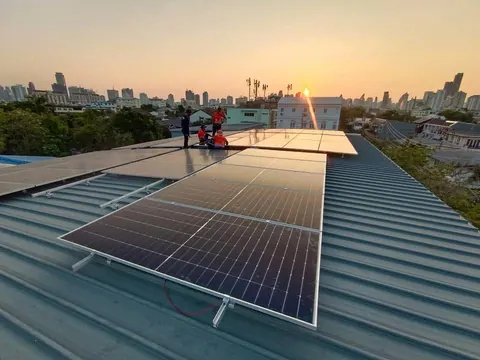
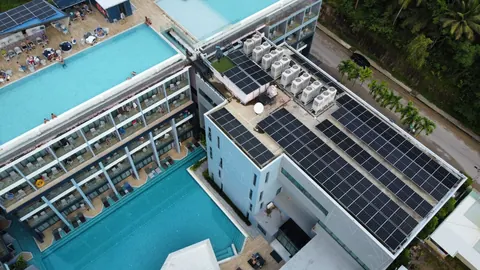
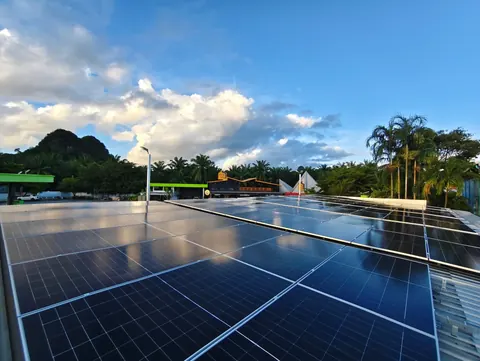
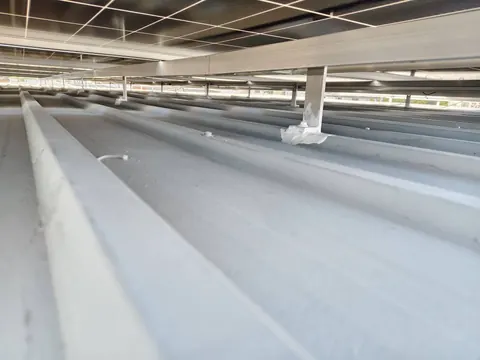
Real site photos from our installation team. See all projects
Read before you decide
- Monthly Bill of THB 3,000, 5,000 or 10,000 — What Size Solar System Do You Need?The best-value size is not the largest your roof can hold — it is the size that matches the electricity you use during the day.
- On-Grid, Off-Grid or Hybrid Solar: What's the Difference and Which Suits You?The difference comes down to whether the system connects to the utility grid and whether it can store power — which changes both the price and the value.
- 7 Things to Check Before Choosing a Solar Installer in Southern ThailandThe cheapest price is not necessarily the best value, and the most expensive is not necessarily the best. Here is what to look at instead.