Office & Clinic Solar in Southern Thailand
For company offices, clinics and government buildings. Buildings that open in the daytime use power exactly when panels generate the most, so they use almost all of it on site. Daytime businesses pay back in around 4–7 years, under the conditions below.
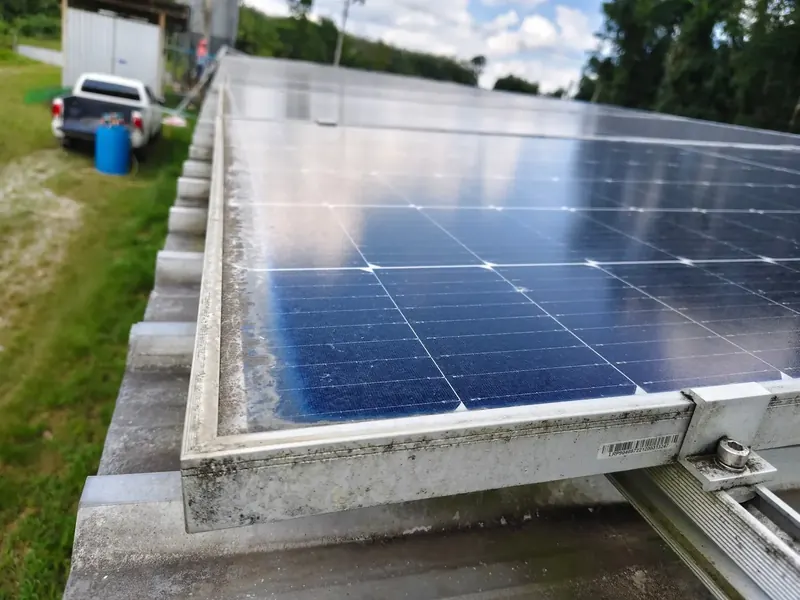
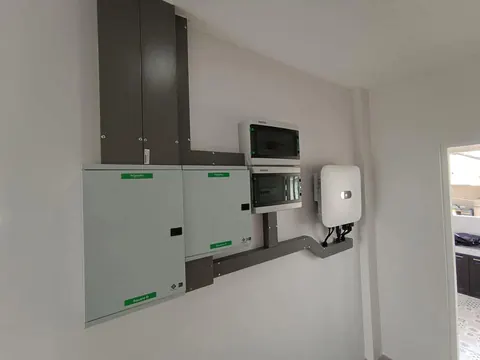
A building rooftop installed by our own team.
How the building uses power
Office hours overlap with the hours panels generate
Solar panels generate from roughly 8 a.m. to 5 p.m. — the same hours offices, companies and government buildings run their air-con, computers and lighting. The power is used the moment it is made, so every unit is worth the full electricity rate of around THB 4.20 per kWh.
The point to settle from the start is days off. A building closed at weekends and on public holidays uses far less power on days when the panels still generate fully, and buildings on commercial meters cannot sell surplus back. The right system size comes from real daytime load, not the bill total.
An office building's power use through the week
| When | Power use | Solar output |
|---|---|---|
| Weekday, daytime | High — air-con and office equipment | Highest |
| Evening to night | Low — lighting and fridges | None |
| Day off, daytime | Low if the building is closed | Full |
Businesses that use most of their power in the daytime pay back in around 4–7 years. Estimated at THB 4.20 per kWh and Southern Thailand sunshine (1,350 kWh per kWp per year, rainy season included). Actual payback depends on your bill and when you use electricity — we calculate it for your property before quoting.
Who it suits
Solar for companies, clinics and government buildings
Buildings open in the daytime benefit most. Buildings with heavy evening use need looking at case by case.
Company offices
Air-con, computers and lighting run throughout office hours — the load that lines up best with sunshine.
Clinics
Consulting-room air-con and medicine fridges run all day. Clinics open in the daytime benefit more than those open only in the evening.
Government buildings
Open during official hours and closed on holidays, so the system must be sized to the working-day load.
Shophouse offices
Narrow, long roofs often shaded by neighbors for part of the day. System size depends on the area that actually gets sun.
Districts where these buildings cluster
Mueang Nakhon Si Thammarat, Nakhon Si Thammarat
The province's center for government, trade and healthcare. Most buildings are shophouses, offices and clinics; shophouse roofs are narrow and often shaded by taller neighbors for part of the day.
Solar in Nakhon Si ThammaratMueang Phatthalung, Phatthalung
The provincial center for government and trade, with offices and government buildings in the municipal area. Sites near Songkhla Lake get more humidity and salt than inland ones.
Solar in PhatthalungMueang Songkhla, Songkhla
Home to the provincial government center. Many old-town buildings have limits on roof alterations, and the whole district takes salt air from both the lake and the Gulf of Thailand.
Solar in Mueang SongkhlaKhlong Hoi Khong, Songkhla
Site of Hat Yai airport and several government agencies. Work inside the air-navigation safety zone needs height and glare rules checked before design.
Solar in SongkhlaMueang Surat Thani, Surat Thani & Koh Samui
The economic hub of the upper South, dense with offices and commercial buildings. Concrete roof decks carry weight well, but the waterproofing must be checked before anything is drilled.
Solar in Mueang Surat ThaniMueang Krabi (Ao Nang), Krabi
The provincial government center. Town offices use most of their power during office hours — the same hours the panels produce the most.
Solar in Mueang Krabi (Ao Nang)Mueang Phang Nga, Phang Nga & Khao Lak
The provincial government center, set in a valley of steep limestone hills that cut off the sun earlier than on flat land. Hill shading is assessed building by building before sizing.
Solar in Phang Nga & Khao LakMueang Satun, Satun
The provincial government center. Mangrove humidity stays high all day, so electrical connections need tight sealing and better-protected enclosures than inland jobs.
Solar in SatunMueang Chumphon, Chumphon
The provincial center for government and trade, on the stretch of coast where Gulf storms make landfall most often. Mounting has to allow for higher wind loads than the standard value.
Solar in Chumphon
We serve 13 provinces in Southern Thailand. Site surveys are by appointment, and any travel charge is confirmed before booking. See all service areas
Design points
What differs from a home installation
Size to weekday load, not the bill total
Buildings on commercial meters cannot sell power back, so surplus generated on days off has no value. A system bigger than your daytime load simply stretches the payback.
Concrete decks: check the waterproofing first
Many office buildings have concrete roof decks that carry weight well, but if the waterproofing has already deteriorated, drilling makes it leak and the cause is hard to pin down. We check it every time.
Solar on concrete roofsNeighbors' shade and rooftop clutter
Town buildings often have taller neighbors, and decks carry air-con condensers, water tanks and masts. Panel layout follows the real shade through the day and leaves walkways for maintenance.
Clinics: loads that must not go off
Medicine and vaccine fridges run around the clock. If you need backup during a power cut, a hybrid system with a battery can be designed to supply only the circuits you cannot lose.
Hybrid systems and batteriesSite-specific rules
Old-town buildings, buildings near the airport and seafront sites carry conditions ordinary jobs don't — local rules, height, glare and corrosion — checked building by building.
Power cuts booked outside office hours
Connecting the main switchboard and changing the meter need a short power cut. We schedule these ahead, on a holiday or outside office hours, so your service isn't disrupted.
Tax and accounting
The tax questions accounts teams ask before approving
Tax invoices and withholding tax
- 19Energy is a VAT-registered company and issues full tax invoices in your company's name.
- 3% withholding tax works as normal for corporate clients.
- Every quote states whether prices are before or after VAT.
- The system is an asset that can be depreciated under normal accounting rules; ask your accountant for the exact tax effect for your business.
1.5x deduction on equipment cost
Under Royal Decree No. 805 of 2026, which runs until the end of 2028, companies and people with business income can deduct 1.5 times the equipment cost as an expense. Only the equipment counts — installation labor is not included — and these conditions apply:
- The equipment must be new and never used before
- The equipment must carry the No. 5 energy-efficiency label as specified by the authorities
- It cannot be claimed on top of other investment-promotion measures
Confirm with your accountant how this applies to your business before deciding. Read the full 2026 solar tax deduction rules
System sizes
Common sizes for offices and clinics
We don't publish prices, because the real cost depends on the roof type, structure and cable runs. We quote after the site survey.
10 kW
16 panels · about 45 m² of roof · single-phase or three-phase
Large homes, pool villas, shops and daytime businesses
Shops, offices, pool villas and large homes that use power steadily through the day. The best return per baht invested. Single-phase homes can take it if the meter allows — we check the meter size first.
10 kW system details15 kW
24 panels · about 68 m² of roof · three-phase
Small factories, hotels and commercial buildings
Businesses that run all day use almost every unit the moment it is generated, so they pay back noticeably faster than homes.
15 kW system details20 kW
32 panels · about 90 m² of roof · three-phase
Factories, cold storage and buildings with heavy all-day loads
Continuous loads such as cold rooms, large pumps and production lines — every unit generated gets used.
20 kW system detailsLarger buildings are designed project by project from the real load. Examples of our on-grid work include a 35 kW system in Tha Chang and a 760 kW project on commercial buildings.
Equipment and warranty
Named brands you can check, warranties listed by component
Equipment we install
- Solar panels: JA Solar, LONGi or Jinko Solar · N-type TOPCon, dual-glass, 620–630 W per panel
- Inverters: HUAWEI, Solis or Deye · On-grid and hybrid inverters with a monitoring app so you can check your generation history yourself
- Batteries (hybrid systems): LVTopsun or Sunwoda · LiFePO4 lithium batteries for hybrid systems, sized to your night-time consumption
The exact brand and model are written into your quote before you sign anything.
Warranty by component
Solar panels — product warranty
Set by each panel manufacturer for the brand and model you choose, stated in your quote
Solar panels — power output warranty
Set by each panel manufacturer for the brand and model you choose, stated in your quote
Inverter
Most major brands give 10 years, and it can be extended
Installation and mounting work by 19Energy
2 years · 19Energy's own technicians handle every job
Manufacturer warranties follow the documents for the exact model installed. See warranty terms by brand
2 years of free aftercare
- Panel cleaning once a year
- Annual system health check
- A check of your building's wiring while we are there
We contact you 14days ahead of each visit and can book a day that doesn't clash with your office hours. Panel cleaning service
Bill review first, then the site survey
- A first estimate from your electricity bill is free — just send a photo of the bill on LINE.
- The on-site survey costs THB 1,200–1,500 for sites within 100 km, and it is refunded in full against your quote when you go ahead with the installation. It covers fuel, a technician's full day away from installation work, and the time to measure, calculate and write up your report.
- Site surveys are by appointment, and any travel charge is confirmed before booking.
We handle the paperwork with the PEA and the ERC. PEA permit service
FAQ
Questions from office, clinic and facility managers
Can you issue a full tax invoice to our company?
Yes. 19Energy is a VAT-registered company, so we issue full tax invoices in your company's name, and 3% withholding tax works as normal for corporate clients. Every quote states whether prices are before or after VAT.
What tax benefit does a company or clinic get from installing solar?
Under Royal Decree No. 805 of 2026, companies and people with business income can deduct 1.5 times the equipment cost as an expense; installation labor is not included. The equipment must be new and carry the No. 5 energy-efficiency label, and the deduction cannot be combined with other investment-promotion measures. The measure runs until the end of 2028. Confirm how it applies to your business with your accountant.
Our office is closed at weekends. Is the power generated then wasted?
Any surplus beyond what the building uses at weekends has no value. The rooftop buy-back scheme is open only to residential meters, and buildings on commercial meters must install equipment that prevents power flowing back into the grid, as required by the Provincial Electricity Authority (PEA). So we size the system from your weekday daytime use and the loads that keep running at weekends — fridges, server cabinets, rooms whose air-con stays on — not from the bill total alone.
Is solar worth it for a clinic that mainly opens in the evening?
It depends on what runs during the day. Panels generate in daylight, so if a clinic opens mainly in the evening and uses little power during the day, the system can only offset daytime loads such as medicine fridges and air-con left running. Payback is then closer to the 6–10 years typical of homes than the roughly 4–7 years of daytime businesses. We work it out from your bills and actual opening hours before proposing a size.
What permits are needed?
There is a grid-connection application to the PEA; systems under 1,000 kVA file a license-exemption notice with the Energy Regulatory Commission (ERC); and an engineer must certify that the roof or deck can carry the weight. If the installed area or weight exceeds the ministerial-regulation thresholds, a building-modification permit is also needed. We handle these for you.
Do we have to close the office during installation?
No. Roof and deck work goes ahead while the office is open. Power only has to be cut briefly while we connect to the main switchboard and when the PEA changes the meter. We book these in advance at the least disruptive time, such as a holiday or outside office hours.
Can a government agency buy a system from you?
Government agencies follow their own procurement procedures. We provide a quote that states the brand, model and system size, together with our company details and tax ID, for use in that process. The 1.5x expense deduction is a benefit for payers of business income tax, so it does not apply to agencies that do not pay income tax.
Estimated at THB 4.20 per kWh and Southern Thailand sunshine (1,350 kWh per kWp per year, rainy season included). Actual payback depends on your bill and when you use electricity — we calculate it for your property before quoting.
Request a quote for your building
Send us your past electricity bills and the building's opening hours. We will propose a system size with the assumptions behind it laid out for you to check.
Our team replies in English — on LINE, by email or by phone. Sending a photo of your electricity bill and your location on LINE is the quickest way to get an estimate.
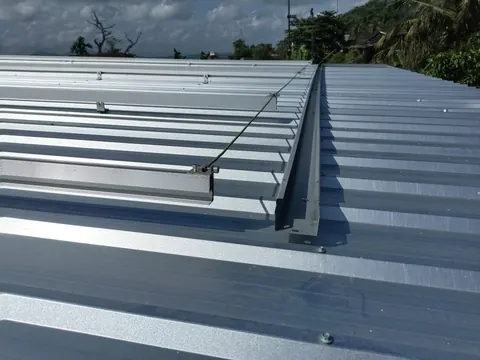
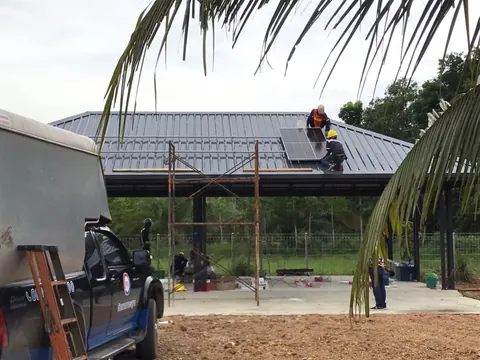
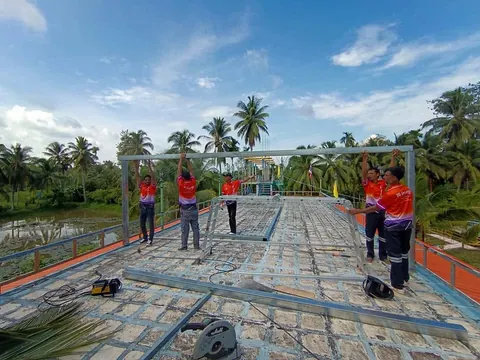
Factory and commercial projects installed by our own team. See all projects
Read before you decide
- Thailand's 2026 Solar Tax Deduction: Up to THB 200,000 — Who Actually QualifiesThe measure runs until the end of 2028, but several conditions stop people who have already installed from using it. The most common mistakes are system size and the names on the documents.
- Can You Put Solar on a Shophouse or Commercial Building?A small roof but heavy daytime use — a completely different equation from a detached house, and one that often turns out better than people expect.
- Check Your Roof Before Going Solar: Which Roofs Need Repair FirstSolar panels stay on your roof for twenty-plus years. If the roof underneath has only a few years left, or already leaks, you want to know and fix it before installation — fixing it afterward means taking the panels down first.