Solar for Rubber Plantations, Smokehouses and Buying Yards
The plantation itself uses almost no electricity. The power goes into everything that happens after tapping — rolling, smoking, drying and washing — and all of it takes place in the daytime, exactly when the panels produce the most.
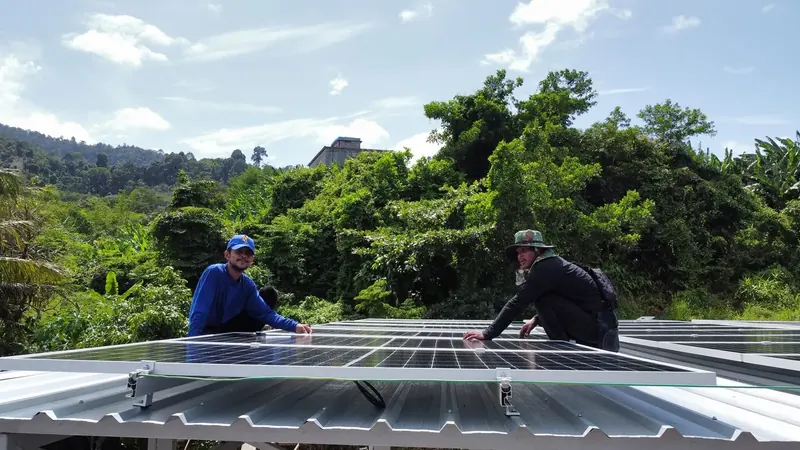
An installation on agricultural land by our team
Know this first
Solar doesn't pay off on every rubber plantation
Solar cuts the bill only when something on site uses the power. On some plantations, the actual bill shows that nothing in the plot uses power apart from a few light bulbs.
A solar system pays for itself through power that is used the moment it is generated. With no load to take it, the power simply flows away unused — no matter how many panels you install.
We tell you whether your business qualifies when we look at your electricity bill, before you pay the THB 1,200–1,500 site survey fee.
Which rubber businesses it pays off for
Smokehouses and drying sheds
Fan and conveyor motors run continuously through every smoking cycle. This is the group where solar pays off best.
Latex and cup-lump buying yards
Open from morning to early afternoon — exactly when the panels generate the most.
Sheet-rolling sheds and processing plants
Large motor loads that run through the whole working day.
Plantations watering new rubber
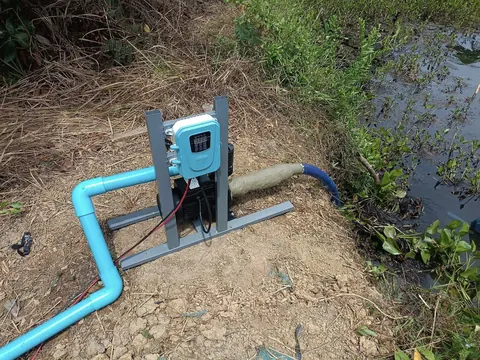
Pumping can be moved entirely into the hours of strongest sun.
Bare plots with no buildings
There is no load to use the power generated. In this case solar is not yet worth installing.
The loads we design for
Where a rubber business's electricity goes
We size the system from these real loads, not from how much empty roof space there is.
Smokehouse fans and conveyors
Smokehouses burn firewood, but the fans that circulate the hot air and the conveyors that move the sheets are electric motors running for the whole smoking cycle. They use more power than most owners expect.
Sheet rollers and kneading machines
Large motors that draw a very high current at start-up. These are the loads that decide which inverter model you need — not just the total generation figure.
Pumps for washing cups and yards
They run in cycles every day during daylight hours, and their timing can be shifted entirely into the sunniest part of the day, so almost none of the solar power goes to waste.
Scales and buying-yard equipment
Latex buying yards open from morning to early afternoon, right when the panels generate. That covers the scales, the dry rubber content (DRC) testing equipment and the lighting under the yard roof.
Agitators and fresh latex tanks
Fresh latex waiting to be shipped has to be stirred so it doesn't coagulate. The agitator motor is small but runs for long hours — a steady base load that soaks up generation instead of letting it flow away unused.
Pumps for fields and newly planted rubber
Young rubber trees need watering in the dry season for their first two or three years. Plots far from the house often have no grid supply, so a solar pump set installed right where the water is needed costs less than running power lines out to it.
Payback for businesses that use most of their power in the daytime is around 4–7 years, estimated at THB 4.20per kWh and Southern Thailand sunshine. Actual results depend on each business's load.
Site conditions
What makes rubber-processing sites different
We plan for these points at the design stage, so the system lasts as long as it should in a rubber-processing environment.
Acid fumes and humidity from processing
The acid used to coagulate latex, combined with the humidity inside smokehouses, speeds up corrosion much like salt air on the coast. Corrosion-resistant materials are needed even far inland.
Motor inrush current at start-up
Rollers and kneading machines draw a very high current as they start turning. The inverter has to handle that surge and be set up so it doesn't trip every time a machine is switched on.
Dust and soot from smokehouse firewood
Soot settling on the panels reduces output faster than on an ordinary site. We discuss the cleaning schedule at the design stage, so it doesn't come as a surprise later.
Power use that changes with the season
During the leaf-shedding season, when tapping stops, the business uses almost no power. That's why we look at 12 months of bills, not one, so you don't end up with a system bigger than you need.
FAQ
What rubber plantation owners ask us most
Is solar worth it for a rubber plantation with no smokehouse?
In most cases, no. If nothing in the plot uses electricity apart from a few light bulbs, the system will take a very long time to pay back, because there is no load to use the power it generates. Solar makes sense for plantations with a smokehouse, drying shed, buying yard, sheet roller or a pump that runs regularly. We tell you whether your business qualifies when we look at your electricity bill — before you pay for a site survey.
Rubber is tapped at night. How can solar help?
Tapping is done with rechargeable head lamps, not power from the grid. What solar helps with is everything after tapping — rolling, smoking, drying and washing — which all happens in the daytime. That is why rubber businesses match electricity use to solar generation well.
Smokehouses give off acid fumes. Will the equipment fail early?
It has to be planned for at the design stage. Rubber processing combines high humidity with fumes from the acid used to coagulate latex, which speeds up metal corrosion much like salt air on the coast. We use aluminum mounting structures with stainless-steel fasteners, and we place the inverter away from the path of the smokehouse fumes.
Tall rubber trees cast shade. Where do the panels go?
Mature rubber trees grow taller than 20 meters and are planted close together, so a house or shed in the middle of a plantation is often shaded for part of the day. In that case we put the panels on the smokehouse roof or the buying-yard canopy, which stand in more open ground, or use a ground-mounted frame in a clear area. We also allow for the trees growing taller over the next few years, rather than judging the shade only on the day of the survey.
When is the best time to install if we're felling for replanting?
If you plan to fell and replant, the period right after felling is the best time. The land is open with no shade, and trucks can get onto the site easily. Newly planted rubber also needs watering in the dry season, a load that suits a solar pump system well. We recommend talking to us before you fell, so the system can be placed where it won't need to be moved later.
Rubber prices swing. Will the system become a burden in a bad year?
That is why we don't recommend a system bigger than your real load. A system sized to your actual usage cuts your electricity bill every month whatever the rubber price does, because electricity is a fixed cost that stays the same. An oversized system becomes a burden in the years when prices fall. We work from a full year of past electricity bills and recommend the size that fits your real usage.
Our buying yard runs on three-phase power. How big a system do we need?
It depends on the real load. A mid-sized buying yard with scales, DRC testing equipment and lighting is usually within what a 10–20 kW system can cover. Smokehouses and drying sheds with several motors need more than that. We always ask to see 12 months of past bills first, because rubber businesses use very different amounts of power in the tapping season and in the leaf-shedding season. A single month's bill doesn't show the full picture.
Other farm work
Other crops we install solar for
Each crop uses power differently, and each needs a different system design.
Send us your electricity bill first
We'll tell you whether your business qualifies before you pay for a site survey. If it isn't worth it yet, we'll say so.
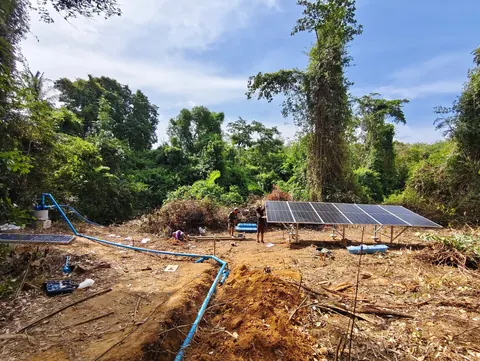
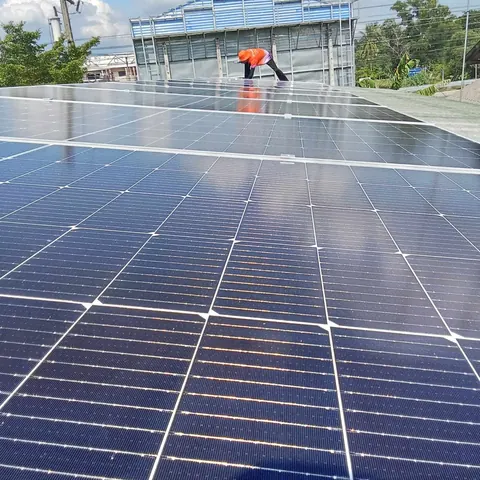
Installations on agricultural land and solar pump projects. See all projects
Read before you decide
- Solar Water Pumps for Rubber Plantations and Shrimp Ponds: How to ChoosePumps run during the day, exactly when panels produce power, and their timing is flexible — which makes them one of the most cost-effective uses of solar.
- Can Lightning Strike Solar Panels? The Protection You Need in Southern ThailandRooftop panels don't attract lightning the way many people fear, but surge damage from a nearby strike is real — and it can be prevented.
- Monthly Bill of THB 3,000, 5,000 or 10,000 — What Size Solar System Do You Need?The best-value size is not the largest your roof can hold — it is the size that matches the electricity you use during the day.