Solar for Shrimp Ponds, Fish Ponds & Aerators in Southern Thailand
Aerators have to run all night, but panels only generate in the daytime. We design the system to carry the daytime share of your bill while the aerators keep their night-time power exactly as before — with equipment built for the salt and humidity of pond sites.
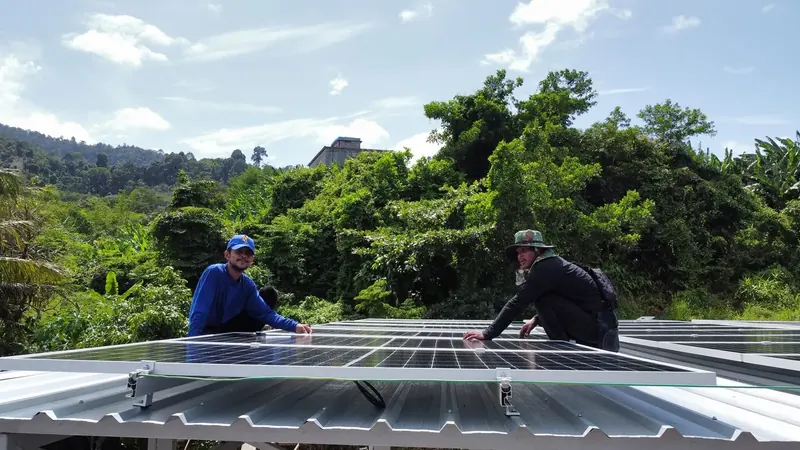
An example of work by the 19Energy team.
Understand this first
Solar for pond aerators helps only while the sun is up
Shrimp-pond aerators have to run at night, because dissolved oxygen is usually lowest from night to early morning — while solar panels only generate in daylight.
What solar genuinely does is carry the daytime load: the aerators already running, exchange pumps and freezers. The power is used the moment it is generated, with almost nothing wasted, and each unit is worth the grid price of around THB 4.20 per kWh.
At night, the aerators still run on grid power as before. We never design a system that leaves aerators depending on the sun alone.
If your farm's electricity rate is close to the assumption below, a system whose power is used immediately in the daytime usually pays back in the same range as other daytime businesses — around 4–7 years. Farms where most of the bill is at night will cut a smaller share of it.
Estimated at THB 4.20 per kWh and Southern Thailand sunshine (1,350 kWh per kWp per year, rainy season included). Actual payback depends on your bill and when you use electricity — we calculate it for your property before quoting. These payback figures are for on-grid systems without a battery.
Day and night
Paddlewheel aerators and air pumps
The main load on a shrimp pond, and it has to run at night, because dissolved oxygen is usually lowest from night to early morning. In the daytime, solar carries part of this load; at night it still comes from the grid.
Can move to daytime
Intake, exchange and top-up pumps
The best fit for solar, because pumping can be scheduled into strong-sun hours almost entirely.
Continuous
Freezers and ice makers
Used to store the harvest and keep it fresh. Compressors cycle all day and absorb daytime solar power well.
Night
Lighting and pond cameras
Small night loads that panels do not offset directly — usually the circuits put on backup if a hybrid system is installed.
System types
Three setups for three different jobs
Chosen from each farm's loads and risks.
The main option
On-grid, connected to your existing meter
Panels supply the aerators and pumps during the day; at night and in poor light, grid power takes over automatically as before. The aerators never depend on the sun, and no battery is needed.
Only if you need outage backup
Hybrid with battery, as backup power
Used to keep selected aerators running during a power cut — not to lower the bill, and it does not make the system pay back faster. Aerator loads are high, so a battery that lasts long is expensive; for outages of several hours a generator is often the more economical choice.
Daytime pumping only
Standalone solar pump, not grid-connected
Panels drive the pump directly: sun out, pump runs; sun gone, pump stops. It suits filling ponds far from a power line, but cannot run aerators that must work at night.
Who it suits
Shrimp farms, fish ponds and fish cages in the areas we serve
Districts where aquaculture is one of the main types of work, based on each area's local economy.
Pak Phanang
Shrimp farms, aquaculture ponds and cold storage — aerators, pumps and cold-room compressors that hardly ever stop.
Hua Sai
Rice fields next to aquaculture ponds: field pumps can move to daytime, but paddlewheel aerators must run overnight.
Chian Yai
The saltwater side of the Pak Phanang basin, where aquaculture ponds need aerators running continuously.
Pak Phayun
Small-scale fishing and cage fish farming on Songkhla Lake, with pumps, aerators and freezers.
Ranot
Pumps for rice fields and aquaculture ponds — loads that can be moved into sunny hours.
Kanchanadit
Solar in Surat Thani & Koh Samui
Oyster and shrimp farming on Bandon Bay, with pumps and aerators that run overnight.
Palian
Aquaculture ponds in the mangrove belt, with equipment that runs through the night.
Nuea Khlong
A coast with small-scale fishing and aquaculture ponds alongside palm-oil mills.
The same terms apply in every area: Site surveys are by appointment, and any travel charge is confirmed before booking.
Pond-specific design
What makes pond work different from a house roof
Motor starting current
Aerator and pump motors draw several times their running current when they start. On an on-grid system the grid covers this. A hybrid system running on battery during an outage needs an inverter rated for the surge, and the motors set to start one after another.
Salt air and constant humidity
Coastal and lakeside ponds face both salt and continuous humidity. We use corrosion-resistant structures and fixings, seal electrical connections properly, and choose control enclosures with a higher water and dust protection rating than inland jobs.
Wet ground and electrical safety
Pond banks are wet areas where people work every day. The system needs correct earthing and earth-leakage protection, with cables run in conduit and raised clear of water — never laid across the pond bank.
Foundations on soft soil and mud
River basins and mangrove areas have soft soil and a shallow water table. Ordinary concrete footings settle and tilt within a few years, so ground-mounted frames here need spread footings or short piles — a cost we show in the quote from the start.
Where panels and inverters go
The roofs of feed stores, pump houses or farm housing are usually the best places for panels. The inverter should be shaded, well ventilated and out of the spray thrown up by aerators.
Theft risk
Ponds far from the house are at risk of panel theft. Mounting should be hard to remove, and panels placed where they can be seen from the house or workers' quarters.
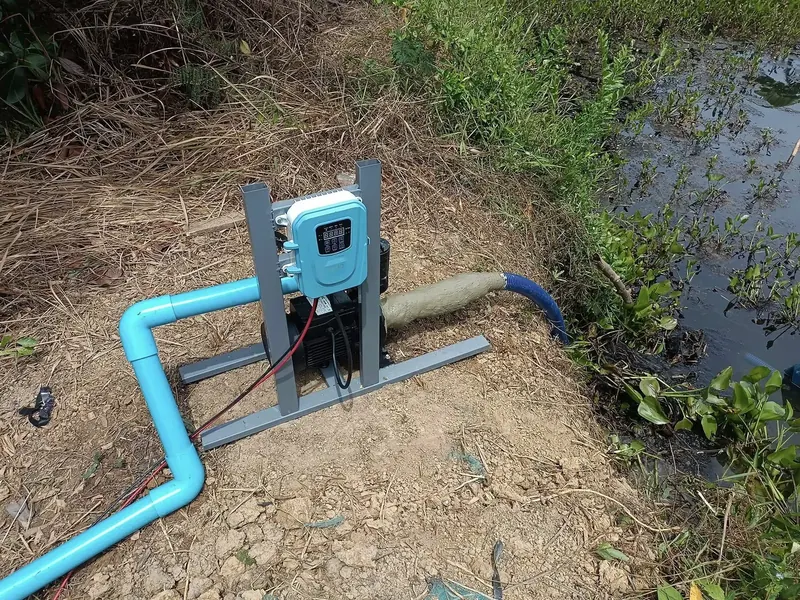
A pump wired straight to the panels suits daytime pumping. Ponds that need aeration 24 hours a day need a system that still has power at night — not one that works only in sunshine.
System sizes
Starting sizes for farms and ponds
We don't publish prices. The right size is calculated from your farm's daytime consumption, not the whole monthly bill. Larger farms get a custom design.
10 kW
single-phase or three-phase · 16 panels
Large homes, pool villas, shops and daytime businesses
- Output per year
- ~13,500 kWh
- Panel area
- ~45 m²
15 kW
three-phase · 24 panels
Small factories, hotels and commercial buildings
- Output per year
- ~20,250 kWh
- Panel area
- ~68 m²
20 kW
three-phase · 32 panels
Factories, cold storage and buildings with heavy all-day loads
- Output per year
- ~27,000 kWh
- Panel area
- ~90 m²
Output is estimated from Southern Thailand sunshine of 1,350 kWh per kWp per year, rainy season included. Systems of 15 kW and above need a three-phase supply; single-phase farms can start smaller.
Equipment and warranty
Named brands you can check, and a warranty for each component
Equipment we use
- Solar panels
- JA Solar, LONGi or Jinko Solar · N-type TOPCon, dual-glass, 620–630 W per panel
- Inverters
- HUAWEI, Solis or Deye · On-grid and hybrid inverters with a monitoring app so you can check your generation history yourself
- Batteries (hybrid systems only)
- LVTopsun or Sunwoda · LiFePO4 lithium batteries for hybrid systems, sized to your night-time consumption
The exact brand and model are written into your quote before you sign anything.
Warranty by component
Solar panels — product warranty
Set by each panel manufacturer for the brand and model you choose, stated in your quote
Solar panels — power output warranty
Set by each panel manufacturer for the brand and model you choose, stated in your quote
Inverter
Most major brands give 10 years, and it can be extended
Installation and mounting work by 19Energy
2 years · 19Energy's own technicians handle every job
Aftercare for the first 2 years
- Panel cleaning once a year
- Annual system health check
- A check of your building's wiring while we are there
Included in the installation price. We schedule each visit and contact you 14 days ahead. Coastal farms should clean more often than this — see panel cleaning.
Getting started
What to have ready before you contact us
- 12 months of electricity bills, to see stocking periods versus fallow periods
- The number of aerators and pumps, with the power rating from each motor's nameplate
- When each one runs — how many hours by day and how many by night
- Where the ponds and farm buildings are, and where panels could go
A first estimate from your electricity bill is free — just send a photo of the bill on LINE. Photos of the motor nameplates help too.
Site survey fee THB 1,200–1,500
For sites within 100 km, refunded in full against your quote when you go ahead with the installation.
Why there is a fee
It covers fuel, a technician's full day away from installation work, and the time to measure, calculate and write up your report.
Site surveys by appointment
Any travel charge is confirmed before booking
PEA permit paperwork
For grid-connected systems we handle the application. See the process
FAQ
What pond and fish-farm owners ask us most
Our aerators run at night. Is solar still worth it?
For the daytime part, yes. Aerators running day and night use the daytime solar output immediately, with almost nothing left over, so the daytime part of the bill really does fall. The night-time part stays the same. The result depends on how your farm's use splits between day and night, so we calculate it from your bills and the actual running hours of your equipment before quoting.
Can solar run the aerators on its own, without the grid?
We don't recommend it for ponds that need aeration 24 hours a day. Panels only generate in sunlight, and relying on batteries alone through the night needs a very large battery and is still risky during several days of continuous rain. The right system stays connected to the grid or has another backup source.
We worry about a night-time power cut starving the shrimp of oxygen. Will a battery help?
It helps as backup power, with the battery set to keep only the most essential aerators running — not the whole farm. But a battery adds a lot to the investment and does not cut the bill any further. If you are worried about outages lasting several hours, a backup generator is often more economical. We give you both options to compare before you decide.
Our ponds are far from the house with no power line. What can we do?
If you only need to pump water into ponds during the day, a solar pump set with the panels wired straight to the pump often costs less than running a power line out, and needs no new meter. But it cannot run aerators at night; for that you need grid power or a backup source at the pond.
We have many motors. Can the system handle their starting current?
An on-grid system can, because the grid keeps supplying whatever the panels do not. This matters for a hybrid system running on battery during an outage: the inverter has to be sized for the starting current, not the running power, and the motors should be set to start one after another.
Do we need permission from the electricity authority?
Any system connected to the grid — on-grid or hybrid — has to be approved by the Provincial Electricity Authority (PEA) through the normal process, and we handle the paperwork. A solar pump set that is not connected to the PEA's lines at all does not need a grid-connection application.
Coastal ponds get salt air all the time. Will the equipment last?
That depends on choosing materials at the design stage. We use corrosion-resistant structures and fixings, seal the connections, and keep the inverter shaded and out of spray. Panels should also be cleaned regularly, because salt deposits stick harder and block more light than ordinary dust.
Let us calculate how much your farm can save
Send your electricity bills and a list of your aerators and pumps. We will show which part of the bill panels can cut and which part still needs grid power, with assumptions you can check.
Our team replies in English — on LINE, by email or by phone. Sending a photo of your electricity bill and your location on LINE is the quickest way to get an estimate.
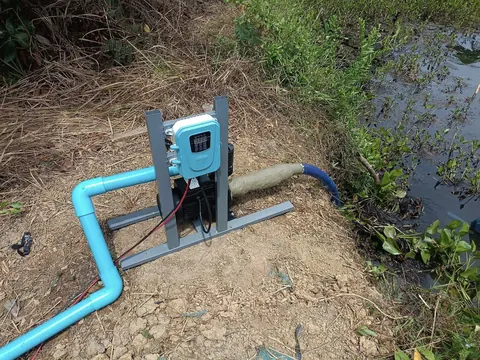
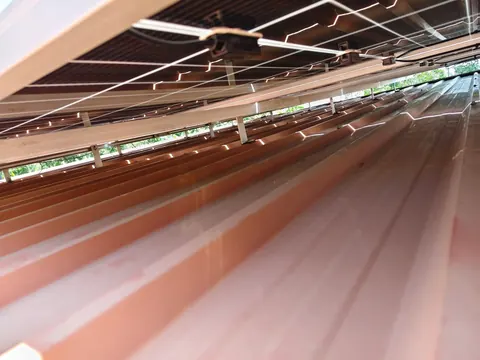
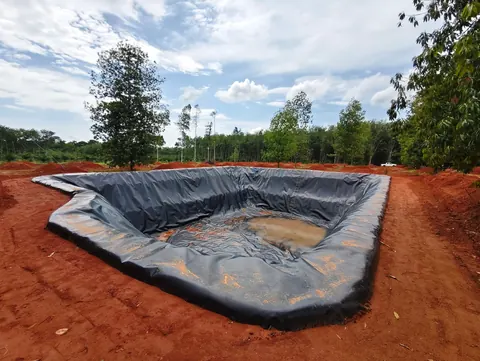
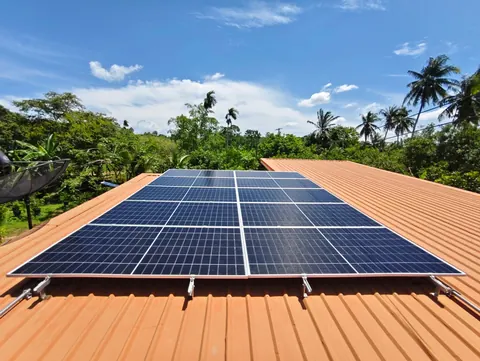
Examples of farm and water-pump work we have installed See all projects
Read before you decide
- Solar Water Pumps for Rubber Plantations and Shrimp Ponds: How to ChoosePumps run during the day, exactly when panels produce power, and their timing is flexible — which makes them one of the most cost-effective uses of solar.
- On-Grid, Off-Grid or Hybrid Solar: What's the Difference and Which Suits You?The difference comes down to whether the system connects to the utility grid and whether it can store power — which changes both the price and the value.
- Solar vs a Generator: Which One Keeps the Power On?The two do different jobs. Solar cuts your electricity bill every day but doesn't back you up on its own; a generator covers outages but needs fuel the whole time. The right answer usually depends on how often the power goes out, and for how long.