Solar for Dormitories, Apartments & Homestays in Southern Thailand
Accommodation uses most of its power at night, when panels don't generate. The value lies in the daytime power the owner pays for, so we design from that — not from the whole building's bill.
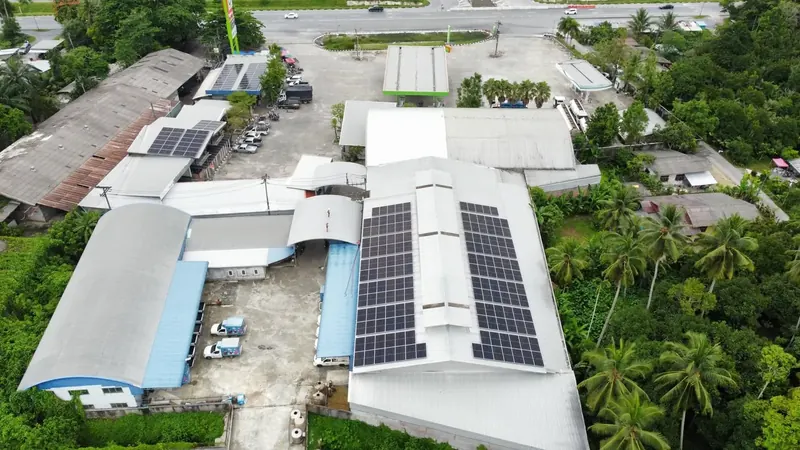
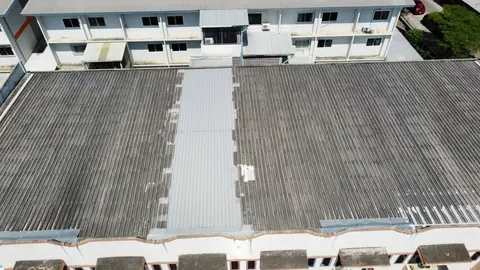
A building rooftop installed by our own team.
How accommodation uses power
Most of it is used when the panels aren't generating
In dormitories let to students or working people, rooms are often empty during the day and use most power from evening to night. Homestays are similar: guests tend to go out in the day and switch the air-con on when they come back at night.
What suits solar is the daytime load the owner pays for — water pumps, common-area air-con, washing guest linen, the kitchen, and the owner's own flat or office. These common-area costs are fixed and fall on the owner every month, whether the rooms are full or not.
If the owner's daytime load is small, a small system — or no system yet — may be the right answer. We review the bill before proposing any size.
Who pays for what, and when it's used
| Load | Heaviest use | Solar fit |
|---|---|---|
| Room air-con and lighting | Evening to night | Low |
| Corridor and outdoor lights | Night | None |
| Water pumps, common air-con | All day | Good |
| Laundry, kitchen, owner's rooms | Daytime | Good |
Accommodation that uses power mainly at night has a payback close to the 6–10 years of homes; places with more daytime load move toward the 4–7 years of businesses. Estimated at THB 4.20 per kWh and Southern Thailand sunshine (1,350 kWh per kWp per year, rainy season included). Actual payback depends on your bill and when you use electricity — we calculate it for your property before quoting.
Who it suits
Dormitories, apartments, small guesthouses and homestays
Student dormitories
Common-area power such as pumps and shared air-con is the owner's cost, and concrete decks can be covered with panels.
Apartments
Multi-story buildings with roof decks — a good fit when the owner has daytime load in the building, such as an office or their own flat.
Small guesthouses
Air-con and pumps run continuously and the business can't close, so power cuts for the works have to be planned around guests.
Homestays
Garden or island properties with frequent power cuts, where backup often matters more than cutting the bill to the minimum.
Districts with this kind of accommodation
Tha Sala, Nakhon Si Thammarat
Home to Walailak University, with dense dormitories and apartments. Common-area power is a fixed cost for owners; most buildings have concrete decks whose waterproofing must be checked before drilling.
Solar in Nakhon Si ThammaratPa Phayom, Phatthalung
Home to Thaksin University's Phatthalung campus, with dormitories around it. Close to the Banthat range, so the ridge can cut off morning or evening sun early.
Solar in PhatthalungLamae, Chumphon
Home to Maejo University Chumphon, with small guesthouses along the coast.
Solar in ChumphonLan Saka, Nakhon Si Thammarat
Small guesthouses and homestays at the foot of Khao Luang. High humidity lets moss build up on panels quickly, so they must drain freely and be easy to reach for cleaning.
Solar in Nakhon Si ThammaratChaiya, Surat Thani & Koh Samui
Small guesthouses for meditation visitors and travelers. Coconut fronds cast moving strips of shade across roofs, so string layout matters.
Solar in Surat Thani & Koh SamuiKoh Yao, Phang Nga & Khao Lak
Mostly small island guesthouses, where keeping the power on while guests stay matters more than cutting the bill. A small hybrid system covering only essential circuits usually fits better.
Solar in Koh YaoMueang Krabi (Ao Nang), Krabi
Accommodation from hotels to small town guesthouses, running air-con and water pumps continuously and unable to close for works.
Solar in Mueang Krabi (Ao Nang)Mueang Songkhla, Songkhla
Small guesthouses in the old town, where many older buildings have limits on roof alterations that must be checked building by building.
Solar in Mueang SongkhlaLa Ngu, Satun
Many guesthouses around Pak Bara pier close for long stretches in the monsoon — a good window for installation that affects no guests, but it needs booking ahead.
Solar in Satun
We serve 13 provinces in Southern Thailand. Site surveys are by appointment, and any travel charge is confirmed before booking. See all service areas
Design points
What to settle before installing on accommodation
Separate the owner's power from tenants' power
Before sizing, we check which meter belongs to whom and which meter the common-area loads run through. The system should connect to the meter with the most daytime load.
Concrete decks: check waterproofing before drilling
A deck whose waterproofing has already failed will leak after installation, and the cause is hard to pin down. Top-floor rooms with tenants are the first to suffer.
Solar on concrete roofsBackup for essential circuits only
Where power cuts are common, backing up the whole building takes a very large battery. Choosing only lighting, the water pump and fridges keeps the system smaller and better value.
Hybrid systems and batteriesShade from trees and hills
Many small guesthouses sit in gardens or at the foot of hills. Tree and ridge shade make real sun hours differ from the provincial average, so shade is checked on site.
Access for cleaning
Humid sites and sites near trees get dirt and moss on panels quickly. The layout leaves room for water to drain and for someone to get up and clean.
Power cuts booked in advance
Connecting the main switchboard and changing the meter need a short power cut. We book it ahead so you can notify tenants or guests, at the least disruptive time.
Tax and accounting
If the business buys the system
Tax invoices and withholding tax
- 19Energy is a VAT-registered company and issues full tax invoices in your business's name.
- 3% withholding tax works as normal for corporate clients.
- Every quote states whether prices are before or after VAT.
1.5x deduction on equipment cost
Under Royal Decree No. 805 of 2026, which runs until the end of 2028, companies and people with business income can deduct 1.5 times the equipment cost as an expense. Only the equipment counts — installation labor is not included — and these conditions apply:
- The equipment must be new and never used before
- The equipment must carry the No. 5 energy-efficiency label as specified by the authorities
- It cannot be claimed on top of other investment-promotion measures
Confirm with your accountant how this applies to you before deciding. Read the full 2026 solar tax deduction rules
System sizes
Common sizes for dormitories and guesthouses
We don't publish prices, because the real cost depends on the roof type, structure and cable runs. We quote after the site survey.
5 kW
8 panels · about 23 m² of roof · single-phase or three-phase
Homes with a bill of roughly THB 3,000–5,000 a month
Homes where someone is in during the day or the air-con runs in the afternoon. The most cost-effective starting size for a house, and it works on an existing single-phase supply without changing the meter.
5 kW system details10 kW
16 panels · about 45 m² of roof · single-phase or three-phase
Large homes, pool villas, shops and daytime businesses
Shops, offices, pool villas and large homes that use power steadily through the day. The best return per baht invested. Single-phase homes can take it if the meter allows — we check the meter size first.
10 kW system details15 kW
24 panels · about 68 m² of roof · three-phase
Small factories, hotels and commercial buildings
Businesses that run all day use almost every unit the moment it is generated, so they pay back noticeably faster than homes.
15 kW system detailsThe right size for accommodation is often smaller than the total bill suggests, because it is based on the daytime load the owner pays for. How to choose a size from your bill
Equipment and warranty
Named brands you can check, warranties listed by component
Equipment we install
- Solar panels: JA Solar, LONGi or Jinko Solar · N-type TOPCon, dual-glass, 620–630 W per panel
- Inverters: HUAWEI, Solis or Deye · On-grid and hybrid inverters with a monitoring app so you can check your generation history yourself
- Batteries (hybrid systems): LVTopsun or Sunwoda · LiFePO4 lithium batteries for hybrid systems, sized to your night-time consumption
The exact brand and model are written into your quote before you sign anything.
Warranty by component
Solar panels — product warranty
Set by each panel manufacturer for the brand and model you choose, stated in your quote
Solar panels — power output warranty
Set by each panel manufacturer for the brand and model you choose, stated in your quote
Inverter
Most major brands give 10 years, and it can be extended
Installation and mounting work by 19Energy
2 years · 19Energy's own technicians handle every job
Manufacturer warranties follow the documents for the exact model installed. See warranty terms by brand
2 years of free aftercare
- Panel cleaning once a year
- Annual system health check
- A check of your building's wiring while we are there
We contact you 14 days ahead of each visit, so you have time to let tenants or guests know. Panel cleaning service
Bill review first, then the site survey
- A first estimate from your electricity bill is free — just send a photo of the bill on LINE. Tell us which bills are for the common-area and owner meters.
- The on-site survey costs THB 1,200–1,500 for sites within 100 km, and it is refunded in full against your quote when you go ahead with the installation. It covers fuel, a technician's full day away from installation work, and the time to measure, calculate and write up your report.
- Site surveys are by appointment, and any travel charge is confirmed before booking.
If you don't own the building — for example, you lease it to run a guesthouse — the building owner must agree first. Who you need permission from
FAQ
Questions from dormitory, apartment and homestay owners
Tenants pay for their own room meters. Who benefits from solar?
It depends on whose meter the rooms are connected through. If each room has its own PEA meter, a rooftop system connected to the common-area meter only reduces the common-area power the owner pays for. If all rooms run through the owner's main meter and are billed by sub-meter, the solar output reduces the main meter reading. How electricity is charged to tenants is a matter for your lease and the rules that apply to your business, and we don't advise on that part. We work out the value from the power the owner pays for.
Is solar worth it for a dormitory when tenants use power at night?
Counting room power alone, it is usually less worthwhile than for a daytime business, because rooms use most power from evening to night when panels don't generate. The value lies in daytime loads the owner pays for — water pumps, common-area air-con, owner-run laundry machines, and the owner's own flat or office. Accommodation that uses power mainly at night has a payback closer to the 6–10 years of homes than the roughly 4–7 years of daytime businesses. If daytime load is low, a small system is better value, or installing may not pay yet — which shows up at the bill-review stage.
Can panels go on an apartment's roof deck?
Yes. Most multi-story apartments have a concrete deck that carries weight better than a tiled roof and can be covered fully. The waterproofing must be checked before any drilling, and space has to be left for water tanks, pumps and maintenance walkways.
Should a homestay go on-grid or hybrid?
If the main aim is the bill and the homestay uses a fair amount of power in the daytime, on-grid is better value. If power cuts are frequent and the lights must stay on while guests are staying, a hybrid system with a battery designed to supply only essential circuits — lighting, water pump, fridge — usually suits better than backing up the whole building.
Can accommodation sell surplus power back to the grid?
It depends on the meter type. The rooftop buy-back scheme is open only to residential meters. If your accommodation is on a business meter, the system has to be designed to use all of its power on site, with equipment that prevents power flowing back into the grid as the Provincial Electricity Authority (PEA) requires.
Can you install while tenants or guests are staying?
Yes. Roof work does not require anyone to move out. Power is cut briefly only while we connect to the main switchboard and when the meter is changed, and we book those times in advance so you can tell tenants or guests. Places that close in the low season can use that period for installation.
Can you invoice the business?
Yes. 19Energy is VAT-registered, issues full tax invoices and supports 3% withholding tax for corporate clients. If the system is bought by the business, Royal Decree No. 805 of 2026 lets companies and people with business income deduct 1.5 times the equipment cost as an expense, excluding installation labor, under the conditions above. Confirm with your accountant.
Estimated at THB 4.20 per kWh and Southern Thailand sunshine (1,350 kWh per kWp per year, rainy season included). Actual payback depends on your bill and when you use electricity — we calculate it for your property before quoting.
Send us your bill for a first estimate
Send the bill for the meter the owner pays, and tell us how the rooms are metered. We will size the system from the owner's daytime load, with the assumptions laid out for you to check.
Our team replies in English — on LINE, by email or by phone. Sending a photo of your electricity bill and your location on LINE is the quickest way to get an estimate.
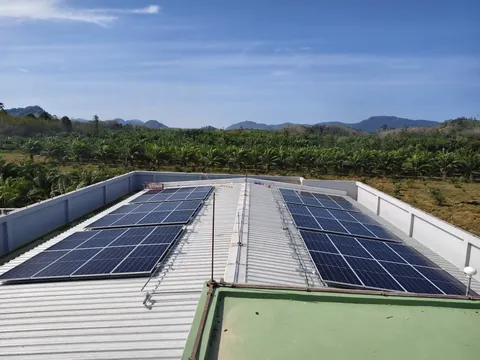
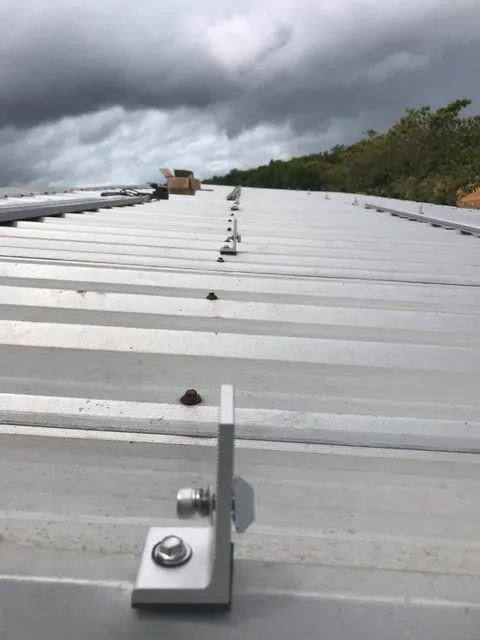
Factory and commercial projects installed by our own team. See all projects
Read before you decide
- Solar in a Housing Estate or Condo: Do You Need the Juristic Person's Approval?Before you choose a system size, find out who owns the roof. Detached houses, townhouses, condos and rented homes each need agreement from different people.
- Is Solar With a Battery Worth It in Areas With Frequent Power Cuts?A battery doesn't always save you more on electricity. What it really buys you is peace of mind during power cuts — and you have to judge whether that is worth the price.
- Monthly Bill of THB 3,000, 5,000 or 10,000 — What Size Solar System Do You Need?The best-value size is not the largest your roof can hold — it is the size that matches the electricity you use during the day.