Solar Panels on Tile Roofs
On a tile roof, the panels aren't fixed to the tiles at all — hooks are fixed to the rafters underneath. So the challenge here isn't screw-hole leaks as on metal sheet roofs, but cracked tiles.
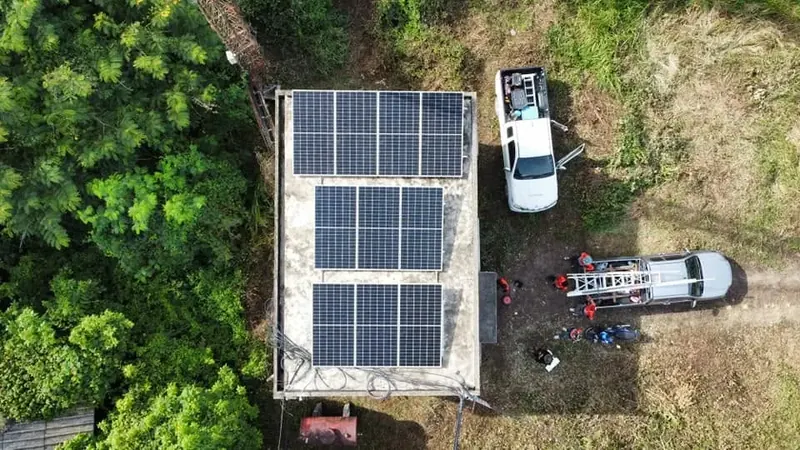
Work on a residential roof by our team
The correct mounting method
The weight goes on the rafters, not the tiles
Our method is to lift the tile out, fix a hook to the rafter, then put the tile back, with the hook coming out through the gap between tiles.
All of the panels' weight is transferred straight to the roof frame. The tiles don't carry a single kilogram of it.
Drilling straight through a tile and screwing it down can cause leaks, so the tiles themselves are never drilled.
How we work on a tile roof, step by step
- 1
Lay load-spreading boards before starting
The installers walk on boards instead of stepping on the tiles directly, and only along lines supported by rafters.
- 2
Lift only the tiles at the fixing points
We don't strip the whole roof — only the tiles over the rafter positions we calculated.
- 3
Fix the hooks to the rafters and add flashing
Where each hook passes through, waterproof flashing goes under the tile, because wind-driven rain can get in.
- 4
Put the tiles back in their original overlap
They must overlap in the right order with the water flow, not against it.
- 5
Fit the rails and mount the panels
Rails attach to the hooks and panels to the rails, leaving the ventilation gap under the panels that the manufacturer specifies.
Tile types
Three kinds of tile found on homes in Southern Thailand
The tile type decides both how long the work takes and the level of risk. We tell you which group your house falls into at the site survey.
Corrugated fiber-cement tiles
The most common type on homes in Southern Thailand, and the easiest to work with. Standard hooks fit as they are, and the tiles can be lifted out and put back without notching — as long as they haven't become too brittle.
Flat concrete tiles
Thicker and stronger than corrugated tiles, but some models have to be notched on the underside so the hook can pass through while the tile still sits flat. That needs cutting tools and takes longer.
Clay tiles and old-style diamond tiles
The most brittle and the hardest to replace. Many older houses use tiles that are no longer made, so a broken one can't be replaced with an identical tile. In this case we talk the risks through clearly before taking on the job.
We don't promise that no tile will crack, because tiles that have been through years of sun and rain are more brittle than they look. What we do promise is to have spare tiles ready and replace any tile our work breaks at no extra charge.
Checked before we quote
We inspect from under the roof, not just from above
Because the hooks are fixed straight into the rafters, the condition of the timber or steel under the tiles matters even more than the condition of the tiles you can see from above.
Condition of the rafters and battens
Old timber rafters or ones with termite damage may not have the strength to hold the screws. They have to be reinforced or replaced first.
Rafter spacing
Hook positions are set by the rafters, not by where you'd like the panels to go, so the rafter spacing decides the whole layout.
Whether matching tiles can be found
If the model is discontinued, spare tiles have to be found before work starts — or a ground-mounted frame considered instead.
Which way each roof face points
Gable roofs can often take panels on both sides. The east side generates in the morning and the west in the afternoon, which together suit household use better than packing everything on one side.
Houses in Southern Thailand shaded by large trees often have moss on the tiles. It makes the roof very slippery to work on, and it also shows that those tiles stay damp all the time, so they are more brittle than the rest of the same roof.
FAQ
The questions we hear most about tile roofs
Do you have to drill through the tiles to install solar?
No, the tiles are not drilled. Our method is to lift that tile out, screw a hook into the rafter or timber batten underneath, and put the tile back, with the hook coming out through the gap between tiles. All the weight goes onto the roof structure, none onto the tiles. Drilling straight through a tile and screwing it down can cause leaks.
Will tiles crack when the installers are on the roof?
There is always a chance, especially with tiles that have become brittle after years of sun and rain. We reduce the risk by laying load-spreading boards as walkways instead of stepping on the tiles directly, and by walking only along lines supported by rafters. But we don't promise that nothing will crack. What we do promise is to have spare tiles ready and replace any tile our work breaks at no extra charge.
My house uses an old tile model that's no longer made. What then?
We need to talk it through before taking on the job. If identical tiles can't be found, the risk is much higher than usual, because any broken tile has to be replaced with a different model that will visibly stand out. We recommend finding spare tiles locally before work starts. If that really isn't possible, consider putting the panels on a ground-mounted frame on your property instead — in some cases that's better value and carries no roof risk at all.
Can a tile roof take the weight of the panels?
The roof frame carries the weight, not the tiles. Panels plus mounting weigh around 12 to 15 kg per square meter, which a typical house roof frame can take. But houses with old timber rafters or signs of termites need checking first, because the hooks are fixed directly into the rafters — if the wood has lost its strength, they won't hold. We always inspect from under the roof too, not just from above.
Is flashing needed around the hooks?
Yes. Even though the hooks come out through the gaps between tiles without any drilling, the point where each hook passes through is still a gap that wind-driven rain can get into — and that happens often in Southern Thailand. So we fit waterproof flashing under the tiles around each fixing point, and check that every tile we put back overlaps in the original order, not against the direction of water flow.
Our gable roof faces two directions. Which side should the panels go on?
The south-facing side gets the most sun, followed by west and east, with north getting the least. In practice we often use both sides of the gable if the better side doesn't have enough space. The east side generates in the morning and the west side in the afternoon, which together give a wider generation curve that suits household use better than packing all the panels onto one side.
Do you warranty against leaks and cracked tiles?
Our installation work carries a 2-year warranty, which covers leaks at the fixing points we make and tiles broken by our work. It doesn't cover leaks from tiles that were already cracked, or from gutters that have deteriorated. That's why we photograph the condition of the roof before every job starts, so both sides have the same record of what was there beforehand.
Other roof types
Other roofs are mounted differently
Mounting method, leak risk and the checks needed beforehand all change with the roof type.
Send us photos of your roof first
Two or three clear shots of the tiles are enough for us to tell you what type they are, whether the job is straightforward or difficult, and whether finding replacement tiles could be a problem.
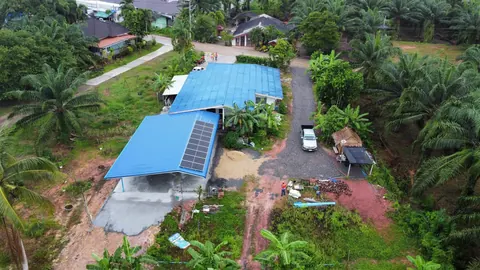
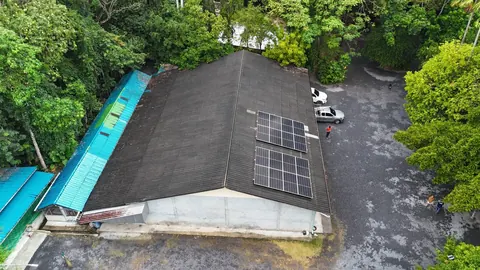
Installations on residential roofs from real projects. See all projects
Read before you decide
- Will Solar Panels Make My Roof Leak? Installation Methods That Protect Your RoofIt is homeowners' number-one worry, and a reasonable one: drill points that are not sealed correctly really can cause leaks.
- How Long Does Solar Installation Take, From Signing to Switching On?The installation itself takes only a few days, but the paperwork with the utility takes months. Many people assume the system can be used as soon as it's installed.
- 7 Things to Check Before Choosing a Solar Installer in Southern ThailandThe cheapest price is not necessarily the best value, and the most expensive is not necessarily the best. Here is what to look at instead.