Solar Panels on Metal Sheet Roofs
The real question with a metal sheet roof isn't whether solar can go on it — it's how to mount it so it doesn't leak and lasts the life of the system. The answer depends on the sheet profile and the condition of the existing roof.
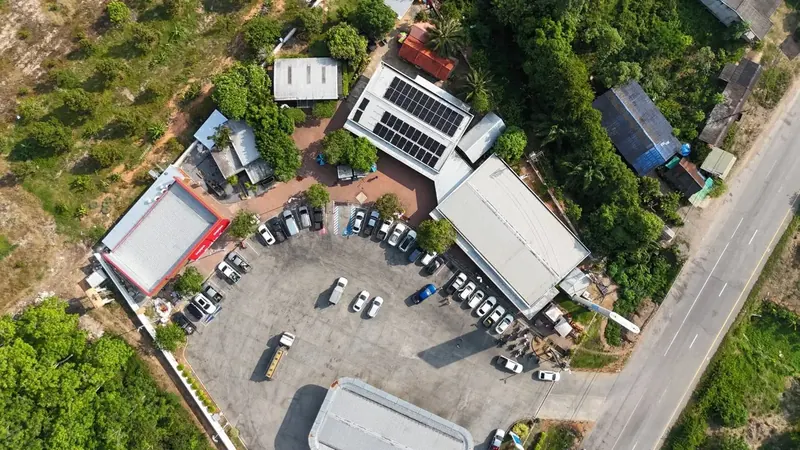
Work on a wide-span metal sheet roof by our team
Mounting methods
There are three ways to mount it. We use two.
The roof's sheet profile decides which method can be used — not price or speed.
Seam clamps for standing-seam roofs
Roofs with interlocking standing seams can take clamps that grip the seam directly, without drilling a single hole in the sheet, so the installation adds no leak risk. If your roof is this type, it's the best method.
Screws into the purlins with EPDM seals
Ordinary corrugated and trapezoidal sheet roofs have to be drilled through, with screws driven into the steel purlins. The fixing points must always be on the ribs — never in the valleys where the water runs — using screws with built-in rubber seals and a layer of sealant on top.
Fixing to the roof sheet only, not the purlins
This is quicker because nobody has to locate the purlins, but a 0.35 to 0.5 mm metal sheet can't resist the uplift from wind. In strong wind the sheet tears around the screw holes and leaks permanently. We don't use this method.
Any method that drills through the sheet carries some leak risk. We keep that risk as low as possible and tell you exactly where it lies.
Checked before we quote
Four things we need to know before choosing fixing points
None of these can be judged from aerial images or photos you send us. Someone has to go up, look and measure — which is one of the reasons the site survey carries a fee.
The sheet profile
Corrugated, trapezoidal or standing-seam (clip-lock) — each of the three uses a completely different set of fixings.
Purlin position and spacing
Fixings must always go into the purlins. If they are further apart than the mounting system allows, extra purlins have to be added or the rail layout changed.
The condition of the existing screw holes
Sheets rusted around the old screws have to be repaired first. Drilling more holes in corroded sheets will leak no matter how well it is sealed.
How much extra load the building can take
Older wide-span buildings were usually designed for the original roof load only. An engineer has to calculate and certify it.
Metal sheet roofs on the coast of Southern Thailand deteriorate much faster than inland, because salt air corrodes both the sheets and the original screws. On seaside sites we inspect the sheets more closely than usual.
FAQ
The questions we hear most about metal sheet roofs
Will my metal sheet roof leak after solar is installed?
Every method that drills through the sheet carries some risk. What we do is keep the risk as low as possible: fixing on the ribs, not the valleys; using screws with built-in EPDM rubber seals; adding a layer of sealant on top; and always fixing into the steel purlins. If your roof is a standing-seam type, we use seam clamps, which need no drilling at all.
My roof is old and rusting around the existing screws. Can you still install?
In that case the roof has to be repaired or replaced first. Drilling more holes in sheets that are already corroded will leak no matter how well it is sealed, because the steel around the holes has no strength left to hold a screw. We tell you at the site survey that this is a cost to plan for before installation, so the roof under the panels starts out sound.
The sheet is only 0.35 mm thick. Can it carry the panels?
The sheet isn't what carries the weight — the steel purlins underneath do. That's why we locate the purlins and measure their spacing before deciding on the fixing points. If the purlins are further apart than the mounting system needs, extra purlins have to be added or the rail layout changed. Sheet thickness matters because thin sheets dent when walked on, so we use load-spreading boards while working on the roof.
What needs checking on older warehouse and factory roofs?
The structure has to be checked every time. Older wide-span buildings were usually designed to carry only the original roof and wind loads, with no allowance for panels. Panels plus mounting weigh around 12 to 15 kg per square meter, which most buildings can take, but we don't judge it by eye. An engineer has to calculate and certify it, because that certificate is also needed for the permit application.
Metal sheet heats up and expands. Will the rails work loose?
It's a real effect that has to be designed for. Long metal sheets can expand and contract by several millimeters with temperature. If the rails are locked tight at every point with no allowance for movement, the stress builds up at the fixings until they loosen or the screw holes widen. So we leave clearances and use fixings that allow movement as the rail manufacturer specifies, rather than tightening every single one solid.
Dark metal roofs get hotter. Will the panels produce less power?
There is some effect. Solar panels produce less power as their temperature rises, and metal sheet roofs hold more heat than tiles. But the real impact is smaller than many people fear, because we leave an air gap under the panels so the breeze can carry the heat away. That gap is part of any correct installation anyway — panels should never be laid flat against the roof sheet.
Do you warranty against leaks caused by the installation?
Our installation work carries a 2-year warranty, which covers leaks from the fixing points we make. It doesn't cover leaks from the roof's existing screw holes or from sheets that were already corroded. That's why we photograph the condition of the roof before every job starts, so both sides have the same record of what was there beforehand.
Other roof types
Other roofs are mounted differently
Mounting method, leak risk and the checks needed beforehand all change with the roof type.
Send us photos of your roof first
Take two or three clear shots of the sheet profile and the existing screws. From those we can tell you which mounting method your roof needs, and whether anything has to be repaired first.
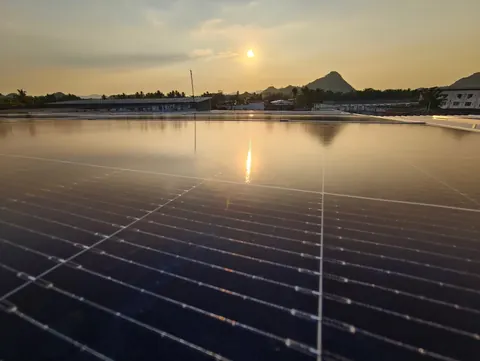
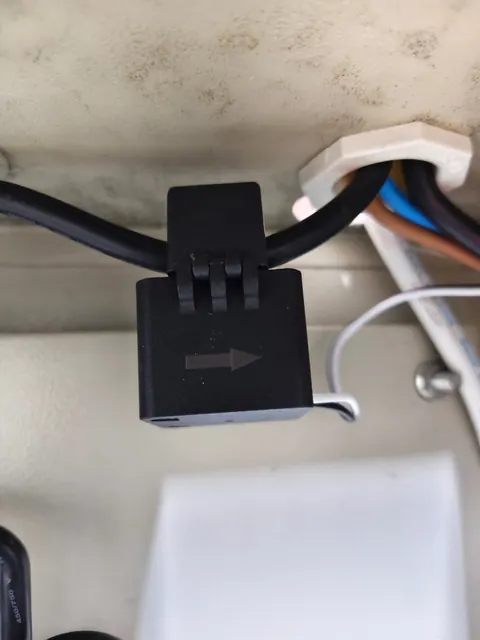
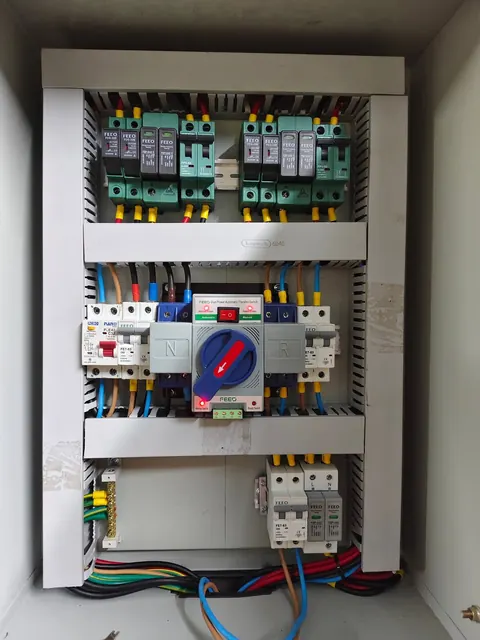
Mounting rails, connections and roof cabling from real projects. See all projects
Read before you decide
- Will Solar Panels Make My Roof Leak? Installation Methods That Protect Your RoofIt is homeowners' number-one worry, and a reasonable one: drill points that are not sealed correctly really can cause leaks.
- How Long Does Solar Installation Take, From Signing to Switching On?The installation itself takes only a few days, but the paperwork with the utility takes months. Many people assume the system can be used as soon as it's installed.
- 7 Things to Check Before Choosing a Solar Installer in Southern ThailandThe cheapest price is not necessarily the best value, and the most expensive is not necessarily the best. Here is what to look at instead.