Solar for Petrol Stations in Southern Thailand
For petrol and gas stations in 10 southern provinces. The convenience store, café and car wash use most of their power in the daytime, when panels generate the most — and every piece of electrical equipment is placed outside the hazardous areas around the pumps and fuel tanks.
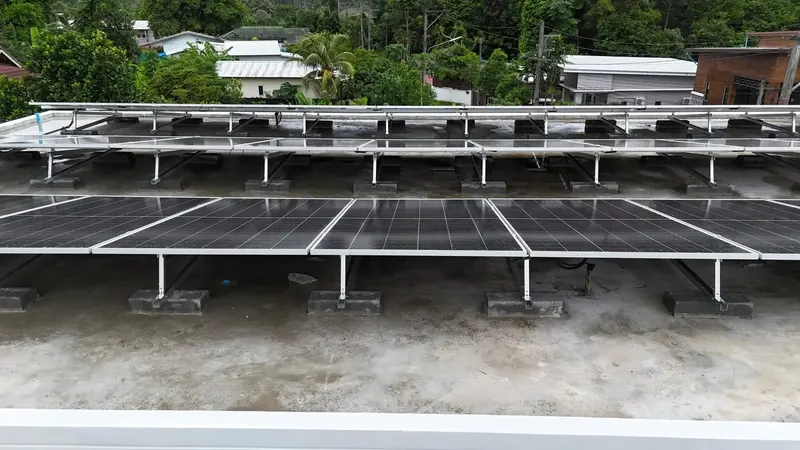
Illustration: a commercial rooftop installed by our own team.
How the station uses power
Petrol station solar covers the daytime share
Petrol stations keep longer hours than most businesses, and many stay open late or around the clock. Daytime loads are the forecourt convenience store's fridges and air-con, the fuel dispensing system, the café, the car wash and the station office. Solar panels generate from roughly 8 a.m. to 5 p.m., so this power is used the moment it is made, and every unit is worth the full electricity rate of around THB 4.20 per kWh.
Canopy and sign lighting mostly runs at night and stays on the grid unless you add a battery — which we offer as backup for circuits you cannot lose, not as a way to cut the bill. The right system size therefore comes from real daytime use, not the bill total.
A petrol station's power use through the day
| When | Power use | Solar output |
|---|---|---|
| Daytime | Store fridges and air-con, café, car wash, dispensing system, office | Highest |
| Evening | Forecourt and sign lighting comes on; the store is still open | Falling to zero |
| Night | Lighting and fridges; 24-hour stations keep drawing power | None |
Businesses that use most of their power in the daytime pay back in around 4–7 years. Estimated at THB 4.20 per kWh and Southern Thailand sunshine (1,350 kWh per kWp per year, rainy season included). Actual payback depends on your bill and when you use electricity — we calculate it for your property before quoting.
Safety
Safety at petrol stations: electrical equipment stays outside hazardous areas
Fuel vapor may be present around the dispensers, tank fill points and tank vent pipes, so any equipment that could spark must be kept out of those areas.
What we set in every design
- Inverters and control panels are installed outside the hazardous areas around the dispensers, tank fill points and tank vent pipes
- Combiner boxes and DC isolators are placed outside the hazardous areas, where they are easy to reach
- Cable routes avoid the hazardous areas and stay clear of vehicle lanes
- Design follows the applicable electrical and safety standards and the station's own requirements
- Work that can throw sparks, such as cutting or grinding steel, is planned to take place outside the hazardous areas
What the station owner should check first
The extent of the hazardous areas depends on each station's layout, tank positions and fuel types, so it is set from the actual site and the station's own documents.
- Your contract and conditions with the fuel brand or franchisor on electrical work and building alterations
- The requirements of the authorities that license service stations
- Existing station drawings and site plans, used to fix equipment positions
We provide drawings, an equipment list and installation positions for you to use when seeking approval.
Who it suits
Solar for petrol stations, forecourt stores and gas stations
Stations with shops and services that use a lot of power in the daytime benefit most. Stations whose heaviest use is at night need looking at case by case.
Highway stations
Often open late or 24 hours, with a convenience store, café and restrooms. Daytime store load is high, and the station buildings' roofs are the main place for panels.
Town stations
Limited site space and smaller building roofs. System size depends on the roof area that actually gets sun and on shade from neighboring buildings.
Small community stations
The main loads are the dispensing system, lighting and a small office. If daytime use is low, the bill needs checking first to see whether solar pays.
LPG and NGV stations
Gas stations also have hazardous areas around the dispensers and storage tanks, and equipment placement follows the same principles. Size is set from the station's daytime load.
Provinces we serve
- Nakhon Si Thammarat
- Phatthalung
- Songkhla
- Trang
- Surat Thani & Koh Samui
- Krabi
- Phang Nga & Khao Lak
- Chumphon
- Satun
- Phuket
- Pattani
- Yala
- Narathiwat
We serve 13 provinces in Southern Thailand. Site surveys are by appointment, and any travel charge is confirmed before booking. See all service areas
Design points
Where panels go at a petrol station
Store and service-building roofs first
The roofs of the convenience store, office, restrooms and service buildings are the first places we look. Most of the ground is needed for vehicles and parking, so ground-mounted panels are rarely suitable.
Forecourt canopy: structural check first
Usable only when an engineer confirms it can carry the panels and the cabling and equipment can be kept outside the hazardous areas. Otherwise we use the building roofs instead.
Sized to daytime load
Buildings on commercial meters cannot sell surplus power back and must install equipment that stops power flowing into the grid, as the PEA requires. So the system is sized from real daytime use, not the bill total.
Night lighting stays on the grid
Canopy and sign lighting mostly runs at night, which panels cannot cover. A battery adds to the system cost, so it is best treated as backup for circuits you cannot lose during a power cut, not as a way to cut the bill.
Hybrid systems and batteriesMetal sheet roofs on station buildings
Many station buildings have metal sheet roofs. Rails must be fixed with hardware that matches the roof profile, and every fixing point sealed against leaks.
Solar on metal sheet roofsWork planned around opening hours
Truck parking, fenced work areas and the short power cut for connection are agreed with the station manager in advance, so the station keeps serving customers during installation.
Tax and accounting
The tax questions accounts teams ask before approving
Tax invoices and withholding tax
- 19Energy is a VAT-registered company and issues full tax invoices in your company's name.
- 3% withholding tax works as normal for corporate clients.
- Every quote states whether prices are before or after VAT.
- The system is an asset that can be depreciated under normal accounting rules; ask your accountant for the exact tax effect for your business.
1.5x deduction on equipment cost
Under Royal Decree No. 805 of 2026, which runs until the end of 2028, companies and people with business income can deduct 1.5 times the equipment cost as an expense. Only the equipment counts — installation labor is not included — and these conditions apply:
- The equipment must be new and never used before
- The equipment must carry the No. 5 energy-efficiency label as specified by the authorities
- It cannot be claimed on top of other investment-promotion measures
Confirm with your accountant how this applies to your business before deciding. Read the full 2026 solar tax deduction rules
System sizes
Common sizes for petrol stations and forecourt stores
We don't publish prices, because the real cost depends on the roof type, structure and cable runs. We quote after the site survey.
10 kW
16 panels · about 45 m² of roof · single-phase or three-phase
Large homes, pool villas, shops and daytime businesses
Shops, offices, pool villas and large homes that use power steadily through the day. The best return per baht invested. Single-phase homes can take it if the meter allows — we check the meter size first.
10 kW system details15 kW
24 panels · about 68 m² of roof · three-phase
Small factories, hotels and commercial buildings
Businesses that run all day use almost every unit the moment it is generated, so they pay back noticeably faster than homes.
15 kW system details20 kW
32 panels · about 90 m² of roof · three-phase
Factories, cold storage and buildings with heavy all-day loads
Continuous loads such as cold rooms, large pumps and production lines — every unit generated gets used.
20 kW system detailsLarger stations are designed project by project from the real load. Examples of our larger on-grid commercial projects include a 35 kW system in Tha Chang and a 760 kW project on commercial buildings.
Equipment and warranty
Named brands you can check, warranties listed by component
Equipment we install
- Solar panels: JA Solar, LONGi or Jinko Solar · N-type TOPCon, dual-glass, 620–630 W per panel
- Inverters: HUAWEI, Solis or Deye · On-grid and hybrid inverters with a monitoring app so you can check your generation history yourself
- Batteries (hybrid systems): LVTopsun or Sunwoda · LiFePO4 lithium batteries for hybrid systems, sized to your night-time consumption
The exact brand and model are written into your quote before you sign anything.
Warranty by component
Solar panels — product warranty
Set by each panel manufacturer for the brand and model you choose, stated in your quote
Solar panels — power output warranty
Set by each panel manufacturer for the brand and model you choose, stated in your quote
Inverter
Most major brands give 10 years, and it can be extended
Installation and mounting work by 19Energy
2 years · 19Energy's own technicians handle every job
Manufacturer warranties follow the documents for the exact model installed. See warranty terms by brand
2 years of free aftercare
- Panel cleaning once a year
- Annual system health check
- A check of your building's wiring while we are there
We contact you 14days ahead of each visit and can book the time that least affects the station's service. Panel cleaning service
Bill review first, then the site survey
- A first estimate from your electricity bill is free — just send a photo of the bill on LINE.
- The on-site survey costs THB 1,200–1,500 for sites within 100 km, and it is refunded in full against your quote when you go ahead with the installation. It covers fuel, a technician's full day away from installation work, and the time to measure, calculate and write up your report.
- Site surveys are by appointment, and any travel charge is confirmed before booking.
We handle the paperwork with the PEA and the Energy Regulatory Commission (ERC): the grid-connection application, the license-exemption notice for systems under 1,000 kVA, and the engineer's structural certification. PEA permit service
FAQ
Questions from petrol station owners and managers
Is solar safe at a petrol station? Can it go near the pumps?
Safety comes down to where the electrical equipment goes. The areas around the fuel dispensers, the tank fill points and the tank vent pipes are hazardous areas where fuel vapor may be present. Inverters, combiner boxes, DC isolators and cable routes must therefore sit outside them. We design to the applicable electrical and safety standards and to the station's own requirements. The extent of the hazardous areas depends on each station's layout, so it is set from the actual site.
Do we have to close the station during installation?
No, the station does not need to close. Work on the store and service-building roofs goes ahead while the station is open. We agree with the station manager where the equipment truck parks, how the work area is fenced off and when work happens, so it stays clear of traffic and away from the dispensers. Power has to be cut briefly while we connect to the main switchboard and when the Provincial Electricity Authority (PEA) changes the meter, and the station's electrical systems stop during that time, so we book it in advance at the least disruptive time.
Can panels go on the forecourt canopy?
Only after a structural check. A forecourt canopy is designed to carry its own roofing and signage, so an engineer has to confirm it can take the panels and mounting. And because the canopy sits directly above the dispensers, the cabling and equipment must also be kept outside the hazardous areas. If either condition cannot be met, we use the convenience-store and service-building roofs instead.
Do we need permission from the fuel brand?
Check your contract and conditions with the fuel brand or franchisor first. Branded stations may have requirements covering electrical work on site, building alterations and the forecourt canopy, which is part of the brand's look. It is also worth checking the conditions of the authorities that license service stations. We provide drawings, an equipment list and installation positions for you to use when seeking approval.
Is solar worth it for a station that is open 24 hours?
Solar only offsets power used in daylight — convenience-store fridges and air-con, the café and the car wash. Forecourt and sign lighting that runs at night still comes from the grid. So the return depends on how much of the station's power is used in the daytime. Businesses that use most of their power in the daytime pay back in around 4–7 years. Estimated at THB 4.20 per kWh and Southern Thailand sunshine (1,350 kWh per kWp per year, rainy season included). Actual payback depends on your bill and when you use electricity — we calculate it for your property before quoting.
Can you issue a full tax invoice to our company?
Yes. 19Energy is a VAT-registered company, so we issue full tax invoices in your company's name, and 3% withholding tax works as normal for corporate clients. Every quote states whether prices are before or after VAT.
What tax benefit does a petrol station get from installing solar?
Under Royal Decree No. 805 of 2026, companies and people with business income can deduct 1.5 times the equipment cost as an expense; installation labor is not included. The equipment must be new and carry the No. 5 energy-efficiency label, and the deduction cannot be combined with other investment-promotion measures. The measure runs until the end of 2028. Confirm how it applies to your business with your accountant.
Estimated at THB 4.20 per kWh and Southern Thailand sunshine (1,350 kWh per kWp per year, rainy season included). Actual payback depends on your bill and when you use electricity — we calculate it for your property before quoting.
Request a quote for your station
Send us your past electricity bills, the station's opening hours and a site plan if you have one. We will propose a system size and installation positions with the assumptions behind them laid out for you to check.
Our team replies in English — on LINE, by email or by phone. Sending a photo of your electricity bill and your location on LINE is the quickest way to get an estimate.
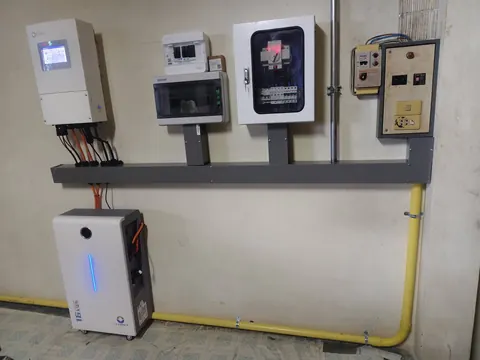
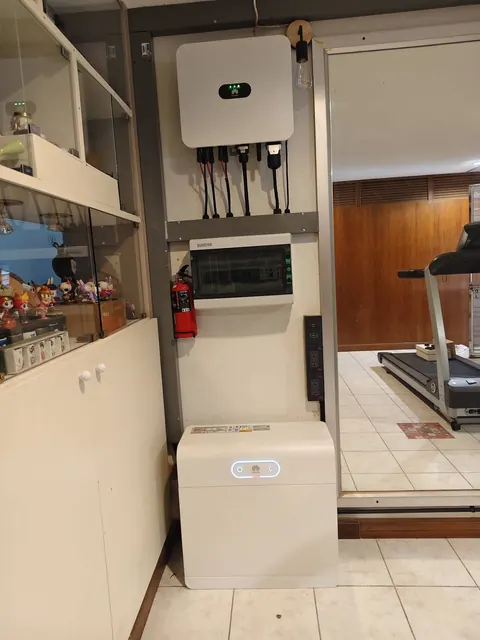
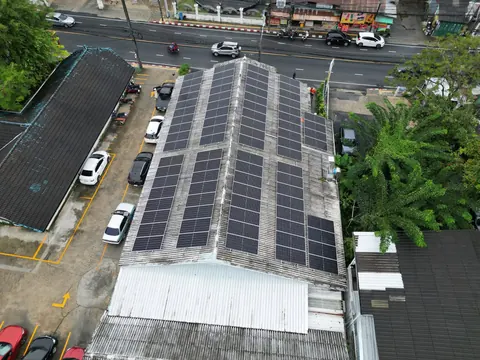
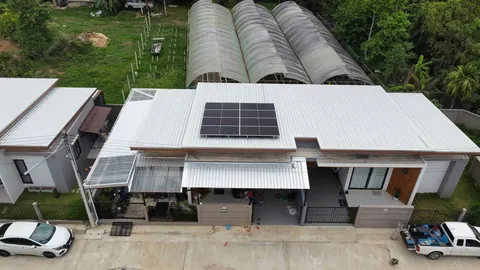
Factory and commercial projects installed by our own team. See all projects
Read before you decide
- Thailand's 2026 Solar Tax Deduction: Up to THB 200,000 — Who Actually QualifiesThe measure runs until the end of 2028, but several conditions stop people who have already installed from using it. The most common mistakes are system size and the names on the documents.
- Can Lightning Strike Solar Panels? The Protection You Need in Southern ThailandRooftop panels don't attract lightning the way many people fear, but surge damage from a nearby strike is real — and it can be prevented.
- Check Your Roof Before Going Solar: Which Roofs Need Repair FirstSolar panels stay on your roof for twenty-plus years. If the roof underneath has only a few years left, or already leaks, you want to know and fix it before installation — fixing it afterward means taking the panels down first.