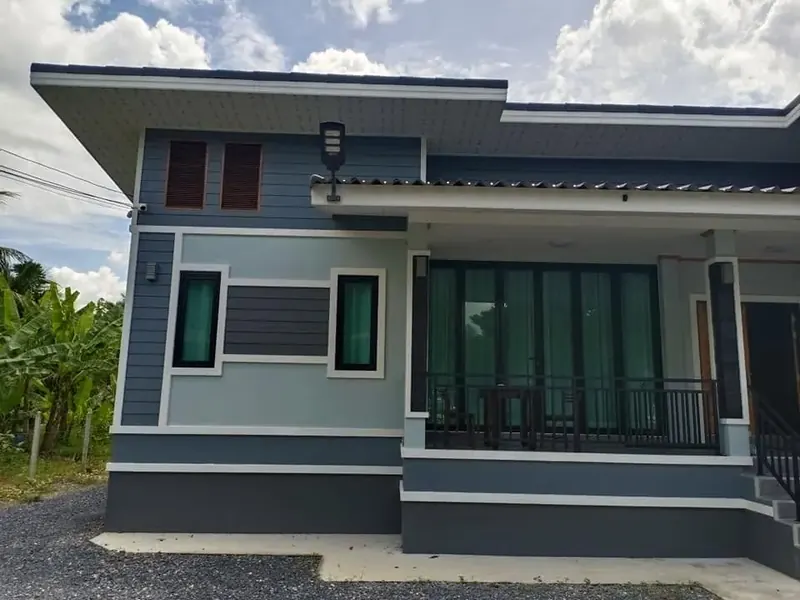
Anyone with a home, villa or resort on Koh Samui or Koh Pha Ngan knows power cuts are something to plan for, especially in high season. The obvious follow-up question is whether solar will keep the lights on. The answer depends on the type of system, and this article separates what each type can and can't do.
Where the islands' power comes from, and why it fails
According to the Electricity Generating Authority of Thailand (EGAT), writing in December 2025, Koh Samui has no power plant of its own. It relies on undersea cables from the Khanom substation in Nakhon Si Thammarat, run by the Provincial Electricity Authority (PEA): four circuits — two at 115 kV and two at 33 kV — with a combined capacity of 174 MW.
The same statement says these cables are aging, malfunction frequently and can't run at full capacity, and that blackouts occur often, especially in April and May, Koh Samui's high season. EGAT describes the grid instability as affecting Koh Samui, Koh Pha Ngan and Koh Tao.
- March 2021: a ship's anchor snagged a 115 kV undersea cable about 2 km offshore, causing widespread blackouts on both Koh Samui and Koh Pha Ngan. Power was rotated between areas while repairs were made.
- February 2025: PEA was reported to be borrowing five mobile generating units from EGAT to add about 10 MW for Koh Samui while waiting for new cables, after several blackouts in the preceding months.
- EGAT is building two new 230 kV undersea cable circuits from Khanom to a new substation on Koh Samui, with construction starting in 2026, the first circuit due in 2028 and the second in 2029.
These dates are as announced at the time of writing. Until the new cables are in service, the outage risk on the islands remains — and even afterwards, local outages from storms or fallen trees on the lines can still happen, as they do anywhere.
Why an on-grid system shuts down with the grid
On-grid is the most common type of system because it costs the least and pays back fastest. But it is designed to stop supplying power the instant grid power is lost. This is called anti-islanding protection, and every inverter certified for grid connection, of every brand, has it.
The reason is the safety of utility line crews. During an outage, they work on lines they believe are dead. If a house with solar kept feeding power back into the line, the person handling it could be electrocuted. So however bright the sun is on the roof, a house with only an on-grid system is as dark as the house next door.
This isn't a fault that a settings change can fix, and nobody should disable this protection. There's more detail in our article on whether solar works during a power cut.
What a hybrid system with batteries can back up
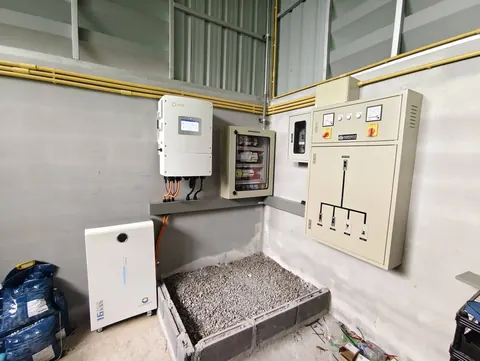
A hybrid system uses an inverter that can take batteries, plus switching that isolates the house from the grid when the power goes out. It then supplies the chosen circuits from the batteries and panels. This is what lets you keep power during an outage safely, without feeding anything back into the lines.
Three things to understand before deciding:
- Not every circuit in the house is backed up. Most installations split the essential circuits onto a separate sub-panel, known as the backup or essential-load circuit. Everything else goes off with the grid.
- Some inverters need an extra device to isolate the backup circuit. For example, HUAWEI states that its single-phase SUN2000-KTL-L1 series needs both a battery and a SmartGuard unit to provide backup power — so the quote must list that device.
- Batteries don't shorten payback. Adding a battery raises the cost and always lengthens the payback period of the whole system. What you get is power during outages, which has to be weighed against the damage outages actually cause you.
For a rental villa or resort, the cost of an outage is rarely the electricity itself. It's guests without water because the pump stopped, the internet going down, or stock spoiling in the freezer. Judge the decision on those, not on a payback figure.
How to choose the backup circuits
The approach that works best is to start with a list of what has to keep running, not with a battery size. Write the list, read the power rating off each appliance's label, and split it into two groups: things you can't do without, and things that can go off for a while.
| Appliance | Put it on the backup circuit? | What to watch for |
|---|---|---|
| Fridges and freezers | Yes | The compressor draws a brief surge when it starts; the inverter has to handle it |
| Water pumps | Yes, especially on hillside homes or with elevated tanks | Pumps draw much more at start-up than when running; check against the inverter's peak rating |
| Wi-Fi router and CCTV | Yes | Very low consumption, but important for guests and security |
| Lights and fans | Yes | LED lighting makes the battery last much longer |
| Air-conditioning | Usually not, or one room only | Draws far more than anything else; backing up every unit multiplies the battery and inverter size |
| Water heaters, electric hobs, pool pumps | No | High loads that can stop without harm |
With the list done, work out two figures. The first is the total power of everything that might run at the same time, which sets the inverter size. The second is the energy needed across an outage — power multiplied by hours — which sets the battery capacity.
If the power goes out during the day, the panels can still charge the battery and help carry the load. If it goes out at night, or during several overcast monsoon days, you can only rely on what's left in the battery. Setting the system to always keep a reserve, rather than draining the battery every night, means there's something left when an outage actually hits.
Pairing solar with a generator
It can be done, and on islands where outages can last hours, a battery plus a generator is often a better fit than buying a very large battery to cover long outages. But it has to be connected correctly.
- Some hybrid inverters are designed to work with a generator. For example, Deye's datasheet for the SUN-SG04LP1 series says it supports storing energy from a diesel generator, and Solis states that its S6-EH3P series supports generator connection. If you want to pair the two, choose a model with this function from the start.
- If a generator is wired into the house switchboard directly, it needs a changeover switch so generator power can't flow back into the utility lines, and grid power can't collide with the generator when it returns.
- An on-grid inverter that's still connected may treat generator power as grid power and start feeding into it, which most generators aren't designed to accept. The two systems have to be designed together, taking into account the equipment already installed.
Surges when the power comes back
The moment power returns after an outage, and thunderstorms in general, are when electronics are most at risk from surges. The system should have surge protection on both the DC side from the panels and the AC side into the house switchboard, with proper earthing. There's more in our article on solar and lightning.
Island work adds one more consideration: every piece of equipment has to come over by boat. If an inverter fails, replacement or repair takes longer than on the mainland. Full protection from day one, and mounting the inverter out of direct sun and rain, reduce the chance of waiting for parts.
Which option fits
| Situation | Option that usually fits |
|---|---|
| Owner-occupied home where outages cause no real damage | On-grid — the best value on electricity savings |
| Want batteries later but not ready now | Start with a hybrid inverter and no battery; add batteries later without replacing the inverter |
| Rental villa that must keep water, lights and Wi-Fi running for guests | Hybrid with batteries, backing up only the essential circuits |
| Resort or shop with freezers, where outages can last hours | Hybrid with batteries, paired with a generator through a generator input or a changeover switch designed alongside it |
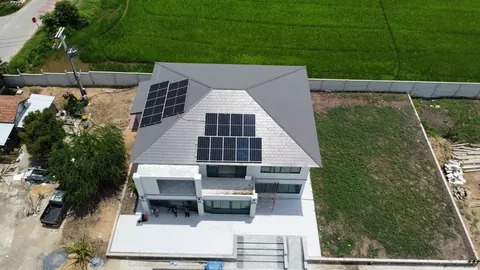
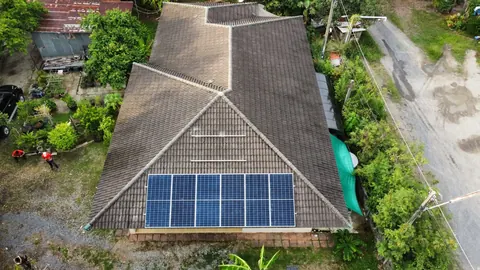
Sources used for this article
Figures in this article are based on public announcements and news reports (most sources are in Thai). If the conditions change, the latest official announcement from the relevant authority applies.
- 230 kV submarine cables to Ko Samui · Electricity Generating Authority of Thailand (Dec 2025)
- PEA borrows mobile generators for Koh Samui pending new cables · The Nation (Feb 2025)
- Anchor damages undersea cable, blackout on Koh Samui and Koh Pha Ngan · The Thaiger (Mar 2021)
- HUAWEI SUN2000-KTL-L1 (single-phase): backup requires battery and SmartGuard · HUAWEI
- Deye SUN-SG04LP1 hybrid inverter datasheet · Deye (PDF)
- Solis S6-EH3P hybrid inverter with generator support · Solis
Frequently asked questions
I have on-grid solar on Koh Samui. Will I have power during a power cut?
No. An on-grid system stops supplying power the moment grid power is lost — a safety requirement to protect crews repairing the lines. For power during outages you need a hybrid system with batteries and switching that isolates you from the grid.
Do batteries make the system pay back faster?
No. Batteries add cost and always lengthen the payback period of the whole system. The reason to add them is backup power, not electricity savings. Decide based on the damage outages actually cause you.
Can I run air-conditioning on batteries during an outage?
Yes, if it's designed for it, but air-conditioning draws far more than anything else. Putting every unit on the backup circuit multiplies the battery and inverter size. The usual approach is to back up one room, or none, and use fans instead.
Will the battery last through a multi-day outage in the monsoon?
It depends on battery size and the loads being backed up. With several overcast days in a row, the panels charge the battery much less. For long outages, a battery paired with a generator usually fits better than a very large battery.
I already have an on-grid system. Can I add backup power?
If your existing inverter is a hybrid model, you can add batteries and a backup circuit. If it's on-grid only, you need to replace the inverter or add a separate battery system, which has to be designed around the existing equipment so the two don't conflict.
Related services and areas
Keep reading
- Does Solar Still Work During a Power Cut?Many people only find out at their first power cut that the house goes dark as usual, even with bright sun on the roof. Here's why, and what you need if you want power to keep running.
- Is Solar With a Battery Worth It in Areas With Frequent Power Cuts?A battery doesn't always save you more on electricity. What it really buys you is peace of mind during power cuts — and you have to judge whether that is worth the price.
- On-Grid, Off-Grid or Hybrid Solar: What's the Difference and Which Suits You?The difference comes down to whether the system connects to the utility grid and whether it can store power — which changes both the price and the value.
- Can Lightning Strike Solar Panels? The Protection You Need in Southern ThailandRooftop panels don't attract lightning the way many people fear, but surge damage from a nearby strike is real — and it can be prevented.