Solar for Cold Storage, Ice Plants, Fish Piers & Seafood Processing
Compressors that never stop use almost every unit of daytime solar power. Businesses that use most of their power in the daytime pay back in around 4–7 years. Our work focuses on what makes cold storage different: starting currents, shutdowns that don't spoil stock, and salt air at the harbor.
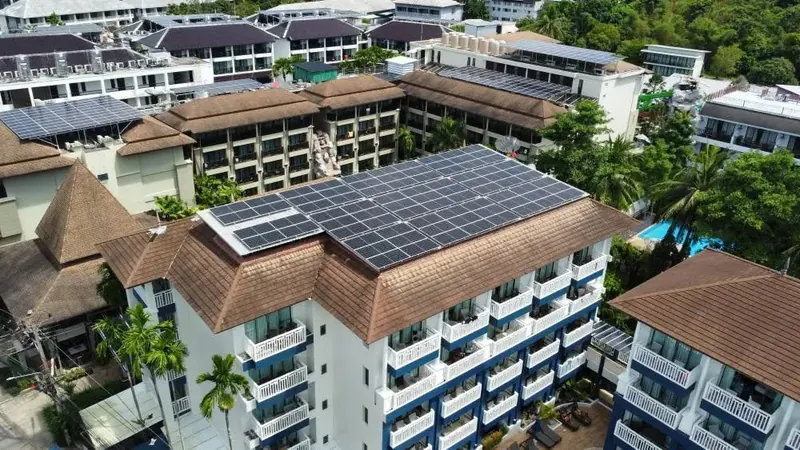
An example of a commercial-building installation by the 19Energy team.
Loads vs. sunshine
Refrigeration peaks when the sun does
Refrigeration does not switch on and off with office hours; it has to hold temperature all the time. Almost every unit the panels generate in the daytime is used immediately, and each is worth the grid price of around THB 4.20 per kWh.
The hottest part of the afternoon is when compressors work hardest — and when the panels produce the most.
Want to know first whether it pays off for your business? Read Is solar worth it for cold storage and ice plants?
Estimated at THB 4.20 per kWh and Southern Thailand sunshine (1,350 kWh per kWp per year, rainy season included). Actual payback depends on your bill and when you use electricity — we calculate it for your property before quoting.
Cold-room compressors and freezers
They hold temperature around the clock, cycling day and night, and work hardest on hot afternoons — exactly when the panels produce the most.
Ice makers
Run continuously, with steady year-round demand in fishing areas. Daytime solar power is used almost entirely the moment it is generated.
Processing lines
Seafood processors have both cold rooms and production lines running in the daytime — a load that matches solar hours.
Pumps, lighting and loading areas
Washing and seawater pumps run with the work, and lighting follows the boats — which, at some piers, means night-time.
Who it suits
Cold storage, ice plants and fish piers along the coasts we serve
Districts where cold storage, ice plants, fish piers and seafood processing are among the main types of work, based on each area's local economy.
Singhanakhon
Songkhla deep-sea port: fishing, cold storage, ice plants and seafood processing.
Solar in Mueang Surat Thani
Cold storage and riverside businesses along the Tapi River.
The same terms apply in every area: Site surveys are by appointment, and any travel charge is confirmed before booking.
Cold-storage design
What makes cold storage different from an ordinary factory job
Compressor starting current
Large compressors draw a very high current when they start. The design has to allow for this rather than looking only at averages on the bill, and we check that the local transformer can take it.
No spoiled stock during installation
A cold room without power for too long means damaged stock. We schedule the power-off work outside operating hours, tell you in advance from the quote stage, and agree a backup plan before work starts — not on the day.
Roofs older than they look
Many cold-storage buildings have been in use for years, and metal sheet roofs exposed to salt air and condensation from the cooling system may have thinned a lot. An engineer checks the structure every time.
Salt air at the harbor
Ports, fish piers and seafront processors face salt air constantly. Structures and fixings must resist corrosion, and the inverter belongs in a shaded, ventilated place — not on a wall facing the sea wind.
Heat from condenser units
Inverters reduce their output when the air around them is hot, so they should not sit in the hot-air stream from the refrigeration condensers. The position is chosen from the airflow of the units actually on site.
Preventing export to the grid
Businesses on commercial or industrial meters generally cannot sell power back, so the system is designed for full on-site use with the anti-export equipment the Provincial Electricity Authority (PEA) requires. With cold-storage loads this rarely matters.
For businesses whose heavy use follows the season or the boats — fruit packing houses and fish piers, for example — we size from a full year of bills and the real operating pattern, not the highest month, because an oversized system produces surplus power that cannot be sold back.
System sizes
Starting sizes for cold storage and ice plants
We don't publish prices. The real price depends on the roof condition, the structure, cable runs and salt-resistant parts. Larger businesses get a custom design.
15 kW
three-phase · 24 panels
Businesses that run all day use almost every unit the moment it is generated, so they pay back noticeably faster than homes.
- Suits
- Small factories, hotels and commercial buildings
- Output per year
- ~20,250 kWh
- Roof area
- ~68 m²
20 kW
three-phase · 32 panels
Continuous loads such as cold rooms, large pumps and production lines — every unit generated gets used.
- Suits
- Factories, cold storage and buildings with heavy all-day loads
- Output per year
- ~27,000 kWh
- Roof area
- ~90 m²
Output is estimated from Southern Thailand sunshine of 1,350 kWh per kWp per year, rainy season included.
Larger on-grid projects we have delivered: 35 kW in Tha Chang · a 760 kW project
Equipment and warranty
Named brands you can check, and a warranty for each component
Equipment we use
- Solar panels
- JA Solar, LONGi or Jinko Solar · N-type TOPCon, dual-glass, 620–630 W per panel
- Inverters
- HUAWEI, Solis or Deye · On-grid and hybrid inverters with a monitoring app so you can check your generation history yourself
The exact brand and model are written into your quote before you sign anything.
Warranty by component
Solar panels — product warranty
Set by each panel manufacturer for the brand and model you choose, stated in your quote
Solar panels — power output warranty
Set by each panel manufacturer for the brand and model you choose, stated in your quote
Inverter
Most major brands give 10 years, and it can be extended
Installation and mounting work by 19Energy
2 years · 19Energy's own technicians handle every job
Aftercare for the first 2 years
- Panel cleaning once a year
- Annual system health check
- A check of your building's wiring while we are there
Included in the installation price. We schedule each visit and contact you 14 days ahead. Harborside buildings should clean more often than this — see panel cleaning.
Tax and accounting
What accounts teams ask before approving
Tax invoices and withholding tax
- 19Energy is a VAT-registered company and issues full tax invoices in your company's name.
- 3% withholding tax works as normal for corporate clients.
- Every quote states whether prices are before or after VAT.
Deduct 1.5 times the equipment cost
Under Royal Decree No. 805 of 2026, which runs until the end of 2028, companies and people with business income can deduct 1.5 times the equipment cost as an expense — equipment only, not installation labor — on these conditions:
- The equipment must be new and never used
- The equipment must carry the No. 5 energy-efficiency label as specified by the authorities
- It cannot be combined with other investment-promotion measures
Confirm how far it applies to your business with your accountant before deciding. Read the full conditions
Getting started
Send a year of bills first, then book a site survey
A first estimate from your electricity bill is free — just send a photo of the bill on LINE. Twelve months of bills is best. A list of your compressors and ice makers with their power ratings makes the estimate more accurate.
Site survey fee THB 1,200–1,500
For sites within 100 km, refunded in full against your quote when you go ahead with the installation.
Why there is a fee
It covers fuel, a technician's full day away from installation work, and the time to measure, calculate and write up your report.
Site surveys by appointment
Any travel charge is confirmed before booking
PEA permit paperwork
We handle the application and give you the permit timeline at the quote stage. See the process
FAQ
What cold-storage and ice-plant owners ask us most
Our cold room runs 24 hours. Should we fill the whole roof?
If your daytime load is always higher than the system's output, you can use the full roof area with no surplus — common for cold storage. But an engineer must first confirm the roof can carry the weight, and the local transformer has to be checked too.
Will the power be cut during installation? Will our stock spoil?
Roof work does not require stopping the cold rooms. Power only needs to be off while we connect to the main board and while the PEA changes the meter. We put this outside operating hours, tell you in advance from the quote stage, and agree a backup plan before work starts.
Can we add batteries to cover power cuts?
You can, but it needs careful calculation. Cold-storage loads are very high, and a battery big enough to carry them for long costs more than the solar system itself. Many businesses choose a backup generator instead, which is more economical for outages.
Can a cold-storage business sell power back to the grid?
Generally, no. Businesses on commercial or industrial meters do not qualify for the buy-back scheme, so the system has to use all its power on site. For cold storage this hardly matters, because the load is high enough that there is no surplus to begin with.
Our fish pier is busiest when boats come in at night. Is solar worth it?
It depends on your real operating pattern. Fish piers and ice plants run hardest when the boats arrive, not evenly through the day like an office. If most of the heavy use is at night, a system without batteries will cut less of the bill than you might expect, so we look at your operating hours and a full year of bills before proposing a size.
Our load is seasonal. Which month's bill do you size from?
From the whole year, not the highest month. Sizing to the peak month gives a system that is too big for the rest of the year, and the surplus goes to waste because it cannot be sold back.
Can you issue a full tax invoice?
Yes. 19Energy is VAT-registered and issues full tax invoices in your company's name, and 3% withholding tax works as normal for corporate clients. Every quote states whether prices are before or after VAT.
Get a quote for your cold storage or ice plant
Send 12 months of electricity bills and your operating hours. We will design the system with a shutdown plan that protects your stock, and return figures with assumptions you can check.
Our team replies in English — on LINE, by email or by phone. Sending a photo of your electricity bill and your location on LINE is the quickest way to get an estimate.
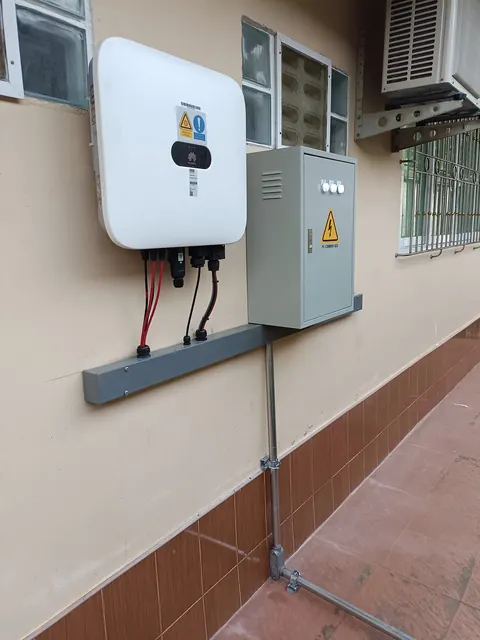
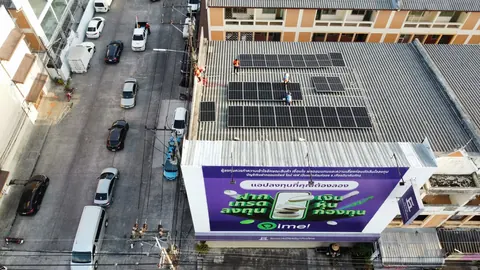
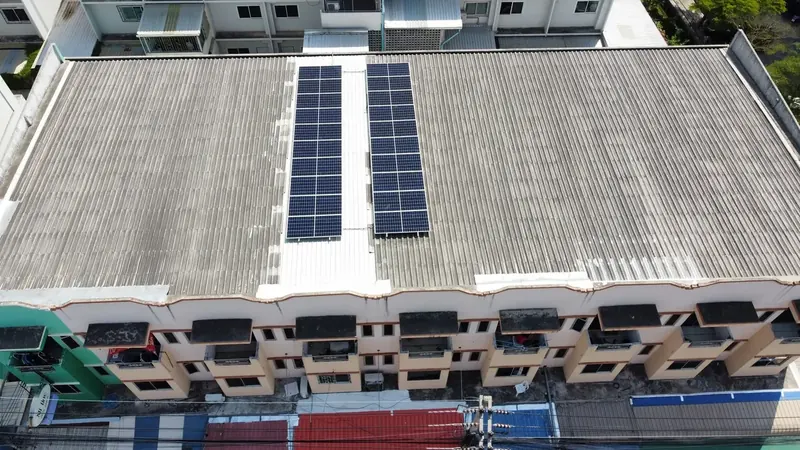
Examples of factory and commercial rooftops we have installed See all projects
Read before you decide
- Is Solar Worth It for Cold Storage and Ice Plants?Compressors that run all the time are the load that absorbs daytime solar power best — and cold storage is a core industry in Songkhla and Nakhon Si Thammarat.
- Solar for Homes Near the Sea: What You Need to Know About Salt Air and CorrosionYou can install near the coast, with salt-resistant materials chosen at the design stage.
- Thailand's 2026 Solar Tax Deduction: Up to THB 200,000 — Who Actually QualifiesThe measure runs until the end of 2028, but several conditions stop people who have already installed from using it. The most common mistakes are system size and the names on the documents.