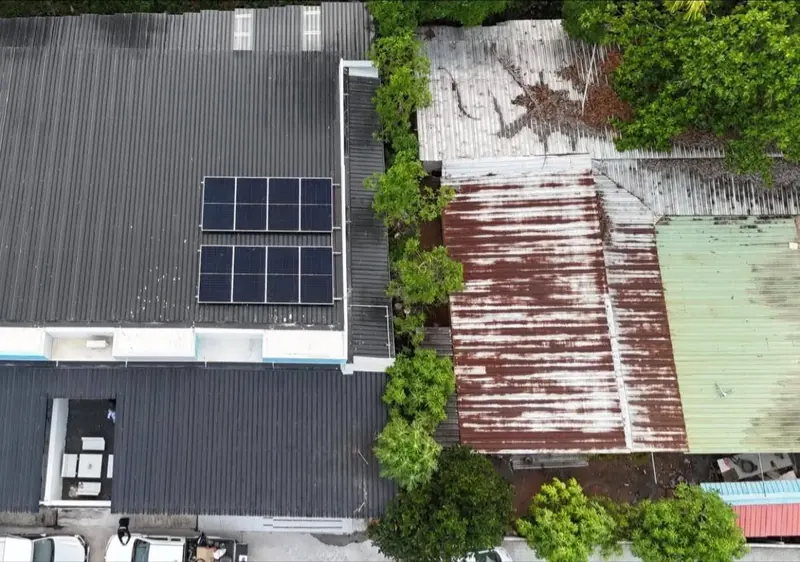
This is one of the most common misunderstandings. Many people think that once they have solar, a power cut doesn't matter because there's power from the roof. That isn't true for the kind of system most people install.
Why the system shuts itself off during a power cut
An on-grid system must stop supplying power the instant grid power is lost. It's a safety requirement that every certified inverter, of every brand, must have.
The reason: during an outage, utility crews go up to repair the lines on the understanding that they're dead. If a house with solar kept feeding power back into the line, the worker handling it would get a shock. So the system is designed to disconnect itself first.
This is why an installer can't unlock the system to keep running during a power cut. It's not a matter of settings — it's about other people's safety.
Options if you want to keep the power on
| Option | How it works | Limitations |
|---|---|---|
| Hybrid system with batteries | Isolates the circuit from the grid and supplies power from the batteries | Much higher cost and a longer payback |
| Backup generator | Runs on fuel or gas during a power cut | Noise and fumes; needs refueling and maintenance |
| Point-of-use UPS | Connects only equipment that can't stop, such as a fridge or router | Handles small loads only and isn't charged from the panels |
For homes where power cuts are rare and nothing must keep running, the most cost-effective choice is often to do nothing at all, because the cost of protecting against outages is higher than the damage they actually cause.
If you add batteries, what to think through
- List everything that has to keep running and add up their power draw.
- Decide how many hours you want them to keep running. Multiply these two together and you have the battery size you need.
- Separate the circuits that should keep running from those that can go off — otherwise the battery drains very quickly.
- Keep in mind that air-conditioning draws far more power than anything else. If you want the air-con on during outages, the battery size goes up several times over.
Frequently asked questions
I already have solar. Can I add batteries later?
Yes, if your inverter is already a hybrid model — you just buy batteries and connect them. With a standard on-grid inverter, you have to replace the whole inverter, which means paying twice. If you think you may want batteries in future, tell your installer on day one so they choose the right inverter.
How often do power cuts have to happen for batteries to be worth it?
It can't be answered in number of outages — it has to be answered in damage. A home with ten outages a year where nothing is damaged isn't worth it. A shop with one outage a year, where that one outage spoils everything in the freezer, may be worth it from the very first time.
Related services and areas
Keep reading
- On-Grid, Off-Grid or Hybrid Solar: What's the Difference and Which Suits You?The difference comes down to whether the system connects to the utility grid and whether it can store power — which changes both the price and the value.
- Is Solar With a Battery Worth It in Areas With Frequent Power Cuts?A battery doesn't always save you more on electricity. What it really buys you is peace of mind during power cuts — and you have to judge whether that is worth the price.
- Is Solar Worth It for Cold Storage and Ice Plants?Compressors that run all the time are the load that absorbs daytime solar power best — and cold storage is a core industry in Songkhla and Nakhon Si Thammarat.