Solar for Hotels & Resorts in Southern Thailand
Electricity is the largest fixed cost in hospitality — and one you can genuinely cut without touching the guest experience. Properties that use most of their power in the daytime pay back in around 4–7 years.
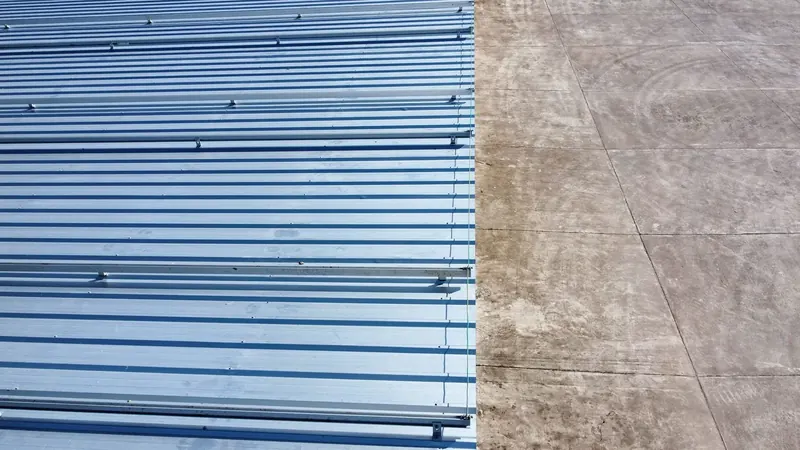
Work on the rooftop of an accommodation building — installed in phases without closing to guests.
The numbers behind it
Hotels use power exactly when the panels produce it
Hotels and resorts have something most homes don't: a base load that runs all the time — cold rooms, water pumps, pool systems and common-area lighting.
These loads use almost all the power generated during the day the moment it is produced, so every unit is worth the full electricity rate of THB 4.20 per unit — instead of flowing out to the grid at a low buy-back rate, as it does for a home where nobody is in during the day.
On top of that, the afternoon, when the sun is strongest, is when the air-con works hardest. The two peaks line up.
Compared with a home
| Item | Home | Hotel |
|---|---|---|
| Peak usage | Evening–night | All day |
| Always-on loads | Few | Many |
| Share of power used on site | ~30–50% | ~75–90% |
| Payback | 6–10 years | 4–7 years |
Payback is estimated at THB 4.20per kWh and Southern Thailand sunshine. Actual results depend on each property's load and occupancy.
The loads we design around
Where a hotel's electricity actually goes
We size the system from these real loads — not from how much empty roof you happen to have.
Air-conditioning
The biggest single load in any hotel — and heaviest in the afternoon, exactly when the panels generate the most.
Water pumps and pool systems
Pool and water pumps cycle throughout the day. They are the easiest load to shift into daylight hours, so more of your own solar power gets used.
Kitchens and cold rooms
Freezers, cold rooms and ice makers run non-stop — a base load that absorbs daytime power very well.
Laundry
Washers and dryers already run in the daytime around housekeeping schedules, a natural fit with solar hours.
Lifts and common-area lighting
Loads that run for as long as you are open — not large, but steady, so less of your solar power goes to waste.
Water heating
If you use electric heaters, they can be set to heat and store water during the day for use in the evening — a very effective way to raise the share of solar power you use yourself.
On site
Installed without closing your doors
What worries hotel owners most isn't the price — it's whether guests will be affected. We plan the work around your occupancy calendar.
Foreign-owned resort or villa business? See our notes on solar for expats and foreign owners.
Work in zones
We install one section of roof at a time, avoiding areas where guests are staying that day
Use the low season
Noisy work and anything that needs a power cut is scheduled for your lowest-occupancy period
One power cut only
Everything that needs the power off — switchboard connection and meter change — is combined into a single window of about half a day
Advance notice
Every stage is scheduled ahead of time so you can inform guests or adjust bookings
Beachfront properties need mounting structures and fixings made to resist salt air, which cost more than standard parts. We specify them at the design stage rather than using the same kit as a job in town.
Tax and accounting
The tax questions hotel accounts teams ask before approving
Tax invoices and withholding tax
- 19Energy is a VAT-registered company and issues full tax invoices in your company's name.
- 3% withholding tax works as normal for corporate clients.
- Every quote states whether prices are before or after VAT.
- The system is an asset that can be depreciated under normal accounting rules; ask your accountant for the exact tax effect for your business.
1.5x deduction on equipment cost
Under Royal Decree No. 805 of 2026, which runs until the end of 2028, companies and people with business income can deduct 1.5 times the equipment cost as an expense. Only the equipment counts — installation labor is not included — and these conditions apply:
- The equipment must be new and never used before
- The equipment must carry the No. 5 energy-efficiency label as specified by the authorities
- It cannot be claimed on top of other investment-promotion measures
Confirm with your accountant how this applies to your business before deciding. Read the full 2026 solar tax deduction rules
FAQ
What hotel and resort owners ask us most often
Can you issue a full tax invoice?
Yes. 19Energy is a VAT-registered company, so we can issue a full tax invoice in your company's name, and 3% withholding tax works as normal for corporate clients. Our quotes state clearly whether prices are before or after VAT.
What tax benefit is there if the company buys the system?
Under Royal Decree No. 805 of 2026, companies and people with business income can deduct 1.5 times the equipment cost as an expense; installation labor is not included. The equipment must be new and carry the No. 5 energy-efficiency label, and the deduction cannot be combined with other investment-promotion measures. The measure runs until the end of 2028. Confirm how it applies to your business with your accountant.
Do we have to close the hotel during installation?
No. Roof work can be done without disturbing guests. We plan the installation zone by zone and avoid floors where guests are staying. Power only needs to be cut temporarily — for about half a day — while we connect to the main switchboard and the Provincial Electricity Authority (PEA) changes the meter. We schedule this in advance and choose the low season or the days with the lowest occupancy.
Can a beachfront property install solar? Won't the salt air corrode it?
Yes, but the materials have to be chosen at the design stage rather than using the same kit as a job in town. For coastal sites we use aluminum mounting structures and stainless-steel fixings, and we position the inverter where it is out of direct sea spray. Beachfront properties should also clean their panels more often than usual, because salt deposits block light and stick harder than ordinary dust.
Can a hotel sell power back to the grid?
Generally, no. The rooftop solar buy-back scheme is open only to residential meters, and hotels and resorts are on commercial meters, so they don't qualify. The system has to be designed to use all of its power on site, with equipment that prevents power flowing back into the grid, as the PEA requires. The upside is that hospitality businesses already use a lot of power in the daytime, so designing for full on-site use is not a real limitation.
Occupancy changes through the year. How do you size the system?
We design from the base load that runs no matter how many guests you have — cold rooms, water pumps, common-area lighting — then add a conservative allowance for the part that rises and falls with occupancy. That way, even in the low season almost all the power generated is still used rather than wasted. We ask for 12 months of electricity bills so we can see the real difference between seasons.
Can the hotel roof take the weight?
An engineer has to check it every time. Panels plus mounting weigh around 12 to 15 kg per square meter, which most buildings can carry — but we never judge it by eye. We have an engineer calculate and certify it in writing, because it concerns your guests' safety and is a document required for the permit applications.
What if there isn't enough roof space? Can we install elsewhere?
Yes. Many properties turn their parking area into a solar carport, which does two jobs at once: it generates power and shades guests' cars. Panels can also go on the roofs of service buildings such as the laundry or plant room. We survey all the available space in one visit and give you the options.
Request a quote for your property
Send us 12 months of electricity bills so we can see the real difference between high and low season. We will then design a system with return figures whose assumptions are laid out for you to check.
Our team replies in English — on LINE, by email or by phone. Sending a photo of your electricity bill and your location on LINE is the quickest way to get an estimate.
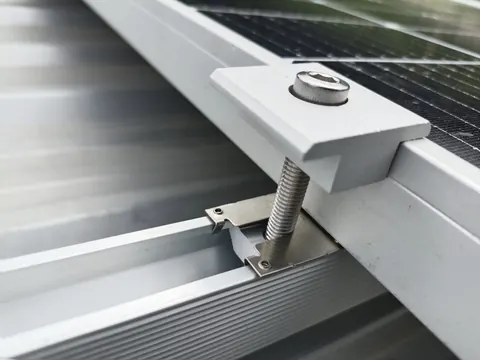
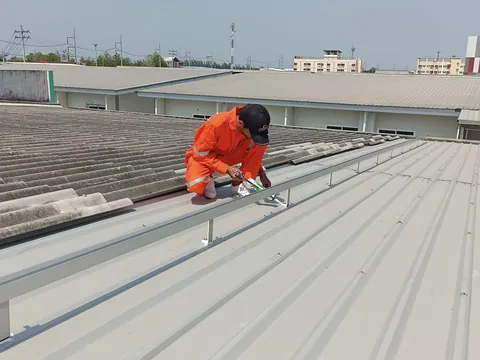
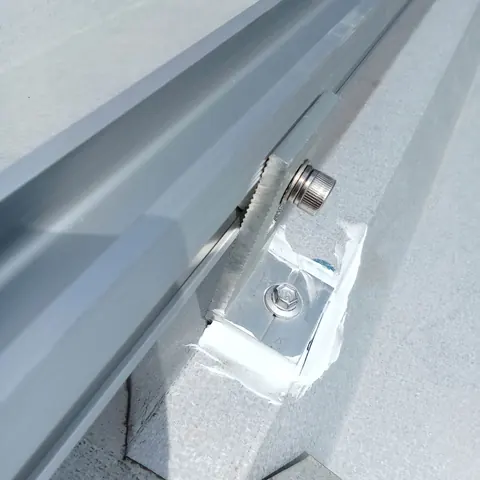
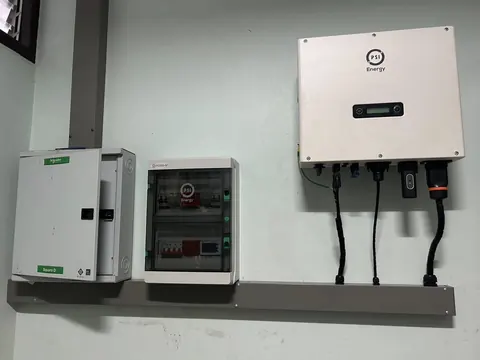
Rooftop work on hotels and accommodation buildings. See all projects
Read before you decide
- How Much Can Hotels in Southern Thailand Save With Rooftop Solar?Hotels use power at exactly the time panels produce it, but the design has to allow for low season — otherwise the power you generate flows out for next to nothing.
- Can Solar Really Cut Costs for a Restaurant or Café?Fridges, ice machines and air-conditioning run nonstop while you're open — a pattern where solar pays back well. But your opening hours matter too.
- Solar for Homes Near the Sea: What You Need to Know About Salt Air and CorrosionYou can install near the coast, with salt-resistant materials chosen at the design stage.