Solar Installation for Shophouses, Shops and Restaurants
Shops that trade in the daytime use power exactly when panels produce it. Even on a small shophouse roof, every unit generated is used straight away at the full tariff. What decides the result is your opening hours, your neighbors' shade and the roof area you can really use.
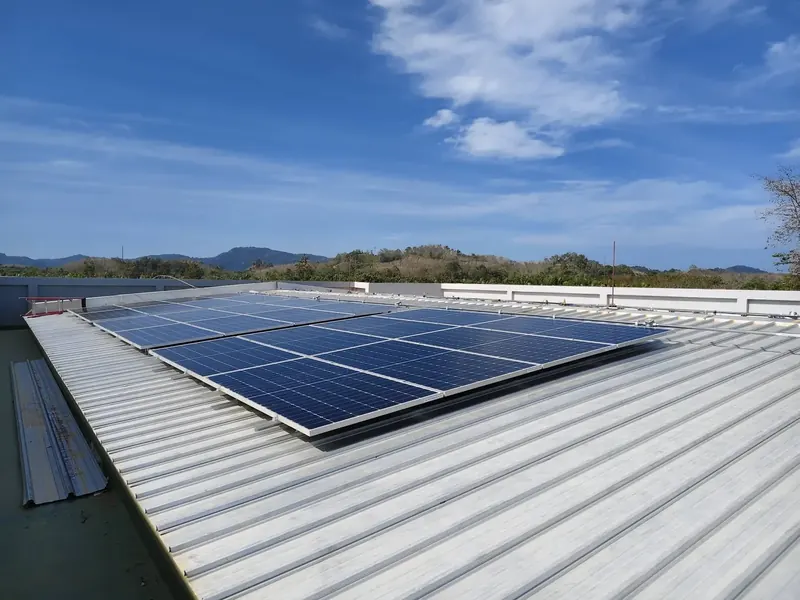
Building and commercial rooftop work by our installation team.
Who it suits
Shophouses, shops, restaurants, cafés and bars in the areas we serve
Owners of shophouses and commercial buildings, shops, restaurants, cafés and bars that use power in the daytime. Below are districts where these businesses are concentrated.
- Hat Yai, SongkhlaShophouses with concrete roof decks and restaurants, in a low-lying city where equipment must sit above flood level.
- Mueang Nakhon Si ThammaratShophouses, commercial buildings and clinics; long, narrow roofs shaded by neighboring buildings.
- Mueang TrangAn unusually dense restaurant and coffee-shop scene; shops open early and run fridges and coffee machines all day.
- Mueang PhuketRestaurants and commercial buildings; the Old Town has local rules on building alterations and appearance.
- Kathu (Patong), PhuketDense restaurants and bars in buildings packed close together at different heights.
- Mueang Krabi (Ao Nang)Town-center shophouses, restaurants and cafés.
- Takua Pa (Khao Lak), Phang NgaRestaurants, cafés and commercial buildings in the old town quarter.
- Koh Samui, Surat ThaniRestaurants and cafés alongside hotels, resorts and villas.
- Koh Pha Ngan, Surat ThaniRestaurants and bars where power cost and power stability matter equally.
- Mueang PhatthalungShophouses and shops in the municipal area, open in the daytime.
- Tha Sala, Nakhon Si ThammaratRestaurants, coffee shops and dormitories around the university.
- Wiang Sa, Surat ThaniRetail stores and commercial buildings where air-con and fridges peak in the late afternoon.
For other locations, see all service areas.
Power use versus sunshine
Where a shop's power goes
Cooling is the main load in restaurants and cafés, and it runs at the same time the panels produce.
Air-conditioning
The biggest load in most shops, working hardest in the afternoon while panels are still producing well.
Fridges and chillers
They never stop, making them a base load that uses solar power every sunny hour.
Ice makers
They work hardest in the hot daytime, matching the hours the panels produce.
Coffee machines and water heaters
Cafés that trade in the daytime use this power exactly when it is produced.
Kitchen extractor fans
They run whenever food is being cooked, so lunchtime kitchens use solar power immediately.
Lighting and signage
Used mostly in the evening, so not a match for solar — but usually small next to refrigeration and cooling.
Businesses that use most of their power in the daytime typically pay back in around 4–7 years. Estimated at THB 4.20 per kWh and Southern Thailand sunshine (1,350 kWh per kWp per year, rainy season included). Actual payback depends on your bill and when you use electricity — we calculate it for your property before quoting. Evening-only shops or heavily shaded roofs will take longer.
Restaurants, cafés and bars
Solar for restaurants: opening hours decide it
The key variable isn't the size of the shop or the bill — it's what time of day the shop uses its power.
To see how worthwhile it is for your kind of shop before talking about installation, read is solar worth it for restaurants and cafés and, for shophouses, can shophouses and commercial buildings go solar.
| Type of shop | Fit with solar |
|---|---|
| Café open morning to late afternoon | Best fit — power is used right as it is produced |
| Restaurant open lunch to evening | Good fit — part of the opening hours matches production |
| Evening-to-late only | Weak fit — nobody uses the daytime power |
| Any shop with fridges running 24 hours | Much better, even if it opens only in the evening |
Design points for shophouses and shops
What to check before panels go on a shophouse
Shade from neighboring buildings
A shophouse next to taller buildings gets morning or afternoon shade that shifts with the seasons. We look at real shade through the day; where it can't be avoided, equipment that lets each panel work independently helps.
Concrete roof decks
Ballasted frames need no drilling, but the existing waterproofing must be checked first, and wind load calculated — uplift at the roof edge is much higher than in the middle.
Usable roof area
Air-con condensers, water tanks, stairwells and grease traps already take space, so less is left than satellite photos suggest.
Grease from kitchen exhausts
Grease mixed with dust sticks to panels near the exhaust and rain won't wash it off. Panels go away from the exhaust, with more frequent cleaning.
Several units, separate meters
Adjoining units with one owner can share roof space and fixed costs, but power from one meter can't be used on another — separate meters mean separate systems.
Old town buildings
Some areas, such as Phuket Old Town, have local rules on alterations and building appearance that must be checked before design.
Flood-prone towns
In low-lying cities like Hat Yai, inverters, batteries and control boxes belong upstairs or raised above past flood levels.
Late-afternoon peaks and single-phase meters
Where air-con and fridges peak in the late afternoon, a small battery can beat adding panels. A PEA single-phase meter tops out around 10 kW in practice.
System sizes
Standard sizes for shophouses, shops and restaurants
A single shophouse is usually limited by roof-deck space, while several units or a larger commercial building can take more. We can design other sizes to fit the roof and your real usage.
5 kW
Single-phase or three-phase · 8 panels
Homes with a bill of roughly THB 3,000–5,000 a month
- Output per year
- ~6,750 kWh
- Roof area
- ~23 m²
10 kW
Single-phase or three-phase · 16 panels
Large homes, pool villas, shops and daytime businesses
- Output per year
- ~13,500 kWh
- Roof area
- ~45 m²
15 kW
Three-phase · 24 panels
Small factories, hotels and commercial buildings
- Output per year
- ~20,250 kWh
- Roof area
- ~68 m²
20 kW
Three-phase · 32 panels
Factories, cold storage and buildings with heavy all-day loads
- Output per year
- ~27,000 kWh
- Roof area
- ~90 m²
Output estimated from Southern Thailand sunshine of 1,350 kWh per kWp per year, rainy season included. Real output depends on direction, tilt and shade from neighboring buildings.
Equipment we use
- Solar panels
- JA Solar, LONGi or Jinko Solar · N-type TOPCon, dual-glass, 620–630 W per panel
- Inverters
- HUAWEI, Solis or Deye · On-grid and hybrid inverters with a monitoring app so you can check your generation history yourself
- Batteries (to shift power into the late afternoon or evening)
- LVTopsun or Sunwoda · LiFePO4 lithium batteries for hybrid systems, sized to your night-time consumption
The exact brand and model are written into your quote before you sign anything.
Warranty, component by component
- Solar panels — product warrantySet by each panel manufacturer for the brand and model you choose, stated in your quotePer manufacturer
- Solar panels — power output warrantySet by each panel manufacturer for the brand and model you choose, stated in your quotePer manufacturer
- InverterMost major brands give 10 years, and it can be extended10 years
- Installation and mounting work by 19Energy19Energy's own technicians handle every job2 years
2 years of free aftercare: Panel cleaning once a year · Annual system health check · A check of your building's wiring while we are there. See warranty terms
How to start
An estimate from your bills first, then a site survey
Send your bills, opening hours and the building location
A first estimate from your bills is free. Tell us whether you rent or own, and how many units and meters there are.
Book an on-site survey
Site surveys are by appointment, and any travel charge is confirmed before booking. The survey costs THB 1,200–1,500 and is refunded in full against your quote when you go ahead with the installation.
We check what decides the system size
Neighbors' shade through the day, usable roof-deck area, waterproofing, kitchen exhausts and meter size.
A quote with its assumptions
System size, equipment brand and model, when power will be cut, and return figures with every assumption open to check.
FAQ
What shophouse and restaurant owners ask us most
We rent the shophouse. Can we still install solar?
Yes, but you need the building owner's written consent, and a clear agreement on who owns or removes the system when the lease ends. Check too that the remaining lease is long enough to pay the system back. If the roof deck is shared by several units, everyone involved has to agree first.
We only open in the evening. Is it worth it?
Usually not very, because nothing uses the power produced during the day. The exception is shops with fridges, cold rooms or ice makers running all day, which still give the daytime power somewhere to go. We look at your bill and equipment list first, and if it isn't worthwhile we'll say so at the bill-estimate stage.
Do we have to close during installation?
Most of the work happens on the roof without affecting trade. Power has to be cut when we connect to the main board and when PEA (Provincial Electricity Authority) changes the meter, which can be scheduled on your closing day or before opening. We keep outages as short as possible so nothing in the fridges spoils.
We own several adjoining units. Can they share one system?
If they are on one meter, yes, and it is usually better value than separate systems because fixed costs like the inverter and paperwork are shared. If each unit has its own meter, power from one can't be used on another, so the systems must be separate per meter.
Do we need a building-alteration permit?
It depends on the area and weight of the system against the thresholds in ministerial regulations. Commercial buildings are more likely to need one than homes. We check case by case during the survey and file it if needed, along with the PEA grid-connection application.
Can the shop sell surplus power back to the grid?
It depends on the meter type. The rooftop buy-back scheme accepts only residential meters. On a commercial meter, the system must be designed to use all its own power, with a device that prevents power flowing back into the grid. Shops that already use a lot of daytime power have little surplus to sell anyway.
What does a survey cost, and can you invoice our business?
A first estimate from your electricity bill is free — just send a photo of the bill on LINE. An on-site survey costs THB 1,200–1,500, refunded in full against your quote when you go ahead with the installation. Site surveys are by appointment, and any travel charge is confirmed before booking. We are VAT-registered, issue full tax invoices and support 3% withholding tax for corporate clients.
Related work
Other buildings and businesses we install for
Send us your bills and opening hours
We give you a free first estimate from the bills, including whether your shop is worth a site survey yet.
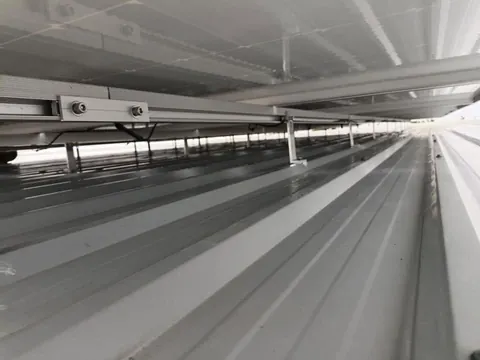
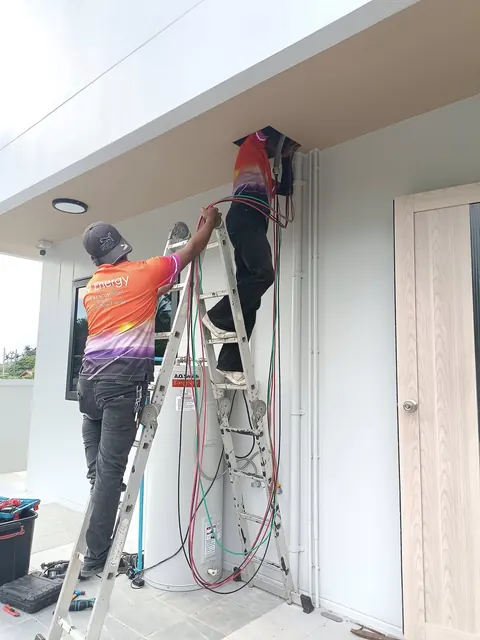
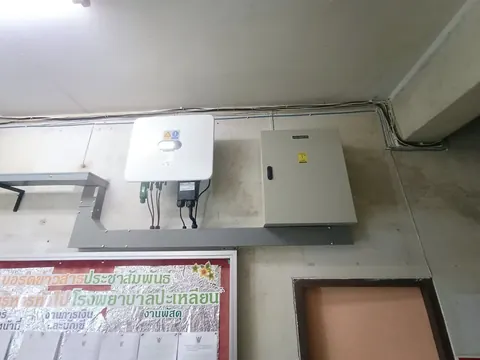
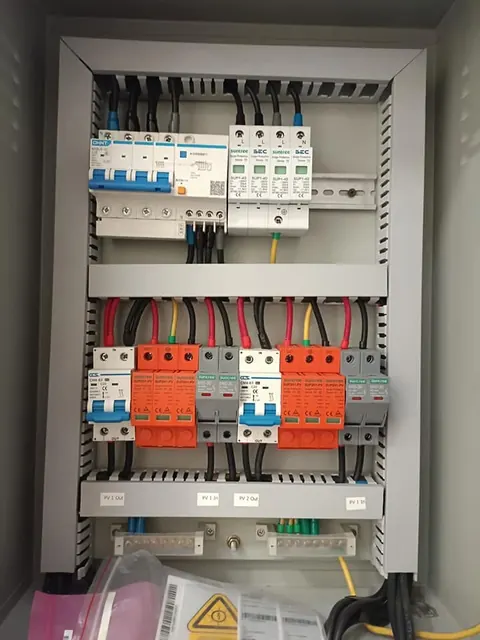
Installation work on and inside commercial buildings by our own team. See all projects
Read before you decide
- Can You Put Solar on a Shophouse or Commercial Building?A small roof but heavy daytime use — a completely different equation from a detached house, and one that often turns out better than people expect.
- Can Solar Really Cut Costs for a Restaurant or Café?Fridges, ice machines and air-conditioning run nonstop while you're open — a pattern where solar pays back well. But your opening hours matter too.
- Check Your Roof Before Going Solar: Which Roofs Need Repair FirstSolar panels stay on your roof for twenty-plus years. If the roof underneath has only a few years left, or already leaks, you want to know and fix it before installation — fixing it afterward means taking the panels down first.