Home & Villa Solar in Southern Thailand
We design your system from your actual electricity bill and the way your household uses power. For houses and villas from Phuket, Koh Samui and Krabi to Hat Yai and Nakhon Si Thammarat.
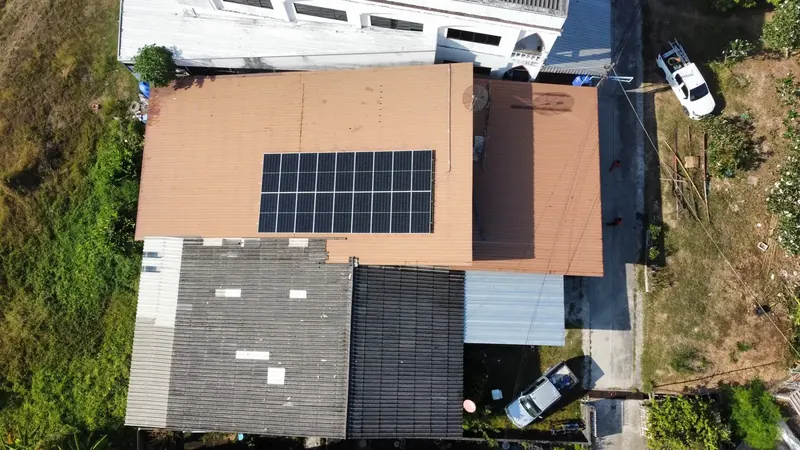
One of the homes we have installed — our own crew handles every step.
Understand this first
Homes don't pay back like factories — and it comes down to when you use power
Solar panels only generate power in the daytime, but most homes use the most electricity from evening into the night — when everyone is back and the air-con goes on.
Power generated during the day that nobody uses flows out to the grid and earns a buy-back rate of roughly THB 2.20 per unit, while the electricity you buy costs around THB 4.20 per unit.
That is why a bigger system is not automatically better value, and why we ask to see your electricity bill before we quote.
Own a villa or house in Thailand as a foreigner? Read our guide to solar for expats and foreign owners.
Which homes get the best value
Someone is home during the day
Retirees, people working from home, or a housekeeper or caretaker on site
The air-con runs regularly in the daytime
Air-conditioning is the biggest power user in the house
A water pump, freezer or water filter runs all the time
Loads that run around the clock soak up daytime power well
Your bill is over THB 3,000 a month
The higher the bill, the more you save — and the faster it pays back
We recommend the system size that fits how your home actually uses power, which for some homes is smaller than expected.
System sizes for homes
Choose a size based on your electricity bill
Pricing depends on your roof and how each household uses power. We visit the property, then give you a quote that reflects the real job.
5 kW
Single-phase or three-phase supply · 8 panels
Homes where someone is in during the day or the air-con runs in the afternoon. The most cost-effective starting size for a house, and it works on an existing single-phase supply without changing the meter.
- Suits
- Homes with a bill of roughly THB 3,000–5,000 a month
- Output per year
- ~6,750 kWh
- Roof area
- ~23 m²
10 kW
Single-phase or three-phase supply · 16 panels
Shops, offices, pool villas and large homes that use power steadily through the day. The best return per baht invested. Single-phase homes can take it if the meter allows — we check the meter size first.
- Suits
- Large homes, pool villas, shops and daytime businesses
- Output per year
- ~13,500 kWh
- Roof area
- ~45 m²
15 kW
Three-phase supply · 24 panels
Businesses that run all day use almost every unit the moment it is generated, so they pay back noticeably faster than homes.
- Suits
- Small factories, hotels and commercial buildings
- Output per year
- ~20,250 kWh
- Roof area
- ~68 m²
20 kW
Three-phase supply · 32 panels
Continuous loads such as cold rooms, large pumps and production lines — every unit generated gets used.
- Suits
- Factories, cold storage and buildings with heavy all-day loads
- Output per year
- ~27,000 kWh
- Roof area
- ~90 m²
Output is estimated from Southern Thailand sunshine of 1,350kWh per kW per year, rainy season included. Real output depends on roof direction, pitch and shading. If your usage doesn't match these sizes, we can design a system in a different size.
FAQ
What homeowners ask us most often
Is solar worth it if nobody is home during the day?
Less so than for a home where someone is in, but it can still pay off if the system is sized correctly. Households that are out at work all day typically use only about 30% of what the panels generate themselves; the rest flows out to the grid at a low buy-back rate. A smaller system means every baht you invest earns its full return. If you can move the washing machine or water pump to daytime hours, the numbers get better still.
Will solar panels make my roof leak?
The points to watch are the screw holes where the mounting rails are fixed to the roof purlins. We use mounting hardware designed specifically for each roof type, seal every penetration against water, and give a 2-year installation warranty that covers any leaks caused by our work.
Does solar still work during a power outage?
A standard on-grid system shuts down when the grid goes down. This is a safety requirement: it stops power from your roof flowing back into the lines while utility crews are repairing them. If you want power during outages, you need to add a battery and switch to a hybrid system, which costs more.
My home or villa is close to the sea. Can I still install solar?
Yes, but the materials have to suit the location. The coast of Southern Thailand has salty air that speeds up corrosion of metal parts, so on properties near the sea we use aluminum mounting structures and stainless-steel fixings, and we recommend cleaning the panels more often than you would in town.
What documents do I need to prepare?
Usually a copy of the owner's ID card, a copy of the house registration, your latest electricity bill and proof of ownership of the building. We handle everything else: the applications to the Provincial Electricity Authority (PEA) and the Energy Regulatory Commission (ERC), and arranging an engineer to certify the roof structure.
Send us your electricity bill first
We will tell you what size your home needs, how much you could save and how many years it takes to pay back — with numbers you can check.
Our team replies in English — on LINE, by email or by phone. Sending a photo of your electricity bill and your location on LINE is the quickest way to get an estimate.
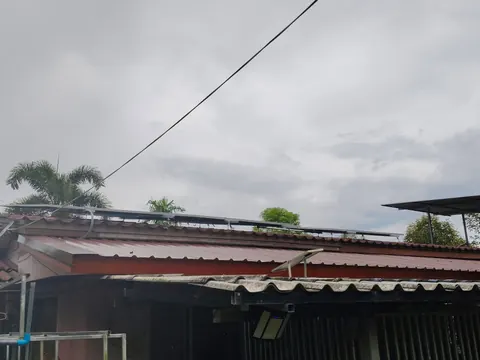
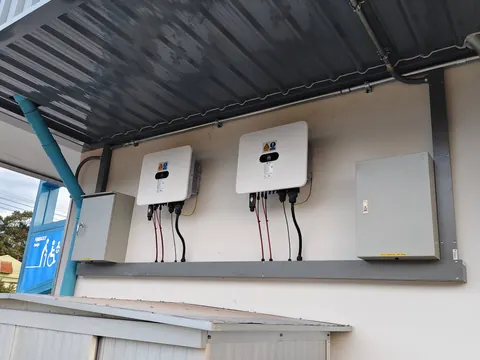
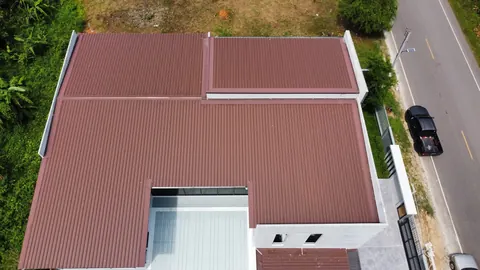
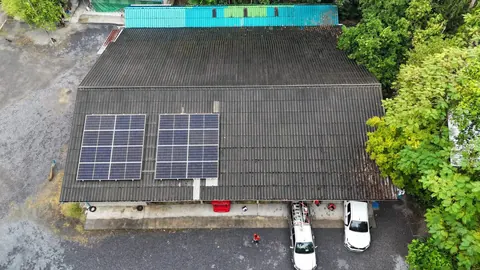
Homes we have actually installed — metal sheet, tile and concrete roofs. See all projects
Read before you decide
- Monthly Bill of THB 3,000, 5,000 or 10,000 — What Size Solar System Do You Need?The best-value size is not the largest your roof can hold — it is the size that matches the electricity you use during the day.
- Will Solar Panels Make My Roof Leak? Installation Methods That Protect Your RoofIt is homeowners' number-one worry, and a reasonable one: drill points that are not sealed correctly really can cause leaks.
- Does Solar Still Work During a Power Cut?Many people only find out at their first power cut that the house goes dark as usual, even with bright sun on the roof. Here's why, and what you need if you want power to keep running.