Solar Panel Cost in Thailand: Phuket, Nakhon Si Thammarat and the South
What a solar installation really costs depends on the roof and on how each property uses power. So we survey the site and quote a price that holds.
Last updated
Transparent pricing
Why we don't put a price tag on it
The cost of installing solar varies a lot from site to site. What moves the number most is the condition of the roof and the length of the cable run.
A fixed headline price has to assume the simplest job: a sound metal-sheet roof with the electrical panel right next to the installation point. When the real site is different, the number changes.
You can still see how the numbers work before the survey. Our cost calculator lets you choose the system size, roof type, panel brand, inverter and battery yourself, then breaks the estimate down line by line so you can see where the money goes — using real retail prices in the Thai market.
We look at the site first, then quote the price you will actually pay. A first estimate from your electricity bill is free. An on-site survey has a fee, refunded when you go ahead with the installation, and there is no obligation to buy.
What our quote tells you
- The brand and model of the panels and inverter, so you can check the specs
- Number of panels, system size, and why that size
- Equipment and labor listed separately
- All the paperwork we handle for you
- Warranty terms broken down by component
- Estimated savings and payback period, with the assumptions shown
What makes prices differ
6 things that set the cost of an installation
Knowing these helps you read any quote with confidence.
Roof type
Metal sheet is the quickest and simplest to install on. Corrugated fiber-cement needs purpose-made purlin hooks, while CPAC concrete tile and flat concrete roofs take more time and more hardware. On the same size of system, the difference can run to tens of thousands of baht.
Condition of the roof structure
If purlins or rafters are rotten or can't take the extra weight, the structure has to be reinforced before installation. That cost depends on what we actually find on site — it can't be judged from photos.
Distance from roof to electrical panel
When the main electrical panel is far from where the panels go, the cable run is longer, so both cable and labor go up with distance. Two-story houses and complex roofs also take longer.
The system size you actually need
We size each system from your electricity bill and the hours you use power. An oversized system costs more up front and earns back less per baht.
Single-phase or three-phase supply
This depends on the meter your property already has. The inverters are different and so is the price. In some cases the meter has to be upgraded, and PEA (Provincial Electricity Authority) charges its own fee for that.
Location
Any travel charge is confirmed before booking, on the same terms in every province we serve. Seafront sites need salt-resistant hardware, which costs more.
System sizes
The sizes we install most often
The right size for you comes from your electricity bill, not from a budget figure.
5 kW
single-phase or three-phase · 8 panels
Homes where someone is in during the day or the air-con runs in the afternoon. The most cost-effective starting size for a house, and it works on an existing single-phase supply without changing the meter.
- Suits
- Homes with a bill of roughly THB 3,000–5,000 a month
- Generation per year
- ~6,750 kWh
- Roof area needed
- ~23 m²
10 kW
single-phase or three-phase · 16 panels
Shops, offices, pool villas and large homes that use power steadily through the day. The best return per baht invested. Single-phase homes can take it if the meter allows — we check the meter size first.
- Suits
- Large homes, pool villas, shops and daytime businesses
- Generation per year
- ~13,500 kWh
- Roof area needed
- ~45 m²
15 kW
three-phase · 24 panels
Businesses that run all day use almost every unit the moment it is generated, so they pay back noticeably faster than homes.
- Suits
- Small factories, hotels and commercial buildings
- Generation per year
- ~20,250 kWh
- Roof area needed
- ~68 m²
20 kW
three-phase · 32 panels
Continuous loads such as cold rooms, large pumps and production lines — every unit generated gets used.
- Suits
- Factories, cold storage and buildings with heavy all-day loads
- Generation per year
- ~27,000 kWh
- Roof area needed
- ~90 m²
Generation is estimated from Southern Thailand sunshine of 1,350kWh per kW per year, rainy season included. Actual output depends on roof direction, pitch and shading. If your usage doesn't fit these sizes, we can design a different size for you.
Scope of work
What our quote includes — and what it doesn't
Included in the price
- Solar panels and inverter to the specification written in your quote
- Mounting structure and fixings suited to your roof
- Control box, protection devices and cabling to utility standards
- 19Energy's own technicians handle every job
- Permit applications with PEA (Provincial Electricity Authority) and the ERC (Energy Regulatory Commission)
- System testing, plus a walkthrough of the monitoring app
- 2-year installation warranty
Not included, and why
Roof structure reinforcement
A roof that is rotten or not strong enough has to be repaired first. The cost depends on its real condition, and we tell you after the survey, before any work starts.
PEA meter upgrade fee
This fee is charged directly by the utility and does not go through us. We give you the current rate when we quote.
Backup battery
The standard system is on-grid. If you want power during a blackout, you need a battery and a hybrid system.
Travel charge (if any)
Confirmed before booking, on the same terms in every province.
What the THB 1,200–1,500 site survey fee covers — and why there is one
The fee is refunded in full against your quote when you go ahead with the installation. In other words, if you choose us, the survey costs you nothing.
Step 1: estimate from your electricity bill — free
A first estimate from your electricity bill is free — just send a photo of the bill on LINE. We work out the system size that suits your usage — no survey booking and no commitment yet.
Step 2: on-site survey — THB 1,200–1,500
A technician visits the property and gathers what we need to design the system and quote.
Step 3: your quote — survey fee refunded in full
We send a quote with every assumption open for you to check. If you go ahead, the survey fee is deducted from the price in full.
- What the technician does on site, and what you get
- Measuring the actual roof and the installation area
- Checking the condition of the roof structure — something photos can't show
- Checking sun direction and any shading
- Deciding where the equipment will be mounted
- A survey report with photos of your actual roof
- Generation and payback calculations based on your own electricity bill
The survey report is yours to keep.
- Why there is a fee
- It covers fuel, a technician's full day away from installation work, and the time to measure, calculate and write up your report. The technician stays on site until we have everything needed to design the system and give you a price that holds.
- How far it covers
- Up to 100 km from our office. For sites further away, we tell you the travel cost before booking.
The survey fee is charged once, before the visit, and deducted in full from your quote when you go ahead with the installation.
Equipment
We name the brands, so you can check them
Every quote names the brand and model, so you can check the specifications yourself.
Solar panels
JA Solar, LONGi or Jinko Solar
N-type TOPCon, dual-glass, 620–630 W per panel
Inverters
HUAWEI, Solis or Deye
On-grid and hybrid inverters with a monitoring app so you can check your generation history yourself
Batteries
LVTopsun or Sunwoda
LiFePO4 lithium batteries for hybrid systems, sized to your night-time consumption
Brands we install for our clients




All trademarks belong to their manufacturers. They are shown to tell you which brands we install — we are not an authorised distributor and are not endorsed by any manufacturer. Tap a brand to check its specifications on the manufacturer's official website.
We choose brands to suit each site and budget, so not every home gets the same brand. The exact brand and model are written into your quote before you sign anything.
FAQ
Pricing and quotes
Why don't you publish a standard price?
Because the real cost of a job varies a lot with the roof type, the condition of the structure, the cable run and the system size that fits how you use electricity. A standard price would be wrong for almost every job. We survey the site first and then quote a price that holds. If you'd like a rough figure before booking, try our cost calculator.
Do I have to pay to get a quote?
There are two steps. A first estimate from your electricity bill costs nothing — just message us on LINE. An on-site survey has a fee of THB 1,200–1,500, which is refunded in full against your quote when you go ahead with the installation. In other words, if you install with us, the survey costs you nothing. Neither step commits you to buying.
What does your quote show?
The brand and model of the panels and inverter, the number of panels, the system size, the equipment list, labor, the paperwork we handle for you, and warranty terms broken down by component. It also shows how much you are likely to save and the payback period, with every assumption laid out so you can check it.
Will the price go up after you quote?
No. Once we have surveyed the site, the price we quote is the price you pay. The only exception is a structural problem that could not be seen during the survey, such as a rotten purlin hidden under the tiles. If that happens, we stop work and tell you before going any further.
How do I compare solar quotes fairly?
Check four things. First, the brand and model of the panels and inverter. Second, whether permit and grid-connection paperwork is included. Third, how many years the installation warranty is, which is separate from the manufacturer's panel warranty. Fourth, whether the price includes VAT — our quotes state clearly whether prices are before or after VAT.
Send us your electricity bill and get a real price within days
We size the system from your bill first, then book a site survey and send a quote with every assumption open for you to check. The bill estimate is free, and the survey fee is refunded in full when you go ahead.
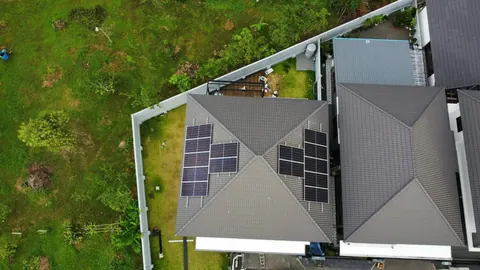
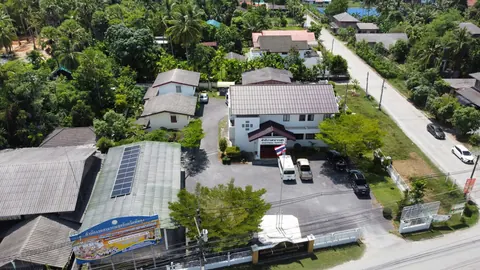
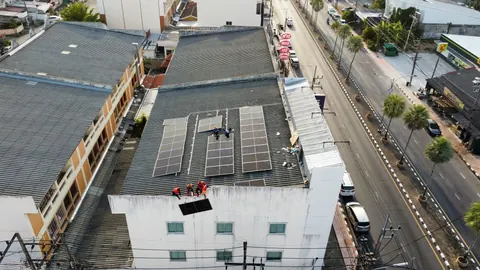
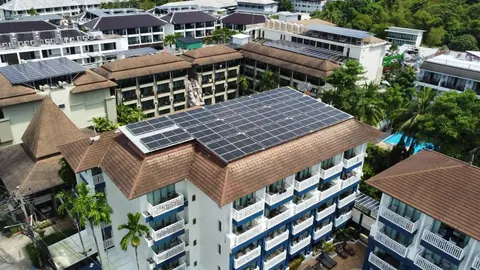
Real installations — each priced to its own roof and site. See all projects
Read before you decide
- Thai Electricity Is THB 3.95 per Unit for Sep–Dec 2026 — How to Calculate Solar Payback CorrectlyThe tariff you see in the news and the rate you actually pay are not the same. Here's how to work out your own real cost per unit so your payback calculation is accurate.
- Can You Pay for Solar in Installments? Financing Options Worth KnowingYou can pay in installments. Work out how much of your savings goes to interest, so you know the full cost in advance.
- Thailand's 2026 Solar Tax Deduction: Up to THB 200,000 — Who Actually QualifiesThe measure runs until the end of 2028, but several conditions stop people who have already installed from using it. The most common mistakes are system size and the names on the documents.