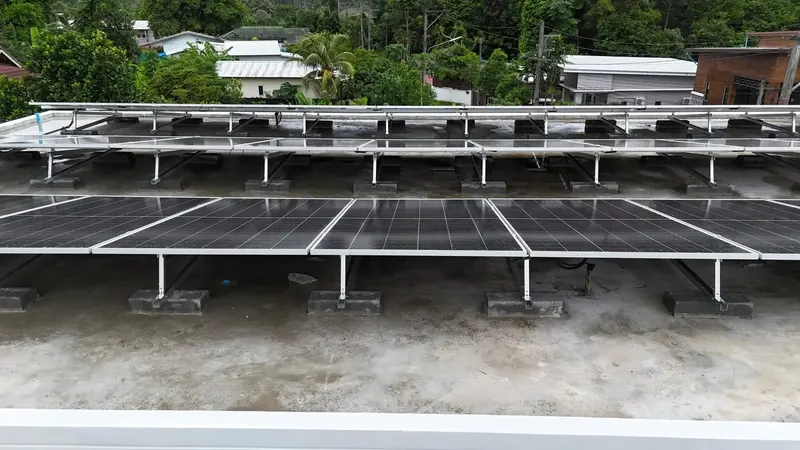
The question we hear most once a price is agreed is: when can I start using it? The answer has two dates — the day installation is finished and the day the system can actually run — and there's quite a gap between them.
The full timeline
| Step | Time taken | Who does it |
|---|---|---|
| Review your bill and estimate the size | Within one day | Us |
| Site survey and quote | 1–3 days after the appointment | Us |
| Order equipment and schedule the crew | 3–7 days | Us |
| Installation on site | 1–3 days, depending on system size | Our installation team |
| Grid-connection application | 30–90 days | We submit it; the utility reviews it |
| Site inspection and meter replacement | Depends on the utility's queue | The utility |
| Approval to switch on | After passing inspection | The utility |
Why the paperwork takes many times longer than the installation
Connecting a generating system to the utility's lines means it has to be checked: that the equipment meets standards, the wiring is correct, and the system genuinely shuts itself off during a power cut. That step is in the hands of the utility — in Southern Thailand, PEA (the Provincial Electricity Authority) — not the installer.
Switching the system on before approval breaches the rules and may cause problems when the utility comes to inspect, so the system stays off until approval is granted.
While you wait for approval, the system doesn't run, but nothing is harmed. The panels and inverter can sit on the roof without degrading any faster.
What makes it slower than usual
- Land title deeds or the house registration don't match the name on the electricity account, which has to be fixed before applying.
- The roof needs structural reinforcement first — found during the survey, and then waiting on the owner's decision.
- Periods when the local utility office has a long queue, especially after news of a power buy-back program.
- Buildings that need additional structural certification from an engineer, which takes time for the inspection and paperwork.
What happens on installation day
- The crew arrives in the morning and lays protective sheets on the ground below to catch anything that falls.
- Rails and mounting hardware are fixed to the roof structure, and every drilled point is sealed against water.
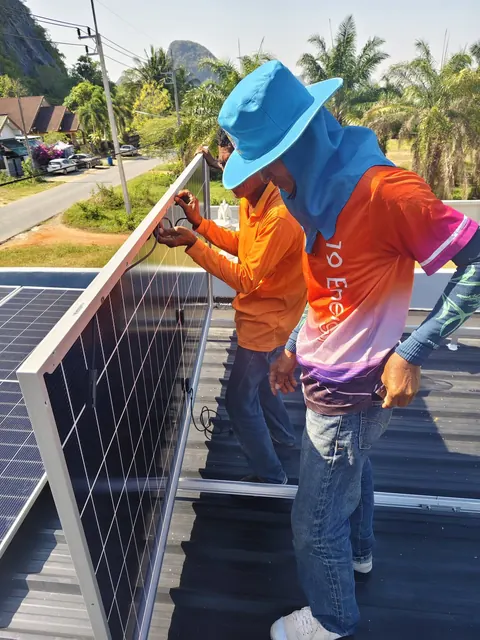
- The panels are lifted up and fixed to the rails, and the DC cables are run down.
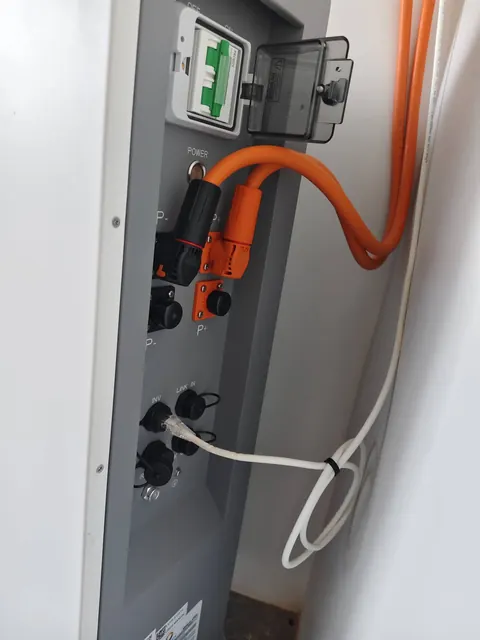
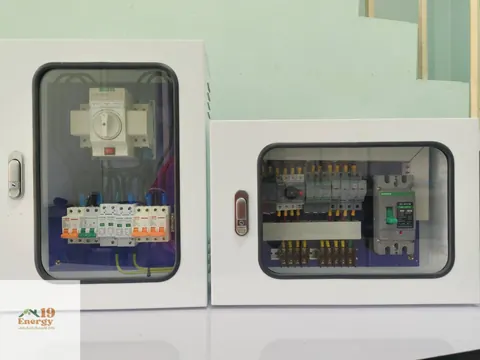
- The inverter and control box are installed, connected to the house wiring, and the grounding system is done.
- The system is tested, before-and-after photos are taken, and it's handed over along with a walkthrough of the monitoring app.
A typical home system of 5 to 10 kW is finished in one to two days. Factories or buildings that need a crane, or work done in phases so production isn't disrupted, take longer.
Frequently asked questions
Do I need to be home all day during installation?
Not all day, but it's best to be there at the start to agree on where the inverter goes, and at handover to learn how to use the system and check the work. During the day the crew can work on the roof without anyone supervising.
How long will the power be off for the whole house?
About one to two hours while connecting to the main electrical panel. We tell you the time in advance so you can prepare. If you have fridges or equipment that can't be switched off, tell us during the survey and we'll keep the shutdown as short as possible.
Do I have to pay in full while waiting for the utility's approval?
The final installment is tied to the day the system actually starts running, not the day installation finishes, so your payments follow the whole process through to switch-on.
Related services and areas
Keep reading
- Will Solar Panels Make My Roof Leak? Installation Methods That Protect Your RoofIt is homeowners' number-one worry, and a reasonable one: drill points that are not sealed correctly really can cause leaks.
- 7 Things to Check Before Choosing a Solar Installer in Southern ThailandThe cheapest price is not necessarily the best value, and the most expensive is not necessarily the best. Here is what to look at instead.
- PEA Meter Replacement Fees Are Much Lower in 2026 — Check the Current RateThe new 2026 PEA meter fees start at THB 3,300, well below the THB 8,500–9,000 set under the 2019 rules. Here's how to check which figure your quote uses.
- Single-Phase vs Three-Phase Power: Do You Need a New Meter for Solar?Your home's power supply sets how big a solar system you can install — and it's worth knowing early whether you need a new meter, which is a separate cost.