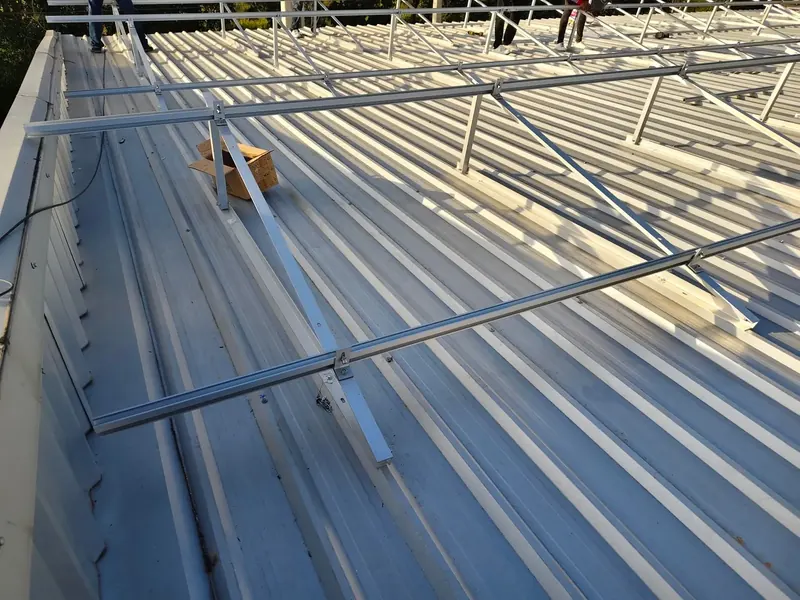
A solar system stays with your home for twenty-plus years. A more important question than who is cheapest is this: five years from now, if the inverter shows a red fault light, who will come and look at it?
1. The brand and model of the equipment — not just “Grade A”
A clear quote states the brand and model of both the panels and the inverter, rather than a general description such as “Grade A”, so you can look up the specifications and the manufacturer's warranty terms yourself.
Tier 1 panels are now the market standard, so it helps to compare the specific model and its warranty terms as well.
2. Installation warranty is not the same as panel warranty
This is the area that most often causes confusion. One system carries three different kinds of warranty.
| Type | What it covers | Who is responsible |
|---|---|---|
| Panel product warranty | Panel defects, such as glass cracking on its own or film peeling | Panel manufacturer |
| Performance warranty | Power output not falling faster than a stated rate | Panel manufacturer |
| Installation warranty | Structure, wiring, leaks from drill points | Installer |
Panel warranties of 25 or 30 years almost always refer to the performance warranty. They do not mean a failed panel will be replaced free for 25 years. Ask about each warranty separately, and how many years each one lasts.
The installation warranty is the one the manufacturer does not cover, so it is worth asking how many years it lasts and what it includes. Installation warranties currently range from 1 to 5 years.
3. Are permit and paperwork fees included?
All of Southern Thailand is served by the Provincial Electricity Authority (PEA), which has its own procedures and documents. This work takes time and expertise. Ask whether it is included in the price, charged separately, or left for you to submit yourself.
Ask clearly what is included: the grid-connection application to PEA, the license-exemption notification to the Energy Regulatory Commission (ERC), and a licensed engineer to certify the structure — a document required in every case.
4. Does the price include VAT?
Check whether each price includes VAT. When you compare a price that includes VAT with one that doesn't, the figures differ by 7% without you realizing it.
When comparing, ask every installer the same question: what is the total amount I will actually pay?
5. Do they survey the site before quoting?
A site survey before quoting matters, because a price prepared by phone or chat without seeing the roof has to assume everything will be as simple as possible.
What has to be checked on site: the condition of the purlins and rafters, the type and age of the roof, its orientation and pitch, shading at different times of day, the distance from the array to the electrical panel, and where the inverter can go. None of this can be assessed from photos.
6. Who looks after the system afterwards, and how far away are they?
Ask how far the installer's operating base is from your home, because distance determines how realistic it is for them to come back and look after the system over its lifetime.
Ask clearly who you contact if the system has a problem, whether the service team is the same team that installed it, and where their office is.
7. Is the company properly registered?
Ask for the company's registered name and tax ID number and check them with the Department of Business Development (DBD) yourself. It takes a few minutes.
This matters because an installation warranty only means something if the company that gave it is still around when you need it, and because a registered company gives you a clear, traceable point of contact for the life of the system.
Points to clarify before you sign
- How long the quoted price and any promotion remain valid, so you have time to decide
- Whether the roof will be surveyed before the final quote
- How the savings and payback figures were calculated from your electricity bill
- Which permits are required and who will apply for them
- The warranty terms, in writing
- The payment schedule, including the deposit due before work begins
Summary
When comparing quotes from several installers, don't just compare the final figure. Compare the equipment brands, how many years the installation warranty lasts, whether paperwork is included, whether VAT is included, and who will look after the system five years from now. Once all five are compared, the price that looked cheaper at first may not be cheaper at all.
Frequently asked questions
How many quotes should I get?
Two or three is about right. More than that becomes hard to compare and takes time without adding information. More important than the number is asking every installer to specify the same items, so the quotes can genuinely be compared.
What is a normal deposit?
Payment is usually split into installments tied to progress — for example, a deposit when equipment is ordered, a further payment when installation is complete, and a final installment after the system has passed inspection and been connected to the grid. A schedule tied to progress like this keeps payments in step with the work.
Related services and areas
Keep reading
- Will Solar Panels Make My Roof Leak? Installation Methods That Protect Your RoofIt is homeowners' number-one worry, and a reasonable one: drill points that are not sealed correctly really can cause leaks.
- Monthly Bill of THB 3,000, 5,000 or 10,000 — What Size Solar System Do You Need?The best-value size is not the largest your roof can hold — it is the size that matches the electricity you use during the day.
- JA Solar, LONGi, Trina, Jinko, Canadian: How Do Solar Panel Brands Compare?What you can actually compare between panel brands is the price per watt and the number of years in the warranty document — this article puts both side by side for five brands.