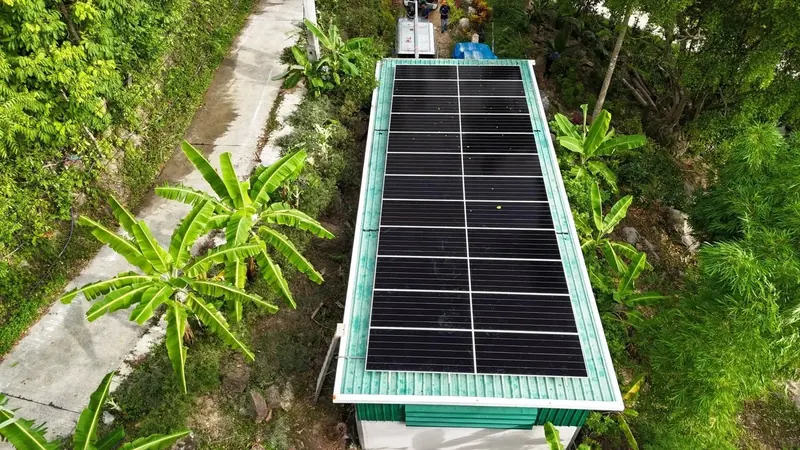
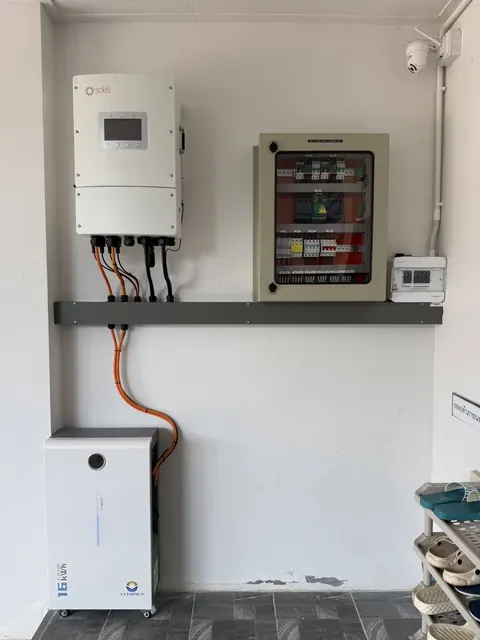
Between 19 and 21 November 2025, Hat Yai received about 630 mm of rain, with about 335 mm on 21 November alone, and water reached about 2.5 meters in some areas. Most homes and businesses with solar have the inverter, control box or batteries mounted on a ground-floor wall — well within reach of floodwater.
This article runs in time order: before the water arrives, during the flood, and after it recedes, then finishes with how to design a system for flood-prone sites. If your area is flooding right now, read the "during the flood" section first.
First: panels keep producing power even when the grid is cut
During floods the utility often cuts power to the area, so many people assume there's no electricity in the house. With solar, that isn't entirely true. The panels on the roof generate DC power whenever there's light, even under cloud, so the DC cables running down to the control box and inverter are still live.
The protection that stops the inverter supplying the house during an outage does not make the panel side dead. And if there's a battery, the cables between the battery and the inverter are live too. Inverter manufacturers' own manuals warn that the inverter's components and cables carry high voltage, and that DC cables connected to a battery may be live.
If any part of the system is underwater or wet, always assume it's live and dangerous. Don't wade near it, don't touch the unit, cables or switches, and don't try to turn off switches that are already wet.
Before the water arrives: shut down following the manufacturer's procedure
If there's advance warning and the equipment is still dry, shutting the system down correctly reduces the risk considerably. The right procedure varies by brand and model, so follow the manual for the equipment actually installed, or the shutdown label fixed next to the inverter or switchboard.
The commonly used sequence for a rooftop system looks roughly like this:
- Switch off the AC breaker that connects the inverter to the house switchboard.
- Switch off the house's main breaker.
- Switch off the DC isolator next to the inverter.
- If there's a battery, shut it down following that battery model's manual.
Only do this when the floor is dry, your hands are dry and you can reach the switches safely. Never go on the roof in a storm. If you're unsure of the steps, call your installer before touching anything — switching off in the wrong order or with wet hands is riskier than not switching off at all.
If your home is in a flood-prone area, something worth doing today: photograph the shutdown label and keep it on your phone, and make sure at least one other person in the house knows where each switch is.
During the flood: keep away
- If the water has reached the inverter, control box or battery, don't go in to switch anything off, and don't wade through that room.
- Keep children and pets away from the area.
- If you smell burning, see smoke or hear unusual sounds from the battery, leave the building and call the fire service.
- Tell your installer the system has been flooded, so an inspection can be planned as soon as the water drops and the site is safe to reach.
After the water drops: don't switch the system back on yourself
This is where repeat damage happens most often. An inverter that has dried out and looks fine from the outside can still hold moisture or silt on its circuit boards and terminals. Switching the system straight back on risks electric shock and short circuits, and can turn equipment that could have been repaired into a write-off.
Guidance from Australia's Clean Energy Council during major floods in Queensland says the system should not be switched back on until it has been checked by an accredited installer or licensed electrician, because moisture may be present in switches and other components, and that submerged inverters will likely need replacing. A U.S. Department of Energy guide states that any solar system components that have been submerged need to be replaced, including the inverter, switchgear, meters and other hardware.
What the technician should check before re-energizing:
- How high the water actually reached relative to each piece of equipment, using the watermark on the wall.
- The inverter, battery, control box, surge protection devices and breakers that were below the waterline.
- Insulation resistance of the DC cabling and connectors that were underwater.
- The earthing system and the house switchboard, which an electrician should check at the same time.
- Rooftop panels usually escape the floodwater, but if there was a storm as well, check the mounting and look for cracked panels at the same time.
Don't charge or use a lithium battery that has been submerged until it has been inspected, and don't open equipment to wipe or blow it dry yourself. Besides the danger, it makes a claim harder.
Will insurance or warranty cover it?
Manufacturer warranties generally cover manufacturing defects, not external events. For example, Solis's warranty terms explicitly exclude damage from lightning, flood, power surges, fire and force majeure. For other brands, check the warranty document for the model actually installed.
An installer's workmanship warranty covers defects in the installation, not natural disasters. So the route that may actually help is usually your home or business property insurance — and flood cover varies from policy to policy.
- Check whether your policy covers flood, and whether the solar system is listed as insured property.
- If the solar was installed after you took out the policy, ask your insurer to add it.
- Before removing or discarding damaged equipment, photograph the watermark, the model and serial number labels, and keep the original quote and tax invoice.
- Ask the technician for a written inspection report to support the claim.
Designing for flood-prone sites
Rooftop panels are rarely the problem. What gets damaged is the equipment on the ground floor — and that's solved by choosing its position on installation day.
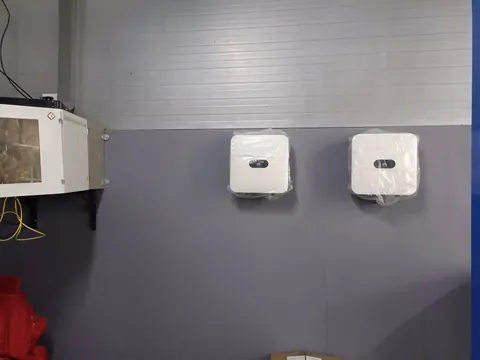
- Mount the inverter, control box and battery above the highest flood level seen in the area, with a margin. The U.S. Department of Energy guidance follows the same principle: raising equipment above the expected flood level prevents a total loss.
- In a two-story house, putting the equipment upstairs or high on a wall above the flood line is often the simplest option — but ventilation and cable runs need to be considered too.
- Batteries must be placed at the clearances and locations the manufacturer specifies, and not on a ground floor that has flooded before.
- Put the DC isolator and breakers somewhere you can reach without wading, and fix a clear shutdown label beside them.
- An ingress rating on an inverter spec sheet, such as IP65, means protection against dust and water jets or spray — it doesn't mean the unit can be submerged.
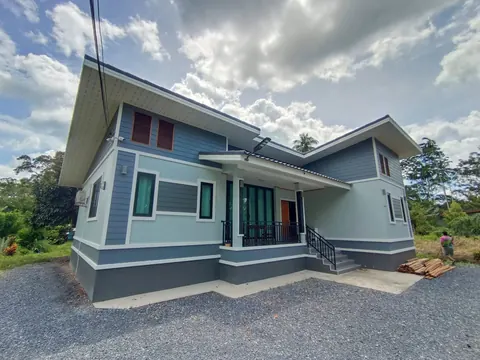
If you're in Hat Yai or anywhere water has entered the house before, tell us the highest flood level when we first discuss the job. Equipment placement needs to be agreed before installation; moving it later costs extra labor and cable.
Sources used for this article
Figures in this article are based on public announcements and news reports (most sources are in Thai). If the conditions change, the latest official announcement from the relevant authority applies.
- Report on the November 2025 Hat Yai floods: rainfall and water levels · The Nation (Dec 2025)
- Solar system safety during floods, citing Clean Energy Council guidance · SolarQuotes (Mar 2021)
- Preventing and mitigating flood damage to solar PV systems · U.S. Department of Energy
- High-voltage safety instructions for inverters · SMA manual
- Warranty terms and exclusions · Solis
Frequently asked questions
The utility has cut the power. Is my solar system still live?
Yes. The rooftop panels generate DC power whenever there's light, so the DC cables down to the control box and inverter still carry voltage, and if there's a battery, its cables are live too. If equipment is underwater or wet, treat it as dangerous and keep away.
My inverter has dried out. Can I switch it back on?
You shouldn't. Moisture and silt can remain on circuit boards and terminals, so switching on risks electric shock and short circuits. Have it inspected first — submerged inverters usually need replacing.
Do flooded solar panels need replacing?
Most rooftop panels stay above the water. If ground-mounted or carport panels were submerged, have them inspected before use, especially the junction box and connectors. The U.S. Department of Energy guide states that submerged components, including modules, need to be replaced.
Does the inverter warranty cover flood damage?
Generally not. Manufacturer warranties cover manufacturing defects — Solis's terms, for example, exclude flood damage. The route that may help is your property insurance, so check the terms of your policy.
My home is in a flood-prone area. Should I still install solar?
Yes — the panels are on the roof. What needs planning is where the inverter, control box and battery go: above the highest past flood level, with the isolation switches reachable without wading.
Related services and areas
Keep reading
- Can Lightning Strike Solar Panels? The Protection You Need in Southern ThailandRooftop panels don't attract lightning the way many people fear, but surge damage from a nearby strike is real — and it can be prevented.
- Does Solar Still Work During a Power Cut?Many people only find out at their first power cut that the house goes dark as usual, even with bright sun on the roof. Here's why, and what you need if you want power to keep running.
- Why Is My Solar Output Dropping, and Can I Check It Myself?Solar systems rarely die completely. More often they slowly produce less with no warning — and the way to catch it is to look at your generation history.
- It Rains a Lot in Southern Thailand — Does Solar Still Produce Real Power?Solar panels run on light, not heat, so they still generate on overcast days. But how much less do they produce, and is it still worth it?