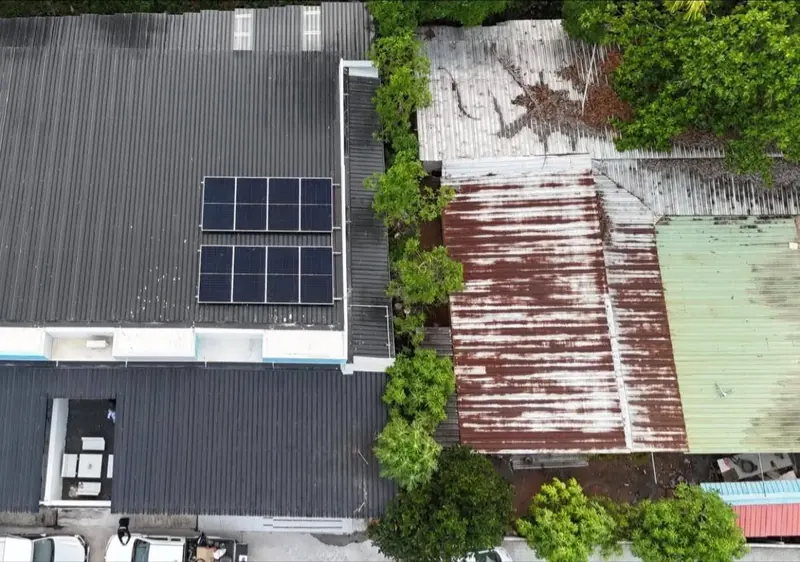
This is the question people in the South ask most, and it is a reasonable one: we live in the rainiest region of the country.
The short answer is yes, solar really does produce power here, but less than in other regions — and that is not a problem as long as the calculation uses the right numbers from the start.
Panels run on light, not heat
A common misconception is that solar panels need intense, hot sun. In fact they respond to the brightness of the light, not the temperature. On a cloudy, overcast day, light still gets through, so the panels still generate.
Interestingly, very high temperatures actually reduce output slightly. Every panel model has a temperature coefficient, which tells you how many percent output falls for every 1°C rise in temperature. This is one reason newer N-type panels suit our hot, humid climate better than older panels.
How much does the rainy season affect output?
On days of really heavy rain, output drops a lot. But the key point is that returns are not calculated day by day — they are calculated over a year.
The figure used for Southern Thailand is around 1,350 units (kWh) per kilowatt of installed capacity per year. It is an annual average that already combines rainy days, overcast days and bright sunny days — not a figure for a good sunny day.
A figure higher than 1,500 for Southern Thailand is usually the value for the Northeast (Isan) or the national average, which gives results roughly 10 to 15% higher than systems here actually produce. You are always welcome to ask where any figure comes from.
An advantage that rarely gets mentioned
Frequent rain has one benefit: it washes dust off the panels for you. Dry, dusty areas such as some provinces in Central Thailand need more frequent cleaning because accumulated dust blocks the light.
But rain does not wash everything away. What you need to watch for in the South are the deposits rain cannot remove.
- Bird droppings, which stick firmly and block light in one spot — this affects output more than a thin layer of dust spread across the panel.
- Leaves caught along the edges of the panels, especially on homes under large trees.
- Moss and mold in damp areas, which slowly build up along the panel frames.
Humidity and equipment
Year-round humidity is something to design for, not something to overlook. The key point is where the inverter goes: it should be in the shade, with good airflow, out of driving rain, and not in an enclosed space where heat builds up.
The other point is that all wiring and every connection must be properly sealed against water, because water getting into connectors is one of the leading causes of long-term system problems.
Summary
Solar works and pays off in Southern Thailand, but it has to be calculated with the South's real sunshine figures, not the national average, and designed for humidity and a maintenance routine that differs from other regions. If the calculation is right from the start, the numbers you are shown are the numbers you will actually see after installation.
Frequently asked questions
If it rains for several days in a row, will I run short of power?
An on-grid system is connected to the utility's power lines at all times. Whenever the panels are not producing enough, the system automatically draws the rest from the grid. You will not notice any shortage — that month's bill will simply be reduced by less than in a sunny month.
Should the panels be tilted more steeply so rain cleans them better?
We generally mount panels at the existing roof pitch, because a raised frame to increase the tilt adds cost, wind load and structural risk. In the South, where strong monsoon winds come through periodically, raising panels above the roof is not something to do without an engineering reason to support it.
Related services and areas
Keep reading
- Is Solar Worth It in Nakhon Si Thammarat? Working It Out From Your Real BillMost people ask how high a bill has to be before solar pays off. Just as important is when you use electricity, because panels only generate during the day.
- Solar for Homes Near the Sea: What You Need to Know About Salt Air and CorrosionYou can install near the coast, with salt-resistant materials chosen at the design stage.