A description such as "Grade A panels" is not a certified standard — no authority certifies a panel as Grade A. What you can genuinely compare comes down to two things: the price per watt, and the number of years written in the warranty document.
Price per watt by brand
Retail shop prices in Thailand, checked on October 1, 2026 (620–725 W panels), fall within these ranges:
| Brand | Price per watt |
|---|---|
| Jinko Solar | THB 4.6–5.5 |
| LONGi | THB 5.0–6.0 |
| JA Solar | THB 5.1–6.1 |
Trina Solar and Canadian Solar were not price-checked in this round, so they are not in the table.
The gap in starting price between brands is around 10%, but panels make up only about a fifth of the total system price. So the difference you actually pay is around 2% of the whole job — not 10%.
Warranty terms published by the manufacturers
First, separate the two kinds of panel warranty, which are unrelated. The product warranty means a defective panel is replaced with a new one. The performance warranty means the manufacturer guarantees output won't fall faster than a stated rate — which doesn't mean you get a new panel.
| Brand | Product | Performance |
|---|---|---|
| JA Solar | 15–25 years | 30 years |
| LONGi | 15 years (Hi-MO X10) | 30 years (Hi-MO X10) |
| Trina Solar | 25 years | 25–30 years |
| Canadian Solar | 25 years | 30 years |
| Jinko Solar | 12–25 years | 30 years |
Notice how wide the product warranty range is for some brands. It varies by model and by the market the panels are imported into — the same model shipped to one market might carry a 25-year warranty while another market gets 12 years. The figure that applies to what you actually receive is the one in that model's documents, not the brand's best number.
When you ask for a quote, ask for the full model name, not just the brand. "JA Solar" on its own doesn't tell you how many years the product warranty is.
So which brand should you choose?
- If budget comes first, choose a brand with a lower price per watt and put the difference toward a larger system — you'll get a better return than from upgrading the brand.
- If you live by the sea, prioritize salt-mist resistance specifications and the frame type over the brand name.
- If you might sell the house in future, a well-known brand helps in conversations with buyers.
- In every case, check how many years the installer warrants the installation for — damage caused by the installation isn't covered by the manufacturer.
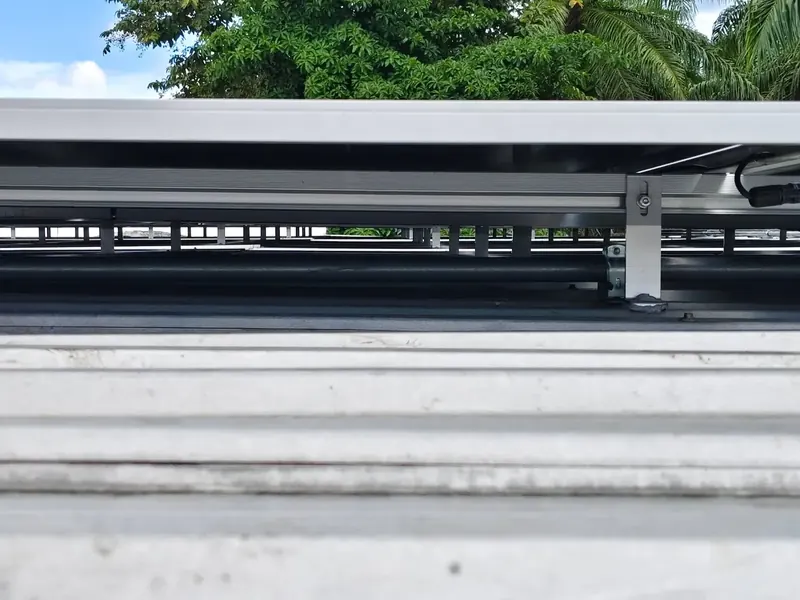
In practice, installation quality matters more than the difference between these five brands: the right fixings and a sound roof structure are what keep any panel performing over its lifetime.
Frequently asked questions
Is there a big difference between Chinese and European panels?
All five brands in the table are Chinese manufacturers, and together they hold more than half of the global market. Panels made in Europe or the US do exist, but they cost much more, and parts and after-sales service in Thailand are harder to find. In practice, for a home in Thailand, these five brands are the sensible choices.
What happens to the warranty if the manufacturer goes out of business?
The manufacturer's warranty can no longer be used — a real risk that no one else can guarantee on their behalf. That's why it also helps to have an installation warranty from a local installer you can reach directly.
Related services and areas
Keep reading
- 7 Things to Check Before Choosing a Solar Installer in Southern ThailandThe cheapest price is not necessarily the best value, and the most expensive is not necessarily the best. Here is what to look at instead.
- Solar for Homes Near the Sea: What You Need to Know About Salt Air and CorrosionYou can install near the coast, with salt-resistant materials chosen at the design stage.
- Monthly Bill of THB 3,000, 5,000 or 10,000 — What Size Solar System Do You Need?The best-value size is not the largest your roof can hold — it is the size that matches the electricity you use during the day.