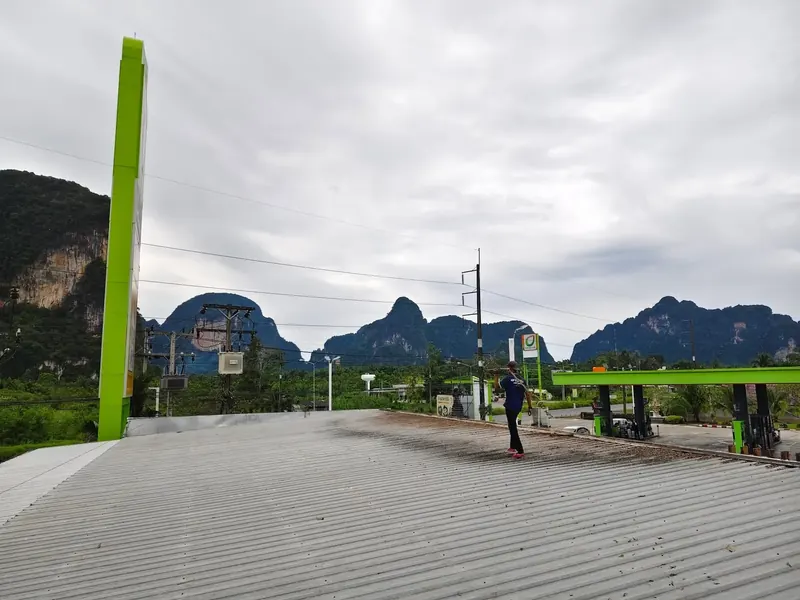
Hat Yai and central Nakhon Si Thammarat are packed with shophouses — the kind of building people often assume can't take solar because the roof is small. The reality is more nuanced.
Advantages a detached house doesn't have
A shophouse used for business has a pattern of electricity use that suits solar clearly better than an ordinary home.
- The shop is open during the day, exactly when the panels produce the most.
- There are loads running throughout business hours, such as air-conditioning, display fridges and product lighting.
- Almost all the power generated is used on site, so hardly any flows out to be sold at a low rate.
The result: even though the system is smaller than on a detached house, every unit it produces is worth the full electricity rate, which makes up for much of the size limit.
Limits you have to accept
Little roof space
A single-unit shophouse usually has little usable rooftop, and part of it is already taken by water tanks, air-conditioning units and the stairwell, which limits how big a system can go.
If several adjoining units belong to the same owner, the picture improves a lot, because the space can be combined and fixed costs such as the inverter and paperwork can be shared.
Shade from neighboring buildings
This matters more than size. A shophouse next to a taller building on its east or west side will be shaded in the morning or afternoon, which cuts a lot of generating time.
You also need to think ahead: the plot next door could be built up higher in the future — a risk a detached house in a housing estate doesn't face.
If shade covers part of the array but not all of it, it can still be managed by choosing equipment that lets each panel work independently, instead of letting shaded panels drag down the whole set. It adds cost but is worth it when the shade can't be avoided.
Who owns the roof
If you rent, you need the building owner's written consent, and should agree clearly who owns the system — or whether it will be removed — when the lease ends.
Another situation we see is a rooftop that is common property shared by several units, which needs agreement from everyone first.
Concrete rooftop structures
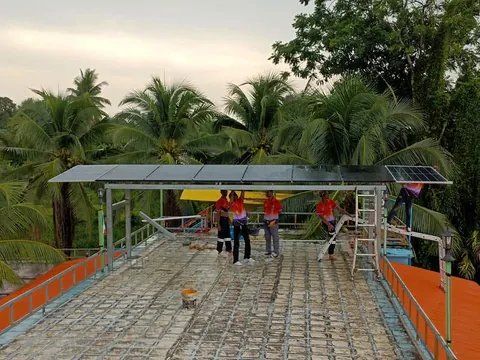
The advantage of a concrete roof deck is that the system can be installed without drilling, using ballasted (weighted) mounts instead, so the roof waterproofing isn't affected at all.
But the weight and wind loads must be calculated carefully, especially on tall shophouses in exposed spots, because wind uplift at the roof edge is much higher than in the middle.
Shophouses where we'd tell you it doesn't pay
- The rooftop is shaded for most of the day by a taller building next door.
- So little usable space is left that the system can't reach a size that justifies the fixed costs.
- You rent, have only a few years left on the lease, and have no agreement about the system when you move out.
- You use little electricity and only open from evening into the night.

Frequently asked questions
Can several shophouse units owned by the same person share one system?
Yes, and it usually pays off much better than separate systems, because fixed costs such as the inverter and paperwork are shared. But check whether the units share one meter or have separate meters — power generated behind one meter can't be used on another. With separate meters, the systems have to be designed separately as well.
Do I need a building modification permit?
It depends on the roof area and the weight of the system compared with the exemption thresholds set by ministerial regulation. Commercial buildings are more likely than homes to need a permit application. We check this case by case during the site survey, and if an application is needed, we handle it.
Related services and areas
Keep reading
- Can Solar Really Cut Costs for a Restaurant or Café?Fridges, ice machines and air-conditioning run nonstop while you're open — a pattern where solar pays back well. But your opening hours matter too.
- How Much Can Hotels in Southern Thailand Save With Rooftop Solar?Hotels use power at exactly the time panels produce it, but the design has to allow for low season — otherwise the power you generate flows out for next to nothing.