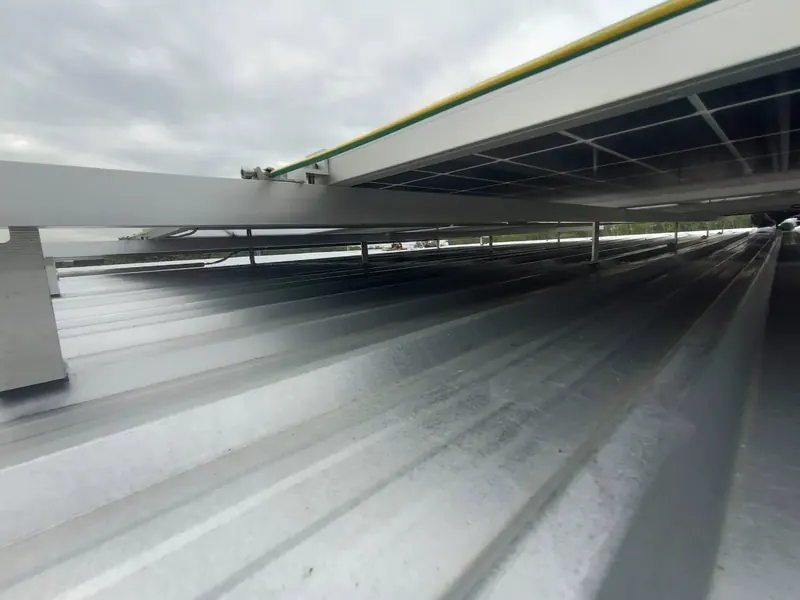
If you ranked businesses by how well solar pays off for them, cold storage and ice plants would always be near the top — and they are spread all along the southern coastline.
Why it pays off better than other businesses
The reason is the nature of the load. Refrigeration does not switch on and off with business hours like office air-con; it has to hold the temperature constantly, so the compressors cycle day and night.
The result is that almost every unit the panels produce during the day is used immediately. No surplus flows out to the grid at a low price — unlike private homes, which use only 30 to 50% of the power they generate themselves.
On top of that, the hottest part of the afternoon is when refrigeration works hardest, and it is also exactly when the panels produce the most. The two peaks coincide.
Which businesses this applies to
- Cold stores for seafood and farm produce, found in large numbers along the coasts of Songkhla, Nakhon Si Thammarat and Surat Thani
- Ice plants, which run continuously and see high demand all year in fishing areas
- Seafood processing plants, with both cold rooms and daytime production lines
- Rubber and palm processing plants with refrigeration systems and machinery that run continuously
Precautions that differ from ordinary jobs
Factory roofs are often older than you think
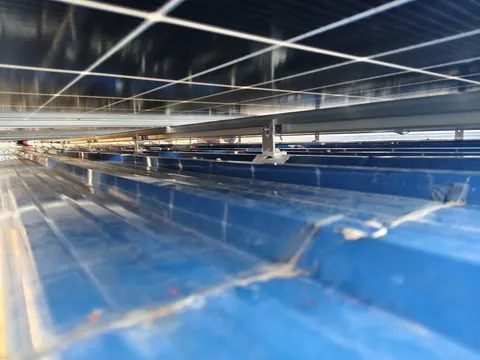
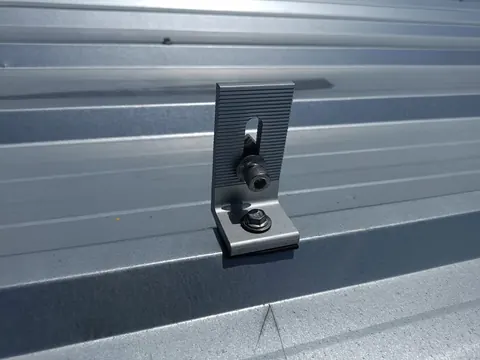
Many cold-storage buildings have been in use for a long time. Metal sheet roofs exposed to salt air and moisture from the refrigeration system may have thinned considerably. Having an engineer inspect the structure first is not a formality — it is genuinely necessary.
Inrush current when compressors start
Large compressors draw very high current when they start. The system design has to allow for this, not just look at the average from the electricity bill.
The power must not go off during installation
This is the clearest difference from other jobs. A cold room that loses power for too long means spoiled stock. Any work that requires a shutdown must be scheduled in advance with a backup plan in place — something to agree before work begins, not a problem to solve on the day.
About selling power back
Businesses on commercial or industrial meters generally do not qualify for the utility's power buy-back program. The system must therefore be designed for full self-consumption, with the anti-backflow (zero-export) device the utility requires.
For cold storage this limitation has almost no effect, because the load is high enough that no surplus flows out in the first place.
Frequently asked questions
We run 24 hours a day. Should we install the biggest system the roof can hold?
If your daytime load is always higher than the system's output, you can fill the roof without any surplus — a common situation in cold storage. But an engineer has to confirm the roof can carry the weight, and check that the local transformer can accommodate it.
Would a battery help if we're worried about power cuts?
It can, but it has to be calculated carefully. Cold-storage loads are so high that a battery able to keep the system running long enough can cost more than the solar system itself. Many businesses choose a backup generator instead, which is better value for power cuts.
Related services and areas
Keep reading
- How Much Can Hotels in Southern Thailand Save With Rooftop Solar?Hotels use power at exactly the time panels produce it, but the design has to allow for low season — otherwise the power you generate flows out for next to nothing.
- Is Solar With a Battery Worth It in Areas With Frequent Power Cuts?A battery doesn't always save you more on electricity. What it really buys you is peace of mind during power cuts — and you have to judge whether that is worth the price.
- Solar Water Pumps for Rubber Plantations and Shrimp Ponds: How to ChoosePumps run during the day, exactly when panels produce power, and their timing is flexible — which makes them one of the most cost-effective uses of solar.