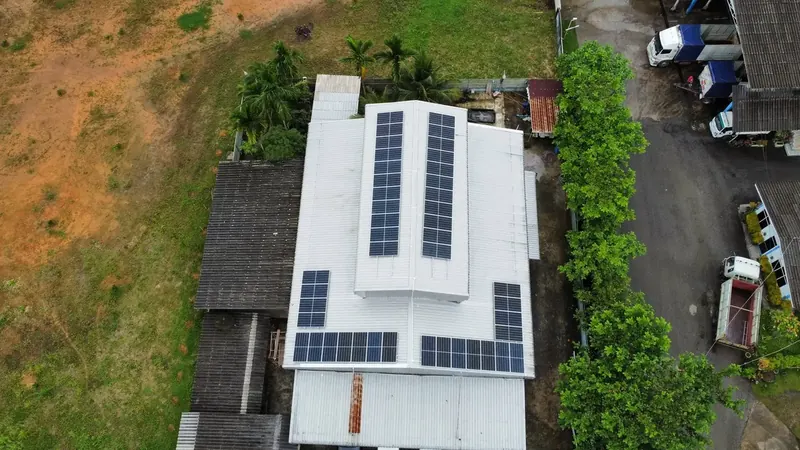
There is no single number that answers this question, because a house next to a dusty road and a house in the middle of a rubber plantation face very different conditions. There are, however, clear rules you can use to decide.
The South has the advantage of rain — up to a point
Frequent rain does a good job of rinsing off the dust that settles across the panels, so homes in Southern Thailand don't need cleaning as often as those in dry, dusty regions.
But there are three kinds of grime that rain won't remove, and these three are what actually drag output down.
- Bird droppings — they stick hard and block light completely, shading one spot so the cells underneath stop working.
- Algae and mold — they grow along the panel frame in humid areas and slowly creep inward.
- Salt deposits in coastal areas — they dry into a white film that bonds more firmly every time.
Why a single patch is worse than dust across the whole panel
Each panel is made of dozens of cells wired in series, which behave like water flowing through a row of pipes. If one point is blocked, the current for the whole string is limited to what the worst point can pass.
The result: a single palm-sized bird dropping can cut the output of an entire panel more than a thin, even layer of dust spread across all of it.
This is why taking a look at your panels once a month is more useful than cleaning on a fixed schedule without looking. What you need to catch is localized grime, not general dust.
How to tell it's time to clean
The most accurate method isn't counting days — it's checking the numbers in your inverter's app.
- Open the app and look at your generation history. Compare sunny days this month with sunny days last month.
- If the numbers keep drifting down while the weather is about the same, something is building up and blocking light.
- Go up and look, or photograph the roof from above — with a drone if you have one, or from an upper floor of the house.
Recommended cleaning frequency in the South
| Site conditions | Recommended frequency |
|---|---|
| Town house, no large trees | Once a year |
| House with large trees around it | Twice a year |
| Coastal area with salt air | 2 to 3 times a year |
| Near a dirt road or a construction site | As needed — possibly more often |
If you plan to clean them yourself
- Don't clean in strong sun. Hot glass hit by cold water can crack — clean early in the morning or in the evening.
- Use fresh water with a soft cloth or soft-bristle brush. Never scrape with anything sharp or a wire brush.
- Don't use corrosive cleaning products — they damage the glass coating that helps light pass through.
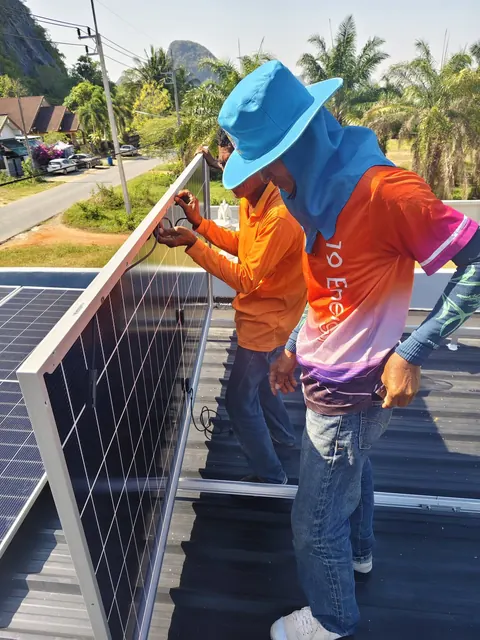
- Safety matters most. A wet roof is extremely slippery. If you don't have proper fall protection, don't go up yourself.
A good cleaning visit should also check the mounting points, screws and cables in the same trip. Spotting rust or a loose fitting early is much easier to fix than waiting until it becomes a problem.
Frequently asked questions
Can I just never clean them?
You can, but output will slowly fall. It's money lost without you noticing, because nothing breaks — the system just produces a little less over time. Checking the app now and then tells you when it's time.
Can I use tap water? I'm worried about limescale.
Yes. If your local water is hard enough to leave white marks when it dries, wipe the panels afterward with a dry cloth, or clean when the sun isn't strong so the water doesn't dry too fast and leave spots.
Related services and areas
Keep reading
- Solar for Homes Near the Sea: What You Need to Know About Salt Air and CorrosionYou can install near the coast, with salt-resistant materials chosen at the design stage.
- It Rains a Lot in Southern Thailand — Does Solar Still Produce Real Power?Solar panels run on light, not heat, so they still generate on overcast days. But how much less do they produce, and is it still worth it?
- Why Is My Solar Output Dropping, and Can I Check It Myself?Solar systems rarely die completely. More often they slowly produce less with no warning — and the way to catch it is to look at your generation history.