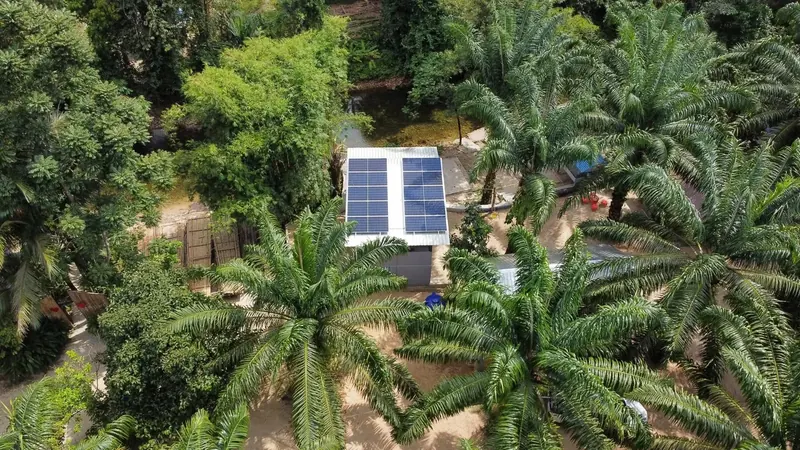
Thailand's 2026 People's Solar program (Solar Pak Prachachon) opened for applications on July 1, 2026, and the news made many households suddenly interested in solar, because they heard they could sell power back to the state. But the buy-back rate is THB 2.20 per unit — almost half what you currently pay for electricity — so we want you to see the real numbers before you decide.
Program terms for 2026
| Item | Terms |
|---|---|
| Applications open | From July 1, 2026 until the quota is filled |
| Total nationwide quota | Up to 500 megawatts |
| Who is eligible | Residential electricity users (tariff category 1) |
| Maximum capacity you can sell | Up to 5 kilowatts per meter |
| Buy-back rate | THB 2.20 per unit |
| Contract term | 10 years |
The quota is first come, first served — not everyone who applies will get a place. It's best to plan your finances without counting on this income in advance.
The number to understand first: the gap between 2.20 and what you pay
The average electricity rate for the September–December 2026 billing period is THB 3.95 per unit before VAT, or about THB 4.23 per unit including VAT.
That means each unit your panels produce is worth a different amount depending on what you do with it:
- Used in your home right away = a full saving of about THB 4.23, because it's a unit you don't have to buy from the utility.
- Exported and sold back to the grid = THB 2.20.
That gap of about THB 2 per unit is why we design our customers' systems so that as much of the power generated as possible is used in the home.
A worked example: a home with a 5 kW system
A 5 kW system in Southern Thailand produces about 6,750 units a year. Assume this household has moderate daytime use, so it uses 70% of what it generates and sells the remaining 30% back.
| Item | Units per year | Value per year |
|---|---|---|
| Power used in the home (70%) | 4,725 units | About THB 19,980 |
| Power sold back to the grid (30%) | 2,025 units | About THB 4,455 |
| Total value for the year | 6,750 units | About THB 24,435 |
Although the exported power is 30% of the volume, it's only about 18% of the total value. That's why we don't recommend installing a system bigger than your actual use in the hope of earning from selling power back.
The figures above illustrate the principle — they are not a guaranteed return. A home that uses less power during the day will get a lower total value, because a larger share has to be sold back at the lower price.
So should you apply?
Yes, if you're going to install solar anyway — this income is a bonus you get without much extra investment.
If you're undecided about installing, it's better not to make it your main reason, because income from selling back is a small share compared with the savings from using your own power. If the numbers for self-consumption don't work, selling back won't make them work.
Program details to know
- The program limits the capacity you can sell to 5 kW per meter. It doesn't mean you can't install more — you can install 10 kW, but only up to 5 kW counts toward selling back.
- You must be on the residential tariff. If your meter is on a business tariff, you don't qualify for this program.
- Joining the program means going through the permit and inspection steps — you can't start selling as soon as the installation is done.
- The 500 MW quota is a national figure, so there's time to compare options before signing a contract.
Sources used for this article
Figures in this article are based on public announcements and news reports (most sources are in Thai). If the conditions change, the latest official announcement from the relevant authority applies.
Frequently asked questions
If I install 10 kW but can only sell 5 kW, where does the excess go?
Nowhere — all the power generated is still used in your home as normal. The 5 kW limit only caps the capacity offered for sale to the grid, which in practice barely affects a home whose system is designed mainly for self-consumption.
If the quota fills up first, does that mean I can't install solar at all?
You can install as normal. The People's Solar program is only about selling excess power back. Installing for your own use isn't tied to the quota, and the savings from using your own power make up most of the value anyway.
Will the THB 2.20 rate go up during the contract?
The 10-year contract fixes the buy-back rate at THB 2.20 per unit. We don't know whether it will be reviewed in the future, so we recommend working out the value based on the published figure rather than planning on a price increase.
Related services and areas
Keep reading
- Monthly Bill of THB 3,000, 5,000 or 10,000 — What Size Solar System Do You Need?The best-value size is not the largest your roof can hold — it is the size that matches the electricity you use during the day.
- Is Solar Worth It in Nakhon Si Thammarat? Working It Out From Your Real BillMost people ask how high a bill has to be before solar pays off. Just as important is when you use electricity, because panels only generate during the day.
- Is Solar With a Battery Worth It in Areas With Frequent Power Cuts?A battery doesn't always save you more on electricity. What it really buys you is peace of mind during power cuts — and you have to judge whether that is worth the price.
- Thailand's 2026 Solar Tax Deduction: Up to THB 200,000 — Who Actually QualifiesThe measure runs until the end of 2028, but several conditions stop people who have already installed from using it. The most common mistakes are system size and the names on the documents.
- Thai Electricity Is THB 3.95 per Unit for Sep–Dec 2026 — How to Calculate Solar Payback CorrectlyThe tariff you see in the news and the rate you actually pay are not the same. Here's how to work out your own real cost per unit so your payback calculation is accurate.