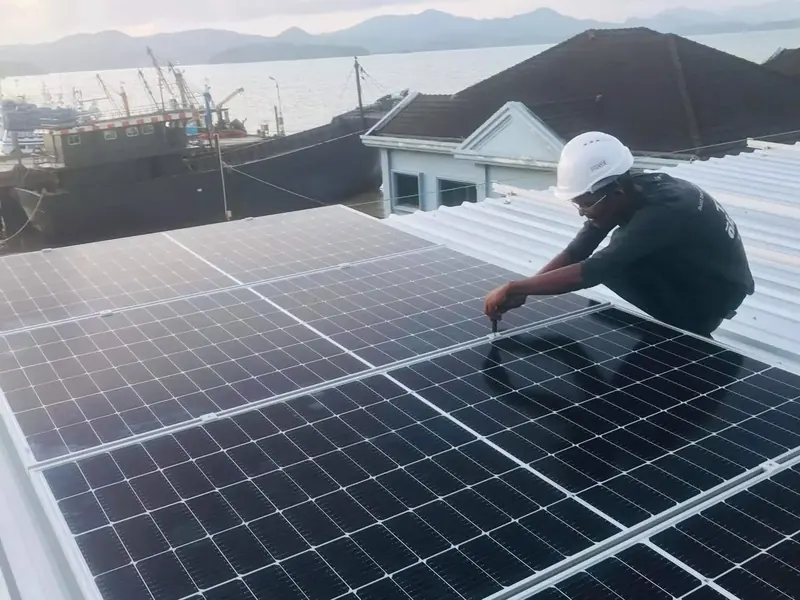
Almost everyone who runs the numbers and finds that solar pays off gets stuck on the same question: the upfront cost. It's a real barrier and shouldn't be brushed aside.
Options available in the market
Credit card installment plans
The easiest route if you have a card with enough credit limit. Many Thai banks run 0% installment programs with participating merchants, usually over about 6 to 10 months.
The upside: no interest if it's a genuine 0% program, and fast approval because you're using a limit you already have. The downside: card limits often aren't enough for a large system, and maxing out your limit affects your ability to spend on other things.
Bank loans
Many banks offer loans specifically for clean energy installations, often at lower interest rates than ordinary personal loans and with much longer terms than a credit card.
The upside: limits high enough for a large system and low monthly payments. The downside: there is interest, more paperwork, and it takes time to get approved.
Your existing mortgage
Some people top up their existing home loan, which usually gets the lowest interest rate of all the options. But it lengthens the mortgage, so you need to count the interest cost over the whole term, not just the monthly payment.
The terms, limits and interest rates of every option change over time and from bank to bank, so we don't quote figures in this article. Contact us to ask about the terms actually available when you're looking.
How to tell whether it still pays off with financing
The simple rule is to compare these two numbers:
- Your monthly electricity savings, based on the system size and how you use power.
- Your monthly installment, including interest.
If the first number is higher than or close to the second, you barely pay anything extra out of pocket during the loan, because your electricity savings cover the installments.
If the first number is much lower, you'll pay extra every month until the loan is done. That doesn't mean you shouldn't do it — but you need to know that going in and plan your cash flow.
Things to check before you sign up
- For "0% installments", ask for the total amount you'll pay, including any fees, and compare it with the cash price.
- A longer term lowers the monthly payment but raises the total interest considerably, so choose the shortest term that fits your budget.
- For any installment plan, check who the creditor is and that there is a written contract you can verify.
- If financing still forces you to shrink the system until it's too small, consider waiting a while and installing the right size in one go.
In summary
Financing lets people for whom solar makes sense, but who don't have the cash up front, actually install it — which is a good thing. Just work out how much of your savings goes to interest. If your monthly savings are close to the installment, that's a sign it's a sensible decision.
Frequently asked questions
Can you help prepare the loan documents?
Yes. Lenders usually ask for a quote detailing the system, the equipment specifications and the estimated savings — which we prepare as standard.
If I can't keep up the payments, will the system be repossessed?
That depends on the terms of your financing. A personal loan or credit card is debt that isn't tied to the asset, so the system stays yours. A hire-purchase contract, or one that names the equipment as collateral, works differently. Always read the contract carefully before signing.
Related services and areas
Keep reading
- Is Solar Worth It in Nakhon Si Thammarat? Working It Out From Your Real BillMost people ask how high a bill has to be before solar pays off. Just as important is when you use electricity, because panels only generate during the day.
- Monthly Bill of THB 3,000, 5,000 or 10,000 — What Size Solar System Do You Need?The best-value size is not the largest your roof can hold — it is the size that matches the electricity you use during the day.
- Thailand's 2026 Solar Tax Deduction: Up to THB 200,000 — Who Actually QualifiesThe measure runs until the end of 2028, but several conditions stop people who have already installed from using it. The most common mistakes are system size and the names on the documents.